Notice: تابع WP_Block_Type_Registry::register به طورنادرست فراخوانی شد. نامهای نوع بلوک نباید حروف بزرگ داشته باشند. لطفاً برای اطلاعات بیشتر، اشکال زدایی در وردپرس را مشاهده کنید. (این پیام در نگارش 5.0.0 افزوده شده است.) in /home/ethicsho/public_html/wp-includes/functions.php on line 5313
Warning: Use of undefined constant TDC_PATH_LEGACY - assumed 'TDC_PATH_LEGACY' (this will throw an Error in a future version of PHP) in /home/ethicsho/public_html/wp-content/plugins/td-composer/td-composer.php on line 109
Warning: Use of undefined constant TDSP_THEME_PATH - assumed 'TDSP_THEME_PATH' (this will throw an Error in a future version of PHP) in /home/ethicsho/public_html/wp-content/plugins/td-composer/td-composer.php on line 113 بایگانیهای Erika Summers Effler - خانه اخلاق پژوهان جوان Notice: Trying to access array offset on value of type bool in /home/ethicsho/public_html/wp-content/plugins/wp-ulike/inc/general-functions.php on line 807
Don Browning’s important work critically appropriates the distinctive insights of religious ethics and contemporary psychology to inform and reform both. Here he elaborates the moral context for pastoral care by formulating five levels of practical moral thinking, illustrates them in two case studies involving homosexuality, and integrates the levels into a method of theological practice. It is a helpful but not dominating ethical framework for pastoral care and counseling useful to students, pastors, and congregations alike. “Browning, in this book, continues efforts to teach religious ethics to those working as counselors…. It presents a clear argument and method for laying practical and workable foundations of religious ethics in pastoral work.” -Clergy Journal “[Browning] points out that much of our pastoral care is undergirded by unexamined or only partially examined moral and ethical thinking…. In our efforts to avoid moralism, we have moved more and more toward a stance of ethical neutrality which has done a disservice to the people who look to us for help. Pastoral care and counseling need to be grounded in a practical moral theology or theological ethics.” -Christian Century “Browning provides ample resources for pastors to begin a discipline of critical moral reflection, especially in their role as counselors…. His borrowings from moral philosophers and theological ethics are explicated in the context of case studies and should prove helpful for anyone engaged in the practice of ministry.” -Religious Studies Review Don S. Browning is Alexander Campbell Professor Emeritus of Ethics and the Social Sciences, Divinity School, University of Chicago. His work at the intersection of theological ethics and social sciences has led to such pioneering and influential works as Religious Thought and the Modern Psychologies and A Fundamental Practical Theology.
Ethical values in computing are essential for understanding and maintaining the relationship between computing professionals and researchers and the users of their applications and programs. While concerns about cyber ethics and cyber law are constantly changing as technology changes, the intersections of cyber ethics and cyber law are still underexplored.Investigating Cyber Law and Cyber Ethics: Issues, Impacts and Practices discusses the impact of cyber ethics and cyber law on information technologies and society. Featuring current research, theoretical frameworks, and case studies, the book will highlight the ethical and legal practices used in computing technologies, increase the effectiveness of computing students and professionals in applying ethical values and legal statues, and provide insight on ethical and legal discussions of real-world applications.
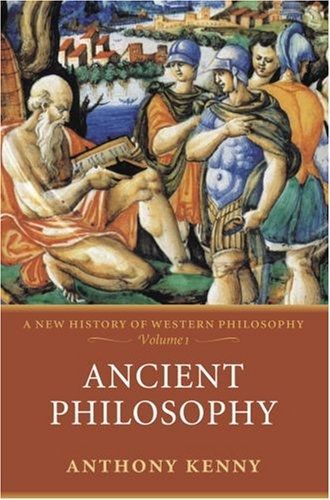
Sir Anthony Kenny here tells the fascinating story of the birth of philosophy and its remarkable flourishing in the ancient Mediterranean world. This is the initial volume of a four-book set in which Kenny will unfold a magisterial new history of Western philosophy, the first major single-author history of philosophy to appear in decades. Ancient Philosophy spans over a thousand years and brings to life the great minds of the past, from Thales, Pythagoras, and Parmenides, to Socrates, Epictetus, Marcus Aurelius, and Augustine. The book’s great virtue is that it is written by one of the world’s leading authorities on the subject. Instead of an uncritical, straightforward recitation of known facts–Plato and his cave of shadows, Aristotle’s ethics, Augustine’s City of God–we see the major philosophers through the eyes of a man who has spent a lifetime contemplating their work. Thus we do not simply get an overview of Aristotle, for example, but a penetrating and insightful critique of his thought. Kenny offers an illuminating account of the various schools of thought, from the Pre-Socratics to the Epicureans. He examines the development of logic and reason, ancient ideas about physics (“how things happen”), metaphysics and ethics, and the earliest thinking about the soul and god. Vividly written, but serious and deep enough to offer a genuine understanding of the great philosophers, Kenny’s lucid and stimulating history will become the definitive work for anyone interested in the people and ideas that shaped the course of Western thought.
Perfectionism is one of the great moralities of the Western tradition. It holds that certain states of humans, such as knowledge, achievement, and friendship, are good apart from any pleasure they may bring, and that the morally right act is always the one that most promotes these states. Defined more narrowly, perfectionism identifies the human good by reference to human nature: if knowledge and achievement are good, it is because they realize aspects of human nature. This book gives an account of perfectionism, first in the narrower sense, analyzing its central concepts and defending a theory of human nature in which rationality plays a central role. It then uses this theory to construct an elaborate account of the intrinsic value of beliefs and actions that embody rationality, and applies this account to political questions about liberty and equality. The book attempts to formulate the most defensible version of perfectionism, using contemporary analytic techniques. It aims both to regain for perfectionism a central place in contemporary moral debate and to shed light on the writings of classical perfectionists such as Aristotle, Aquinas, Hegel, Marx, Nietzsche, and T.H. Green.
Bonnie Steinbock presents The Oxford Handbook of Bioethics –an authoritative, state-of-the-art guide to current issues in bioethics. Thirty-four contributors reflect the interdisciplinarity that is characteristic of bioethics, and its increasingly international character. Thirty topics are covered in original essays written by some of the world’s leading figures in the field, as well as by some newer “up-and-comers.” The essays address both perennial issues, such as the methodology of bioethics, autonomy, justice, death, and moral status, and newer issues, such as biobanking, stem cell research, cloning, pharmacogenomics, and bioterrorism. Other topics concern mental illness and moral agency, the rule of double effect, justice and the elderly, the definition of death, organ transplantation, feminist approaches to commodification of the body, life extension, advance directives, physician-assisted death, abortion, genetic research, population screening, enhancement, research ethics, and the implications of public and global health for bioethics. Anyone who wants to know how the central debates in bioethics have developed in recent years, and where the debates are going, will want to consult this book. It will be an invaluable resource not only for scholars and graduate students in bioethics, but also for those in philosophy, medicine, law, theology, social science, public policy, and public health who wish to keep abreast of developments in bioethics.
ما از اخلاق چه انتظاری داریم؟ این سوال شاید تاحدودی برای عموم مردم و یا متخصصان این رشته قابل پاسخ باشد؛ اینکه خوب بودن را به ما بیاموزد و در تنظیم روابط فردی م...

جشن کتاب تهران به ایستگاه سی و یکم رسیده است. حال و احوال نشر کتاب خوب نیست و باید فرهنگدوستان را به خرید و هدیه دادن کتاب ترغیب نمود. خانه اخلاقپژوهان جوان ب...

بنیاد کتابهای اخلاق اسلامی عمدتا پالایش جان از آلودگیها و آراستن آن به زیباییها است. اندیشه محوری این قبیل کتابها آن است که انسان فعلی آنی نیست که باید باشد...

-
0 Comments