Notice: تابع WP_Block_Type_Registry::register به طورنادرست فراخوانی شد. نامهای نوع بلوک نباید حروف بزرگ داشته باشند. لطفاً برای اطلاعات بیشتر، اشکال زدایی در وردپرس را مشاهده کنید. (این پیام در نگارش 5.0.0 افزوده شده است.) in /home/ethicsho/public_html/wp-includes/functions.php on line 5313
Warning: Use of undefined constant TDC_PATH_LEGACY - assumed 'TDC_PATH_LEGACY' (this will throw an Error in a future version of PHP) in /home/ethicsho/public_html/wp-content/plugins/td-composer/td-composer.php on line 109
Warning: Use of undefined constant TDSP_THEME_PATH - assumed 'TDSP_THEME_PATH' (this will throw an Error in a future version of PHP) in /home/ethicsho/public_html/wp-content/plugins/td-composer/td-composer.php on line 113 بایگانیهای Emile Durkheim - خانه اخلاق پژوهان جوان Notice: Trying to access array offset on value of type bool in /home/ethicsho/public_html/wp-content/plugins/wp-ulike/inc/general-functions.php on line 807
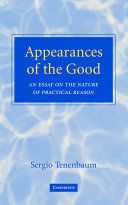
‘We desire all and only those things we conceive to be good; we avoid what we conceive to be bad.’ This slogan was once the standard view of the relationship between desire or motivation and rational evaluation. Many critics have rejected this scholastic formula as either trivial or wrong. It appears to be trivial if we just define the good as ‘what we want’, and wrong if we consider apparent conflicts between what we seem to want and what we seem to think is good. In Appearances of the Good, Sergio Tenenbaum argues that the old slogan is both significant and right, even in cases of apparent conflict between our desires and our evaluative judgments. Maintaining that the good is the formal end of practical inquiry in much the same way as truth is the formal end of theoretical inquiry, he provides a fully unified account of motivation and evaluation.
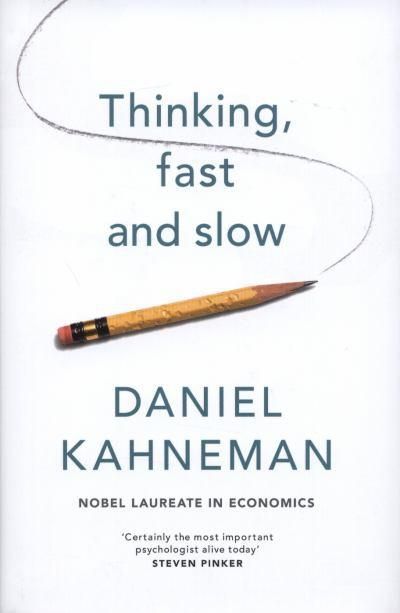
Daniel Kahneman, recipient of the Nobel Prize in Economic Sciences for his seminal work in psychology challenging the rational model of judgment and decision making, is one of the world’s most important thinkers. His ideas have had a profound impact on many fields-including business, medicine, and politics-but until now, he has never brought together his many years of research in one book.In Thinking, Fast and Slow, Kahneman takes us on a groundbreaking tour of the mind and explains the two systems that drive the way we think and make choices. One system is fast, intuitive, and emotional; the other is slower, more deliberative, and more logical. Kahneman exposes the extraordinary capabilities-and also the faults and biases-of fast thinking, and reveals the pervasive influence of intuitive impressions on our thoughts and behaviour. The importance of properly framing risks, the effects of cognitive biases on how we view others, the dangers of prediction, the right ways to develop skills, the pros and cons of fear and optimism, the difference between our experience and memory of events, the real components of happiness-each of these can be understood only by knowing how the two systems work together to shape our judgments and decisions.Drawing on a lifetime’s experimental experience, Kahneman reveals where we can and cannot trust our intuitions and how we can tap into the benefits of slow thinking. He offers practical and enlightening insights into how choices are made in both our professional and our personal lives-and how we can use different techniques to guard against the mental glitches that often get us into trouble. Thinking, Fast and Slow will transform the way you take decisions and experience the world.
ما از اخلاق چه انتظاری داریم؟ این سوال شاید تاحدودی برای عموم مردم و یا متخصصان این رشته قابل پاسخ باشد؛ اینکه خوب بودن را به ما بیاموزد و در تنظیم روابط فردی م...

جشن کتاب تهران به ایستگاه سی و یکم رسیده است. حال و احوال نشر کتاب خوب نیست و باید فرهنگدوستان را به خرید و هدیه دادن کتاب ترغیب نمود. خانه اخلاقپژوهان جوان ب...

بنیاد کتابهای اخلاق اسلامی عمدتا پالایش جان از آلودگیها و آراستن آن به زیباییها است. اندیشه محوری این قبیل کتابها آن است که انسان فعلی آنی نیست که باید باشد...

-
0 Comments