Notice: تابع WP_Block_Type_Registry::register به طورنادرست فراخوانی شد. نامهای نوع بلوک نباید حروف بزرگ داشته باشند. لطفاً برای اطلاعات بیشتر، اشکال زدایی در وردپرس را مشاهده کنید. (این پیام در نگارش 5.0.0 افزوده شده است.) in /home/ethicsho/public_html/wp-includes/functions.php on line 5313
Warning: Use of undefined constant TDC_PATH_LEGACY - assumed 'TDC_PATH_LEGACY' (this will throw an Error in a future version of PHP) in /home/ethicsho/public_html/wp-content/plugins/td-composer/td-composer.php on line 109
Warning: Use of undefined constant TDSP_THEME_PATH - assumed 'TDSP_THEME_PATH' (this will throw an Error in a future version of PHP) in /home/ethicsho/public_html/wp-content/plugins/td-composer/td-composer.php on line 113 بایگانیهای Eileen E. Morrison - خانه اخلاق پژوهان جوان Notice: Trying to access array offset on value of type bool in /home/ethicsho/public_html/wp-content/plugins/wp-ulike/inc/general-functions.php on line 807
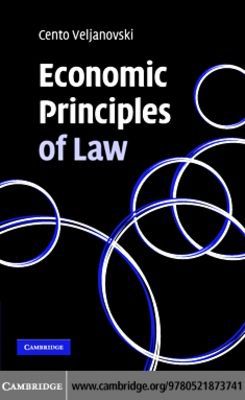
Economic Principles of Law applies economics to the doctrines, rules and remedies of the common law. In plain English and using non-technical analysis, it offers an introduction and exposition of the ‘economic approach’ to law – one of the most exciting and vibrant fields of legal scholarship and applied economics. Beginning with a brief history of the field, it sets out the basic economic concepts useful to lawyers, and applies these to assess the core areas of the common law – property, contract, tort and crime – with particular emphasis on their doctrinal structure and remedies. This is done using leading cases drawn from the birthplace of the common law (England & Wales) and other common law jurisdictions. The book serves as a primer to the wider use of economics which has become increasingly important for law students, lawyers, legislators, regulators and those concerned with our legal system generally.
The second volume in applied ethics based on the distinguished Wayne Leys Memorial Lectureship Series. With guidelines from legal reasoning, Michael D. Bayles examines “Moral Theory and Application.” Abraham Edel questions “Ethics Applied Or Conduct Enlightened?” The late Warner A. Wick shows in “The Good Person and the Good Society: Some Ideals Foolish and Otherwise” that devotion to ideals need not be either fanaticism or foolishness. John Lachs contends that many public gains are purchased at the cost of individuals being manipulated in “Public Benefit, Private Costs.” James E. Childress in “Gift of Life…” considers ethical issues in obtaining and distributing human organs. Carl Wellman in “Terrorism and Moral Rights” argues that there can be no “rights-based justification” for anti-abortion terrorism.
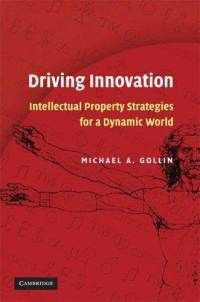
The innovation cycle and creative destruction — The rise of the intellectual property system — Creative tension : the right to exclude and the accessible domain — The innovation forest : intellectual property rights and how they grow — The ABCDs of intellectual property : flow and infringement of IP rights — The global diversity of innovation communities — The role of the innovation chief — Becoming strategic — Strategy tools : policies and practices for managing IP — A menu of strategy options — Evaluating internal resources and the external environment — Placing a financial value on IP assets — Accessing innovations of others — Protecting and enforcing IP rights — Transferring IP rights — IP strategies for different organizations — A comparison of national IP laws — Global challenges and opportunities — Intellectual property, innovation, and freedom.
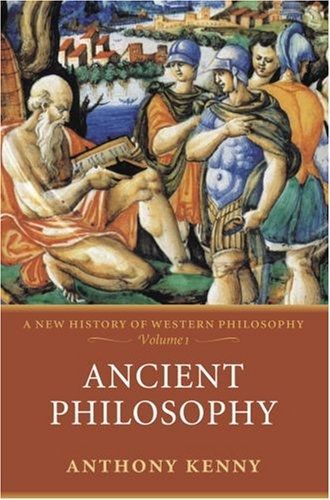
Sir Anthony Kenny here tells the fascinating story of the birth of philosophy and its remarkable flourishing in the ancient Mediterranean world. This is the initial volume of a four-book set in which Kenny will unfold a magisterial new history of Western philosophy, the first major single-author history of philosophy to appear in decades. Ancient Philosophy spans over a thousand years and brings to life the great minds of the past, from Thales, Pythagoras, and Parmenides, to Socrates, Epictetus, Marcus Aurelius, and Augustine. The book’s great virtue is that it is written by one of the world’s leading authorities on the subject. Instead of an uncritical, straightforward recitation of known facts–Plato and his cave of shadows, Aristotle’s ethics, Augustine’s City of God–we see the major philosophers through the eyes of a man who has spent a lifetime contemplating their work. Thus we do not simply get an overview of Aristotle, for example, but a penetrating and insightful critique of his thought. Kenny offers an illuminating account of the various schools of thought, from the Pre-Socratics to the Epicureans. He examines the development of logic and reason, ancient ideas about physics (“how things happen”), metaphysics and ethics, and the earliest thinking about the soul and god. Vividly written, but serious and deep enough to offer a genuine understanding of the great philosophers, Kenny’s lucid and stimulating history will become the definitive work for anyone interested in the people and ideas that shaped the course of Western thought.
ما از اخلاق چه انتظاری داریم؟ این سوال شاید تاحدودی برای عموم مردم و یا متخصصان این رشته قابل پاسخ باشد؛ اینکه خوب بودن را به ما بیاموزد و در تنظیم روابط فردی م...

جشن کتاب تهران به ایستگاه سی و یکم رسیده است. حال و احوال نشر کتاب خوب نیست و باید فرهنگدوستان را به خرید و هدیه دادن کتاب ترغیب نمود. خانه اخلاقپژوهان جوان ب...

بنیاد کتابهای اخلاق اسلامی عمدتا پالایش جان از آلودگیها و آراستن آن به زیباییها است. اندیشه محوری این قبیل کتابها آن است که انسان فعلی آنی نیست که باید باشد...

-
0 Comments