Notice: تابع WP_Block_Type_Registry::register به طورنادرست فراخوانی شد. نامهای نوع بلوک نباید حروف بزرگ داشته باشند. لطفاً برای اطلاعات بیشتر، اشکال زدایی در وردپرس را مشاهده کنید. (این پیام در نگارش 5.0.0 افزوده شده است.) in /home/ethicsho/public_html/wp-includes/functions.php on line 5313
Warning: Use of undefined constant TDC_PATH_LEGACY - assumed 'TDC_PATH_LEGACY' (this will throw an Error in a future version of PHP) in /home/ethicsho/public_html/wp-content/plugins/td-composer/td-composer.php on line 109
Warning: Use of undefined constant TDSP_THEME_PATH - assumed 'TDSP_THEME_PATH' (this will throw an Error in a future version of PHP) in /home/ethicsho/public_html/wp-content/plugins/td-composer/td-composer.php on line 113 بایگانیهای E.J. Lowe - خانه اخلاق پژوهان جوان Notice: Trying to access array offset on value of type bool in /home/ethicsho/public_html/wp-content/plugins/wp-ulike/inc/general-functions.php on line 807
Separated by millennia, Aristotle and Sigmund Freud gave us disparate but compelling pictures of the human condition. But if, with Jonathan Lear, we scrutinize these thinkers’ attempts to explain human behavior in terms of a higher principle–whether happiness or death–the pictures fall apart. Aristotle attempted to ground ethical life in human striving for happiness, yet he didn’t understand what happiness is any better than we do. Happiness became an enigmatic, always unattainable, means of seducing humankind into living an ethical life. Freud fared no better when he tried to ground human striving, aggression, and destructiveness in the death drive, like Aristotle attributing purpose where none exists. Neither overarching principle can guide or govern “the remainder of life,” in which our inherently disruptive unconscious moves in breaks and swerves to affect who and how we are. Lear exposes this tendency to self-disruption for what it is: an opening, an opportunity for new possibilities. His insights have profound consequences not only for analysis but for our understanding of civilization and its discontent.
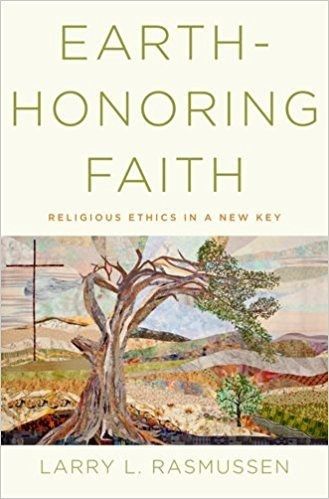
Grand Winner of the 2014 Nautilus Book Awards Thoughtful observers agree that the planetary crisis we now face-climate change; species extinction; the destruction of entire ecosystems; the urgent need for a more just economic-political order-is pushing human civilization to a radical turning point: change or perish. But precisely how to change remains an open question. In Earth-honoring Faith, Larry Rasmussen answers that question with a dramatically new way of thinking about human society, ethics, and the ongoing health of our planet. Rejecting the modern assumption that morality applies to human society alone, Rasmussen insists that we must derive a spiritual and ecological ethic that accounts for the well-being of all creation, as well as the primal elements upon which it depends: earth, air, fire, water, and sunlight. He argues that good science, necessary as it is, will not be enough to inspire fundamental change. We must draw on religious resources as well to make the difficult transition from an industrial-technological age obsessed with consumption to an ecological age that restores wise stewardship of all life. Earth-honoring Faith advocates an alliance of spirituality and ecology, in which the material requirements for planetary life are reconciled with deep traditions of spirituality across religions, traditions that include mysticism, sacramentalism, prophetic practices, asceticism, and the cultivation of wisdom. It is these shared spiritual practices that can produce a chorus of world faiths to counter the consumerism, utilitarianism, alienation, oppression, and folly that have pushed us to the brink. Written with passionate commitment and deep insight, Earth-honoring Faith reminds us that we must live in the present with the knowledge that the eyes of future generations will look back at us.
“In this book, Michael Lynch argues that truth does matter, in both our personal and political lives. Lynch explains that the growing cynicism over truth stems in large part from our confusion over what truth is.” “True to Life defends four simple claims : that truth is objective; that it is good to believe what is true; that truth is a goal worthy of inquiry; and that truth can be worth caring about for its own sake – not just because it gets us other things we want. In defense of these “truisms about truth,” Lynch diagnoses the sources of our cynicism and argues that many contemporary theories of truth cannot adequately account for its value. He explains why we should care about truth, arguing that truth and its pursuit are part of living a happy life, important in our personal relationships and for our political values.”–BOOK JACKET.
Providing Christians with a comprehensive reference volume covering every key issue, person, and concept related to Christian apologetics, this work offers extensive coverage of apologetics with articles on key individuals, philosophical systems and concepts, biblical controversies, contemporary issues, and perennial apologetic arguments. Valuable information and advice are provided for to a wide audience, including pastors and Christian leaders, students on college campuses, those involved in counter-cult ministries.
ما از اخلاق چه انتظاری داریم؟ این سوال شاید تاحدودی برای عموم مردم و یا متخصصان این رشته قابل پاسخ باشد؛ اینکه خوب بودن را به ما بیاموزد و در تنظیم روابط فردی م...

جشن کتاب تهران به ایستگاه سی و یکم رسیده است. حال و احوال نشر کتاب خوب نیست و باید فرهنگدوستان را به خرید و هدیه دادن کتاب ترغیب نمود. خانه اخلاقپژوهان جوان ب...

بنیاد کتابهای اخلاق اسلامی عمدتا پالایش جان از آلودگیها و آراستن آن به زیباییها است. اندیشه محوری این قبیل کتابها آن است که انسان فعلی آنی نیست که باید باشد...

-
0 Comments