Notice: تابع WP_Block_Type_Registry::register به طورنادرست فراخوانی شد. نامهای نوع بلوک نباید حروف بزرگ داشته باشند. لطفاً برای اطلاعات بیشتر، اشکال زدایی در وردپرس را مشاهده کنید. (این پیام در نگارش 5.0.0 افزوده شده است.) in /home/ethicsho/public_html/wp-includes/functions.php on line 5313
Warning: Use of undefined constant TDC_PATH_LEGACY - assumed 'TDC_PATH_LEGACY' (this will throw an Error in a future version of PHP) in /home/ethicsho/public_html/wp-content/plugins/td-composer/td-composer.php on line 109
Warning: Use of undefined constant TDSP_THEME_PATH - assumed 'TDSP_THEME_PATH' (this will throw an Error in a future version of PHP) in /home/ethicsho/public_html/wp-content/plugins/td-composer/td-composer.php on line 113 بایگانیهای Donald MacKenzie MacKinnon - خانه اخلاق پژوهان جوان Notice: Trying to access array offset on value of type bool in /home/ethicsho/public_html/wp-content/plugins/wp-ulike/inc/general-functions.php on line 807
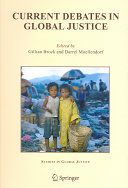
Issues of global justice dominate our contemporary world. Incre- ingly, philosophers are turning their attention to thinking about particular issues of global justice and the accounts that would best facilitate theorizing about these. This volume of papers on global justice derives from a mini-conference held in conjunction with the Paci?c Division meeting of the American Philosophical Association in Pasadena, California, in 2004. The idea of holding a mini-c- ference on global justice was inspired by the growth of interest in such questions, and it was hoped that organizing the mini-conference 1 would stimulate further good writing in this area. We believe that our mission has been accomplished! We received a number of thoughtful papers on both theoretical and more applied issues, showing excellent coverage of a range of topics in the domain of global justice. A selection of some of the very best papers is published in this special issue of The Journal of Ethics. In particular, we tried to include papers that would re?ect some of the range of topics that were covered at the conference, to give readers a sense of both the scope of the ?eld as it is currently emerging and the direction that the debates seem to be taking. As a result of increased attention to theorizing about global j- tice, cosmopolitanism has enjoyed a resurgence of interest as well.
Written across the disciplines of art history, literature, philosophy, sociology, and theology, the ten essays comprising the collection all insist on multidimensional definitions of evil.Taking its title from a moment in Shakespeare’s Tempest when Prospero acknowledges his responsibility for Caliban, this collection explores the necessarily ambivalent relationship between humanity and evil. To what extent are a given society’s definitions of evil self-serving? Which figures are marginalized in the process of identifying evil? How is humanity itself implicated in the production of evil? Is evil itself something fundamentally human? These questions, indicative of the kinds of issues raised in this collection, seem all the more pressing in light of recent world events.The ten essays were originally presented at the First Global Conference on Perspectives on Evil and Human Wickedness, held in March 2000, in Lady Margaret Hall, Oxford University.At the Interface/Probing the Boundaries seeks to encourage and promote cutting edge inter-disciplinary and multi-disciplinary projects and inquiry. By bringing people together from differing contexts, disciplines, professions, and vocations, the aim is to engage in conversations that are innovative, imaginative, and creatively interactive.Inter-Disciplinary dialogue enables people to go beyond the boundaries of what they usually encounter and share in perspectives that are new, challenging, and richly rewarding. This kind of dialogue often illuminates one’s own area of work, is suggestive of new possibilities for development, and creates exciting horizons for future conversations with persons from a wide variety of national and international settings.By sharing cross-disciplinary insights and perspectives, ATI/PTB publications are designed to be both exploratory examinations of particular areas and issues, and rigorous inquiries into specific subjects. Books in the series are enabling resources which will encourage sustained and creative dialogue, and become the future resource for further inquiries and research.
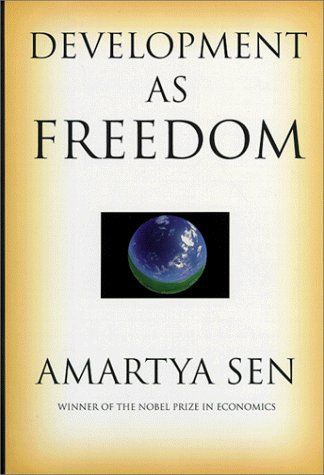
Development as Freedomis a general exposition of the economic ideas and analyses of Amartya Sen, winner of the 1998 Nobel Prize in Economic Science. This brilliant and indispensable treatise compellingly analyzes the nature of contemporary economic development from the perspective of human freedom. Freedom, Sen persuasively argues, is at once the ultimate goal of economic life and the most efficient means of realizing general welfare. It is a good to be enjoyed by the world’s entire population. Drawing on moral and political philosophy and technical economic analysis, this work gives the nonspecialist reader powerful access to Sen’s paradigm-altering vision and vividly shows how he, in the words of the Nobel Prize committee, has both “restored an ethical dimension to the discussion of economic problems” and “opened up new fields of study for subsequent generations of researchers.” To a world divided between those who fear the ruthlessness of the free market under prevailing conditions of global capitalism and those who fear the terror of authoritarian states that stifle indi- vidual liberty as well as initiative,Development as Freedompresents a necessary intellectual and moral framework of analysis and scrutiny. By rigorously addressing one of the largest questions of all–“What is the relation between our economic wealth and our ability to live as we would like?”–Sen allows economics once again, as it did in the time of Adam Smith, to address the social basis of individual well-being and freedom. He also confronts the human dilemma that “despite unprecedented increases in overall opulence, the contemporary world denies elementary freedoms to vast numbers–perhaps even the majority–of people.” This is a landmark work that shows how in individual human freedom–the exclusive possession, Sen shows, of no particular nation, region or historical, intellectual or religious tradition–lies the capacity for political participation, economic development and social progress.
ما از اخلاق چه انتظاری داریم؟ این سوال شاید تاحدودی برای عموم مردم و یا متخصصان این رشته قابل پاسخ باشد؛ اینکه خوب بودن را به ما بیاموزد و در تنظیم روابط فردی م...

جشن کتاب تهران به ایستگاه سی و یکم رسیده است. حال و احوال نشر کتاب خوب نیست و باید فرهنگدوستان را به خرید و هدیه دادن کتاب ترغیب نمود. خانه اخلاقپژوهان جوان ب...

بنیاد کتابهای اخلاق اسلامی عمدتا پالایش جان از آلودگیها و آراستن آن به زیباییها است. اندیشه محوری این قبیل کتابها آن است که انسان فعلی آنی نیست که باید باشد...

-
0 Comments