Notice: تابع WP_Block_Type_Registry::register به طورنادرست فراخوانی شد. نامهای نوع بلوک نباید حروف بزرگ داشته باشند. لطفاً برای اطلاعات بیشتر، اشکال زدایی در وردپرس را مشاهده کنید. (این پیام در نگارش 5.0.0 افزوده شده است.) in /home/ethicsho/public_html/wp-includes/functions.php on line 5313
Warning: Use of undefined constant TDC_PATH_LEGACY - assumed 'TDC_PATH_LEGACY' (this will throw an Error in a future version of PHP) in /home/ethicsho/public_html/wp-content/plugins/td-composer/td-composer.php on line 109
Warning: Use of undefined constant TDSP_THEME_PATH - assumed 'TDSP_THEME_PATH' (this will throw an Error in a future version of PHP) in /home/ethicsho/public_html/wp-content/plugins/td-composer/td-composer.php on line 113 بایگانیهای Dayan Jayatilleka - خانه اخلاق پژوهان جوان Notice: Trying to access array offset on value of type bool in /home/ethicsho/public_html/wp-content/plugins/wp-ulike/inc/general-functions.php on line 807
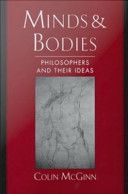
In Minds and Bodies, Colin McGinn offers proof that contemporary philosophy, in the hands of a consummate reviewer, can be the occasion not only sharp critical assessment, but also writing so clear and engaging that readers with no special background in the subject but simply a taste for challenging idea can feel welcome. Gathering nearly forty review-essays printed mainly in nonspecialist publications over the past twenty years, McGinn, a distinguished philosopher and teacher, measures the best of recent Anglo-American philosophical writing, considering books by Thomas Nagel, John Searle, and Daniel Dennett, among others, and navigating with energy and wit important new work in ethics, philosophy of language, and philosophy of mind. Opening with a section on philosophical lives–books written on or by Ludwig Wittgenstein, Bertrand Russell, Charles Peirce, and A. J. Ayer– McGinn moves to the question of consciousness, offering readers two dozen crisp and provocative pieces on work seeking to define and illuminate the mind, its activity, and its relation to the world of physical objects. Closing with a section on ethics, McGinn brings a bold and sharply original perspective to argument in such controversial areas as animal rights and feminist moral theory. A bracing collection of masterfully written reviews that together form an accessible picture of philosophy as it is practiced today, Minds and Bodies makes permanent the critical reflections of a gifted philosopher and writer and is destined to find an appreciative audience both within the philosophical community and in the wider culture of intellectually curious readers.
In this exploration of new territory between ethics and epistemology, Miranda Fricker argues that there is a distinctively epistemic type of injustice, in which someone is wronged specifically in their capacity as a knower. Justice is one of the oldest and most central themes in philosophy, but in order to reveal the ethical dimension of our epistemic practices the focus must shift to injustice. Fricker adjusts the philosophical lens so that we see through to the negative space that is epistemic injustice. The book explores two different types of epistemic injustice, each driven by a form of prejudice, and from this exploration comes a positive account of two corrective ethical-intellectual virtues. The characterization of these phenomena casts light on many issues, such as social power, prejudice, virtue, and the genealogy of knowledge, and it proposes a virtue epistemological account of testimony. In this ground-breaking book, the entanglements of reason and social power are traced in a new way, to reveal the different forms of epistemic injustice and their place in the broad pattern of social injustice.
Lies are often so subtle, so deftly woven into easily acceptable truths, that we can fail to recognize them. Turning Sisela Bok’s defense of truth in her book Lying on its head, Jeremy Campbell argues that deception should no longer be seen as artificial or deviant, but as a natural part of our world. Beginning with a study of evolutionary biology and the necessity (and ultimate value) of deceit in the animal kingdom, Campbell asks the difficult question of whether falsehood might, in fact, be instinctual. Guiding the reader through classical philosophy to more contemporary thinkers such as Freud and Nietzsche, Campbell links a multitude of disciplines and ideas in lucid and engaging prose. Unsettling some of our most firmly held beliefs about truth and ethics, The Liar’s Tale is a riveting work of intellectual history. “This challenging romp through the underbelly of intellectual history…is fascinating and troublesome.”–New York Times Book Review “[A] beautifully written book….a crisp and remarkably readable discussion.”–John Frohnmayer, The Wilson Quarterly
ما از اخلاق چه انتظاری داریم؟ این سوال شاید تاحدودی برای عموم مردم و یا متخصصان این رشته قابل پاسخ باشد؛ اینکه خوب بودن را به ما بیاموزد و در تنظیم روابط فردی م...

جشن کتاب تهران به ایستگاه سی و یکم رسیده است. حال و احوال نشر کتاب خوب نیست و باید فرهنگدوستان را به خرید و هدیه دادن کتاب ترغیب نمود. خانه اخلاقپژوهان جوان ب...

بنیاد کتابهای اخلاق اسلامی عمدتا پالایش جان از آلودگیها و آراستن آن به زیباییها است. اندیشه محوری این قبیل کتابها آن است که انسان فعلی آنی نیست که باید باشد...

-
0 Comments