Notice: تابع WP_Block_Type_Registry::register به طورنادرست فراخوانی شد. نامهای نوع بلوک نباید حروف بزرگ داشته باشند. لطفاً برای اطلاعات بیشتر، اشکال زدایی در وردپرس را مشاهده کنید. (این پیام در نگارش 5.0.0 افزوده شده است.) in /home/ethicsho/public_html/wp-includes/functions.php on line 5313
Warning: Use of undefined constant TDC_PATH_LEGACY - assumed 'TDC_PATH_LEGACY' (this will throw an Error in a future version of PHP) in /home/ethicsho/public_html/wp-content/plugins/td-composer/td-composer.php on line 109
Warning: Use of undefined constant TDSP_THEME_PATH - assumed 'TDSP_THEME_PATH' (this will throw an Error in a future version of PHP) in /home/ethicsho/public_html/wp-content/plugins/td-composer/td-composer.php on line 113 بایگانیهای Daniel M. Haybron - خانه اخلاق پژوهان جوان Notice: Trying to access array offset on value of type bool in /home/ethicsho/public_html/wp-content/plugins/wp-ulike/inc/general-functions.php on line 807
This book examines the ways in which reasonable people can disagree about the requirements of political morality. Christopher McMahon argues that there will be a ‘zone of reasonable disagreement’ surrounding most questions of political morality. Moral notions of right and wrong evolve over time as new zones of reasonable disagreement emerge out of old ones; thus political morality is both different in different societies with varying histories, and different now from what it was in the past. McMahon explores this feature of his theory in detail and traces its implications for the possibility of making moral judgments about other polities, past or present. His study sheds light on an important and often overlooked aspect of political life, and will be of interest to a wide range of readers in moral and political philosophy and in political theory.
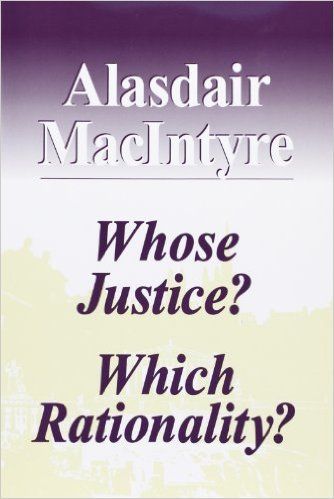
[This book] develops an account of rationality and justice that is tradition specific. -http://undpress.nd.edu. Whose Justice? Which Rationality?, the sequel to After Virtue, is a persuasive argument of there not being rationality that is not the rationality of some tradition. MacIntyre examines the problems presented by the existence of rival traditions of inquiry in the cases of four major philosophers: Aristotle, Augustine, Aquinas, and Hume.
When does a person qualify for protected and continuing life? At a time when technology can sustain marginal life, it is ever more important to understand what constitutes a person. What are the medical, ethical, mental, legal, and philosophical criteria that determine protectable human life? By providing a much-needed religious/philosophical context for the discussion – examining contemporary thinking on just what constitutes valuable life – Walters broadens his inquiry beyond the human to include other animals and also deals with the phenomenon of anencephalic infants, those who are born without higher brains. Searching for a measurable and humane standard of personhood, Walters looks at its current definition and declares it inadequate. He offers instead the idea of proximate personhood, with criteria for helping to determine which individuals possess a unique claim to life.
“When we act, our reason is slave to our passions, said Hume. And the two questions, according to Kant, that a philosopher should address are, What can I know? and What am I to do? The essays collected by editor Edna Ullmann-Margalit in Reasoning Practically address the often elusive link between reason, or theory, and practice, or action.
ما از اخلاق چه انتظاری داریم؟ این سوال شاید تاحدودی برای عموم مردم و یا متخصصان این رشته قابل پاسخ باشد؛ اینکه خوب بودن را به ما بیاموزد و در تنظیم روابط فردی م...

جشن کتاب تهران به ایستگاه سی و یکم رسیده است. حال و احوال نشر کتاب خوب نیست و باید فرهنگدوستان را به خرید و هدیه دادن کتاب ترغیب نمود. خانه اخلاقپژوهان جوان ب...

بنیاد کتابهای اخلاق اسلامی عمدتا پالایش جان از آلودگیها و آراستن آن به زیباییها است. اندیشه محوری این قبیل کتابها آن است که انسان فعلی آنی نیست که باید باشد...

-
0 Comments