Notice: تابع WP_Block_Type_Registry::register به طورنادرست فراخوانی شد. نامهای نوع بلوک نباید حروف بزرگ داشته باشند. لطفاً برای اطلاعات بیشتر، اشکال زدایی در وردپرس را مشاهده کنید. (این پیام در نگارش 5.0.0 افزوده شده است.) in /home/ethicsho/public_html/wp-includes/functions.php on line 5313
Warning: Use of undefined constant TDC_PATH_LEGACY - assumed 'TDC_PATH_LEGACY' (this will throw an Error in a future version of PHP) in /home/ethicsho/public_html/wp-content/plugins/td-composer/td-composer.php on line 109
Warning: Use of undefined constant TDSP_THEME_PATH - assumed 'TDSP_THEME_PATH' (this will throw an Error in a future version of PHP) in /home/ethicsho/public_html/wp-content/plugins/td-composer/td-composer.php on line 113 بایگانیهای Daniel Kolak - خانه اخلاق پژوهان جوان Notice: Trying to access array offset on value of type bool in /home/ethicsho/public_html/wp-content/plugins/wp-ulike/inc/general-functions.php on line 807
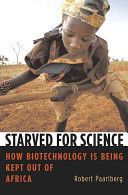
Producer: Heron & CraneHeading upcountry in Africa to visit small farms is absolutely exhilarating given the dramatic beauty of big skies, red soil, and arid vistas, but eventually the two-lane tarmac narrows to rutted dirt, and the journey must continue on foot. The farmers you eventually meet are mostly women, hardworking but visibly poor. They have no improved seeds, no chemical fertilizers, no irrigation, and with their meager crops they earn less than a dollar a day. Many are malnourished. Nearly two-thirds of Africans are employed in agriculture, yet on a per-capita basis they produce roughly 20 percent less than they did in 1970. Although modern agricultural science was the key to reducing rural poverty in Asia, modern farm science—including biotechnology—has recently been kept out of Africa. In Starved for Science Robert Paarlberg explains why poor African farmers are denied access to productive technologies, particularly genetically engineered seeds with improved resistance to insects and drought. He traces this obstacle to the current opposition to farm science in prosperous countries. Having embraced agricultural science to become well-fed themselves, those in wealthy countries are now instructing Africans—on the most dubious grounds—not to do the same. In a book sure to generate intense debate, Paarlberg details how this cultural turn against agricultural science among affluent societies is now being exported, inappropriately, to Africa. Those who are opposed to the use of agricultural technologies are telling African farmers that, in effect, it would be just as well for them to remain poor.
‘These essays, including a masterful introduction by the editors & a useful glossary of Pali terms, constitute a rich addition to the emerging field of comparative religion ethics & demonstrate the fruitfulness of collaborative studies.’–Journal of Religion.
“What is the purpose of the economy? To answer this intriguing and fundamental question, this book provides a systematic approach to economic ethics and constructs a relationship between the economy and morality; it expounds theoretical and practical issues of economic philosophy along two dimensions: values and institutions.” “Economists, philosophers and scholars of social policy and the welfare state will all find this book of great interest – part of its appeal lying in its interdisciplinary approach to contemporary economic, political and social systems based on the synthesis of moral values.”–BOOK JACKET.
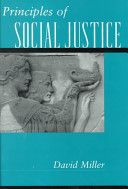
Social justice has been the animating ideal of democratic governments throughout the twentieth century. Even those who oppose it recognize its potency. Yet the meaning of social justice remains obscure, and existing theories put forward by political philosophers to explain it have failed to capture the way people in general think about issues of social justice. This book develops a new theory. David Miller argues that principles of justice must be understood contextually, with each principle finding its natural home in a different form of human association. Because modern societies are complex, the theory of justice must be complex, too. The three primary components in Miller’s scheme are the principles of desert, need, and equality.The book uses empirical research to demonstrate the central role played by these principles in popular conceptions of justice. It then offers a close analysis of each concept, defending principles of desert and need against a range of critical attacks, and exploring instances when justice requires equal distribution and when it does not. Finally, it argues that social justice understood in this way remains a viable political ideal even in a world characterized by economic globalization and political multiculturalism. Accessibly written, and drawing upon the resources of both political philosophy and the social sciences, this book will appeal to readers with interest in public policy as well as to students of politics, philosophy, and sociology.
ما از اخلاق چه انتظاری داریم؟ این سوال شاید تاحدودی برای عموم مردم و یا متخصصان این رشته قابل پاسخ باشد؛ اینکه خوب بودن را به ما بیاموزد و در تنظیم روابط فردی م...

جشن کتاب تهران به ایستگاه سی و یکم رسیده است. حال و احوال نشر کتاب خوب نیست و باید فرهنگدوستان را به خرید و هدیه دادن کتاب ترغیب نمود. خانه اخلاقپژوهان جوان ب...

بنیاد کتابهای اخلاق اسلامی عمدتا پالایش جان از آلودگیها و آراستن آن به زیباییها است. اندیشه محوری این قبیل کتابها آن است که انسان فعلی آنی نیست که باید باشد...

-
0 Comments