Notice: تابع WP_Block_Type_Registry::register به طورنادرست فراخوانی شد. نامهای نوع بلوک نباید حروف بزرگ داشته باشند. لطفاً برای اطلاعات بیشتر، اشکال زدایی در وردپرس را مشاهده کنید. (این پیام در نگارش 5.0.0 افزوده شده است.) in /home/ethicsho/public_html/wp-includes/functions.php on line 5313
Warning: Use of undefined constant TDC_PATH_LEGACY - assumed 'TDC_PATH_LEGACY' (this will throw an Error in a future version of PHP) in /home/ethicsho/public_html/wp-content/plugins/td-composer/td-composer.php on line 109
Warning: Use of undefined constant TDSP_THEME_PATH - assumed 'TDSP_THEME_PATH' (this will throw an Error in a future version of PHP) in /home/ethicsho/public_html/wp-content/plugins/td-composer/td-composer.php on line 113 بایگانیهای Christian Kanzian - خانه اخلاق پژوهان جوان Notice: Trying to access array offset on value of type bool in /home/ethicsho/public_html/wp-content/plugins/wp-ulike/inc/general-functions.php on line 807
It is widely recognized that American culture is both exceptionally religious and exceptionally violent. Americans participate in religious communities in high numbers, yet American citizens also own guns at rates far beyond those of citizens in other industrialized nations. Since9/11, United States scholars have understandably discussed religious violence in terms of terrorist acts, a focus that follows United States policy. Yet, according to Jon Pahl, to identify religious violence only with terrorism fails to address the long history of American violence rooted in religion throughout the country’s history. In essence, Americans have found ways to consider blessed some very brutal attitudes and behaviors both domestically and globally.In Empire of Sacrifice, Pahl explains how both of these distinctive features of American culture work together by exploring how constructions along the lines of age, race, and gender have operated to centralize cultural power across American civil or cultural religions in ways that dont always appear to be “religious” at all. Pahl traces the development of these forms of systemic violence throughout American history, using evidence from popular culture, including movies such as Rebel without a Cause and Reefer Madness and works of literature such as The Narrative of the Life of Frederick Douglass and The Handmaid’s Tale, to illuminate historical events. Throughout, Pahl focuses an intense light on the complex and durable interactions between religion and violence in American history, from Puritan Boston to George W. Bushs Baghdad.
InClassical Individualism,Tibor Machan argues that individualism is far from being dead. Machan identifies, develops and defends what he calls classical individualism: the sort with roots in Aristotle rather than Hobbes. This type of individualism does not reject the social nature of the human being, but finds that every human being is also a self-directed agent who is responsible for what he or she does. Machan rejects all types of collectivism, including communitarianism, ethnic solidarity, racial unity, and gender identity. The ideas inClassical Individualismhave important social and political implications, and will be of interest to anyone concerned with the notion of individuality and individual responsibility.
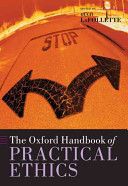
The Oxford Handbook of Practical Ethics is a lively and authoritative guide to current thought about ethical issues in all areas of human activity–personal, medical, sexual, social, political, judicial, and international, from the natural world to the world of business. Twenty-eight topics are covered in specially written surveys by leading figures in their fields: each gives an authoritative map of the ethical terrain, explaining how the debate has developed in recent years, engaging critically with the most notable work in the area, and pointing directions for future work. The Handbook will be essential reading, and a fascinating resource of ideas and information, for academics and students across a wide range of disciplines.
ما از اخلاق چه انتظاری داریم؟ این سوال شاید تاحدودی برای عموم مردم و یا متخصصان این رشته قابل پاسخ باشد؛ اینکه خوب بودن را به ما بیاموزد و در تنظیم روابط فردی م...

جشن کتاب تهران به ایستگاه سی و یکم رسیده است. حال و احوال نشر کتاب خوب نیست و باید فرهنگدوستان را به خرید و هدیه دادن کتاب ترغیب نمود. خانه اخلاقپژوهان جوان ب...

بنیاد کتابهای اخلاق اسلامی عمدتا پالایش جان از آلودگیها و آراستن آن به زیباییها است. اندیشه محوری این قبیل کتابها آن است که انسان فعلی آنی نیست که باید باشد...

-
0 Comments