Notice: تابع WP_Block_Type_Registry::register به طورنادرست فراخوانی شد. نامهای نوع بلوک نباید حروف بزرگ داشته باشند. لطفاً برای اطلاعات بیشتر، اشکال زدایی در وردپرس را مشاهده کنید. (این پیام در نگارش 5.0.0 افزوده شده است.) in /home/ethicsho/public_html/wp-includes/functions.php on line 5313
Warning: Use of undefined constant TDC_PATH_LEGACY - assumed 'TDC_PATH_LEGACY' (this will throw an Error in a future version of PHP) in /home/ethicsho/public_html/wp-content/plugins/td-composer/td-composer.php on line 109
Warning: Use of undefined constant TDSP_THEME_PATH - assumed 'TDSP_THEME_PATH' (this will throw an Error in a future version of PHP) in /home/ethicsho/public_html/wp-content/plugins/td-composer/td-composer.php on line 113 بایگانیهای Charles T. Mathewes - خانه اخلاق پژوهان جوان Notice: Trying to access array offset on value of type bool in /home/ethicsho/public_html/wp-content/plugins/wp-ulike/inc/general-functions.php on line 807
At the Roots of Christian Bioethics explores Professor H. Tristram Engelhardt, Jr.s pursuit for the decisive ground of the meaning of human existence and knowledge of appropriate moral choice. Engelhardt has been the most influential, cogent, but critical voice within bioethics of the past several decades. The essays in this volume compass epistemological, methodological and topical contributions to bioethics, political theory, and Christian theology. Each explores Engelhardts diagnosis of the contemporary social and cultural crisis, seeking to make sense of the decidedly post-Christian and often openly anti-Christian ethics that dominates public morality and politic policy.Each author investigates Engelhardts personal and tireless enquiry to secure ultimate moral foundations as well as to recognize the full implications of the results of his investigations: that Christian bioethics does not originate in human reason but in the command of God.
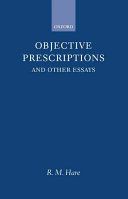
R. M. Hare has brought together in this volume the best of his uncollected essays in moral philosophy, several of them previously unpublished or revised for this collection. They span the whole range of his ethical interests, from the most abstract to the most down-to-earth. The reader willfind here the bases of his ethical theory in Kantian prescriptivism, utilitarianism, and the logic of imperatives, and will see that theory applied to issues of bioethics, medical ethics, business ethics, loyalty and obedience, and racism. The essays display the author’s characteristic clarity andvigour; some of them are polemical, targeting particular opponents and rival theories. The volume provides a compelling demonstration of Hare’s commitment to bringing together the theoretical and the practical in ethics.
Philippa Foot is one of the most original and widely respected philosophers of our time; her work has exerted a lasting influence on the development of moral philosophy. In tribute to her, twelve leading philosophers from both sides of the Atlantic have contributed essays exploring the various topics in moral philosophy to which she has made a distinctive contribution–virtue ethics, naturalism, non-cognitivism, relativism, categorical requirements, and the role of rationality in morality.
Every day, people face tough choices in which their basic moral principles seem to be in conflict. Now, the Director of the Institute for Global Ethics offers a clear strategy for solving ethical dilemmas. Rushworth Kidder explains ends-based, rule-based, and care-based decision making–and uses real-life examples to show how these principles can applied to thorny problems.
In Oughts and Thoughts, Anandi Hattiangadi provides an innovative response to the argument for meaning skepticism set out by Saul Kripke in Wittgenstein on Rules and Private Language. Kripke asks what makes it the case that anybody ever means anything by any word, and argues that there are no facts of the matter as to what anybody ever means. Kripke’s argument has inspired a lively and extended debate in the philosophy of language, as it raises some of the most fundamental issues in the field: namely, the reality, privacy, and normativity of meaning. Hattiangadi argues that in order to achieve the radical conclusion that there are no facts as to what a person means by a word, the skeptic must rely on the thesis that meaning is normative, and that this thesis fails. Since any “skeptical solution” to the skeptical problem is irremediably incoherent, Hattiangadi concludes that there must be a fact of the matter about what we mean. In addition to providing an overview of the debate on meaning and content skepticism, Hattiangadi presents a detailed discussion of the contributions made by Simon Blackburn, Paul Boghossian, Robert Brandom, Fred Dretske, John McDowell, and Crispin Wright, among others, to the controversy surrounding Kripke’s argument. The issues considered include the normativity of meaning and its relation to the normativity of moral judgments, reductive and non-reductive theories of meaning, deflationism about truth and meaning, and the privacy of meaning.
ما از اخلاق چه انتظاری داریم؟ این سوال شاید تاحدودی برای عموم مردم و یا متخصصان این رشته قابل پاسخ باشد؛ اینکه خوب بودن را به ما بیاموزد و در تنظیم روابط فردی م...

جشن کتاب تهران به ایستگاه سی و یکم رسیده است. حال و احوال نشر کتاب خوب نیست و باید فرهنگدوستان را به خرید و هدیه دادن کتاب ترغیب نمود. خانه اخلاقپژوهان جوان ب...

بنیاد کتابهای اخلاق اسلامی عمدتا پالایش جان از آلودگیها و آراستن آن به زیباییها است. اندیشه محوری این قبیل کتابها آن است که انسان فعلی آنی نیست که باید باشد...

-
0 Comments