Notice: تابع WP_Block_Type_Registry::register به طورنادرست فراخوانی شد. نامهای نوع بلوک نباید حروف بزرگ داشته باشند. لطفاً برای اطلاعات بیشتر، اشکال زدایی در وردپرس را مشاهده کنید. (این پیام در نگارش 5.0.0 افزوده شده است.) in /home/ethicsho/public_html/wp-includes/functions.php on line 5313
Warning: Use of undefined constant TDC_PATH_LEGACY - assumed 'TDC_PATH_LEGACY' (this will throw an Error in a future version of PHP) in /home/ethicsho/public_html/wp-content/plugins/td-composer/td-composer.php on line 109
Warning: Use of undefined constant TDSP_THEME_PATH - assumed 'TDSP_THEME_PATH' (this will throw an Error in a future version of PHP) in /home/ethicsho/public_html/wp-content/plugins/td-composer/td-composer.php on line 113 بایگانیهای Charles L. Griswold - خانه اخلاق پژوهان جوان Notice: Trying to access array offset on value of type bool in /home/ethicsho/public_html/wp-content/plugins/wp-ulike/inc/general-functions.php on line 807
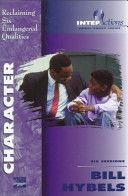
There are no discount character stores.Courage. Discipline. Confidence. Patience. Endurance. Contentment. They’re qualities that can take a lifetime to acquire. Qualities money can’t buy. But here’s good news: God says you can have them all!In Character, you will discover how firmly God is committed to forming noble qualities within you. He wants your character to deepen even more than you do–and He has the power to do something about it! If you’re ready to journey toward the kind of character you’ve always admired, here is a path of radical, God-empowered change and growth–and a transformed, more Christ-like you.Interactions–a powerful, challenging tool for building deep relationships between you and your group member, and you and God. Interaction is far more than another group Bible study. It’s a cutting-edge series designed to help small group participants develop into fully devoted followers of Christ.
In this forward-looking volume the invited authors argue that the world must critically assess the potential pitfalls of new technologies in advance. Many of the developments in modern technology are complex, risky, and, to begin with, cloaked in uncertainty. How should we deal with such developments – that may not only have positive effects (such as an increase of our well-being or an improved ability to control and cure diseases) but also negative effects for human beings and the environment (such as global warming or the medicalisation of human beings)? The fact that technological ‘progress’ often occurs under conditions of uncertainty makes the issue even more pressing. Frequently, we are completely devoid of information concerning the applications of new technologies and what their impact will be on human beings and the environment. History has shown that taking a retrospective perspective by passively awaiting the practical consequences of new technologies is both dangerous and inappropriate, as often damage will already have occurred. The genie is well and truly out of the bottle and those who once had control over the new processes no longer have that power, as the science will have a momentum of its own, unheeding of belated attempts to stop it or slow it down. What is more, technology is often ‘logically malleable’, with far wider applications than even we can anticipate. Thus, say editors Sollie and Duwell, an anticipatory attitude is required towards dealing with new technology. This book addresses methodological issues with regard to the ethical evaluation of new and emerging technology. It focuses specifically on the concept of uncertainty that, unlike the notion of risk, is greatly undervalued in the field of ethics. It is a must-read for anyone involved in (ethical) technology assessment: philosophers, those involved in science and technology studies, and policy-makers alike.
One of the most dynamic aspects of the Islamic revival during the past two centuries has been the rethinking of Islamic political thought. A broad range of actors, ideas, and ideologies characterize the debate on how Islamic ethics and law should be manifested in modern institutions. Yet this aspect of the “return to Islam” has been neglected by policymakers, the media, and even many scholars, who equate “political Islam” with merely one strand, labeled “Islamic fundamentalism.” Bringing together ten essays from six volumes of the Ethikon Series in Comparative Ethics, this book gives a rounded treatment to the subject of Islamic political ethics.The authors explore the Islamic ethics of civil society, boundaries, pluralism, and war and peace. They consider questions of diversity, discussing, among other subjects, Islamic regimes’ policies regarding women and religious minorities. The chapters on war and peace take up such crucial and timely issues as the Islamic ethics of jihad, examining both the legitimate conditions for the declaration of war and the proper conduct of war.In their discussions, the contributors analyze the works of classical writers as well as the full range of modern reinterpretations. But beyond these analyses of previous and contemporary thinkers, the essays also reach back to the two fundamental sources of Islamic ethics–the Qur’an and traditions of the Prophet–to develop fresh insights into how Islam and Muslims can contribute to human society in the twenty-first century.The authors are Dale F. Eickelman, Hasan Hanafi, Sohail H. Hashmi, Farhad Kazemi, John Kelsay, Muhammad Khalid Masud, Sulayman Nyang, Bassam Tibi, and M. Raquibuz Zaman.From the foreword by Jack Miles:”Western foreign ministers and secretaries of state may have to learn a little theology if the looming clash between embattled elements both in the West and in the Muslim umma is to yield to disengagement and peaceful coexistence, to say nothing of fruitful collaboration. . . . It is, then, no idle academic exercise that the thinkers whose work is collected here have in hand. The long-term practical importance of their work can scarcely be overstated.”
ما از اخلاق چه انتظاری داریم؟ این سوال شاید تاحدودی برای عموم مردم و یا متخصصان این رشته قابل پاسخ باشد؛ اینکه خوب بودن را به ما بیاموزد و در تنظیم روابط فردی م...

جشن کتاب تهران به ایستگاه سی و یکم رسیده است. حال و احوال نشر کتاب خوب نیست و باید فرهنگدوستان را به خرید و هدیه دادن کتاب ترغیب نمود. خانه اخلاقپژوهان جوان ب...

بنیاد کتابهای اخلاق اسلامی عمدتا پالایش جان از آلودگیها و آراستن آن به زیباییها است. اندیشه محوری این قبیل کتابها آن است که انسان فعلی آنی نیست که باید باشد...

-
0 Comments