Notice: تابع WP_Block_Type_Registry::register به طورنادرست فراخوانی شد. نامهای نوع بلوک نباید حروف بزرگ داشته باشند. لطفاً برای اطلاعات بیشتر، اشکال زدایی در وردپرس را مشاهده کنید. (این پیام در نگارش 5.0.0 افزوده شده است.) in /home/ethicsho/public_html/wp-includes/functions.php on line 5313
Warning: Use of undefined constant TDC_PATH_LEGACY - assumed 'TDC_PATH_LEGACY' (this will throw an Error in a future version of PHP) in /home/ethicsho/public_html/wp-content/plugins/td-composer/td-composer.php on line 109
Warning: Use of undefined constant TDSP_THEME_PATH - assumed 'TDSP_THEME_PATH' (this will throw an Error in a future version of PHP) in /home/ethicsho/public_html/wp-content/plugins/td-composer/td-composer.php on line 113 بایگانیهای Carol W. Voeller - خانه اخلاق پژوهان جوان Notice: Trying to access array offset on value of type bool in /home/ethicsho/public_html/wp-content/plugins/wp-ulike/inc/general-functions.php on line 807
This lecture is MacIntyre’s most explicit defense of his approach to Thomistic metaphysics. This lecture follows MacIntyre’s argument in After Virtue that modern philosophy has very literally lost its way, and the problems it faces are insoluble. The difficulties are twofold, and stem from the Cartesian turn to the self in the XVith century. Modern philosophy cannot reestablish contact with the outside world when our starting point is self-knowledge, and modern philosophy also cannot accept that any principle could be ‘first’ in any absolute sense of the word, because final causality has been rejected. MacIntyre claims that Thomism does not suffer these defects, but he cautions against a premature victory, because Thomism has been decisively rejected by modern philosophy and modern science, so that there is no chance of effective dialogue between Thomism and other traditions. The very vocabulary of Thomism is a stumbling block. However, modern philosophy has not been able to completely eliminate the Aristotelian roots of all philosophy and science, and so keeps returning to themes that it cannot adequately address. Thus MacIntyre proposes to use the tools of modern philosophies, such as the genealogical narrative, to help reconnect modern philosophy and Thomism. A historical approach might make the rejection, and the reasons for it, evident, and allow fruitful dialogue by allowing for the fruits of modern philosophy to be discussed in a context that will allow them to finally flourish. Essentially, the goal is to enable contemporary philosophy to become more itself by freeing it from the tension created by the premises that cast doubt upon the philosophical enterprise.
This book explores the thesis that legal roles force people to engage in moral combat, an idea that is implicit in the assumption that citizens may be morally required to disobey unjust laws, while judges may be morally required to punish citizens for civil disobedience. Heidi Hurd advances the surprising argument that the law cannot require us to do what morality forbids. Moral Combat is a sophisticated, well-conceived and carefully argued book on a very important and controversial topic at the junction between legal and political philosophy. It will be of interest to moral, legal, and political philosophers, as well as teachers and students of professional ethics in law.
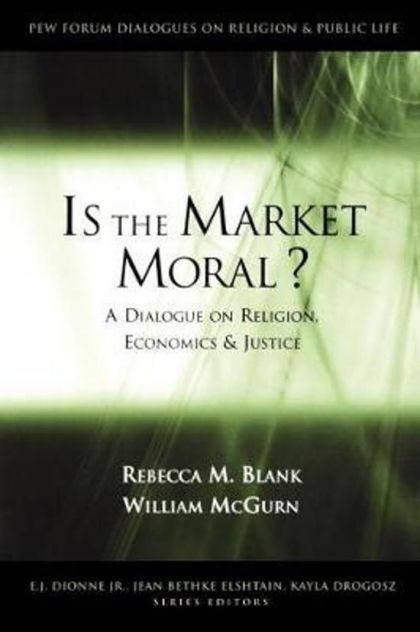
In the great tradition of moral argument about the nature of the economic market, Rebecca Blank and William McGurn join to debate the fundamental questionsequality and efficiency, productivity and social justice, individual achievement and personal rights in the workplace, the costs and benefits of corporate and entrepreneurial capitalism. And they do so grounded in both economic sophistication and religious commitment.Rebecca Blank is an economist by training and describes herself as culturally Protestant in the habits of mind and heart. She has also chaired the committee that wrote the statement on Christian faith and economic life adopted by the United Church of Christ. Addressing market failure, for her, requires that sometimes “freedom to choose” give way to other human values.William McGurn, a journalist and a Roman Catholic, uses his expertise in economics to reflect on the teachings of the church concerning the morality of the market. For McGurn, humans reach their fullest potential when they are free from the constraints of others. He writes that “our quarrel is not so much with Adam Smith or Milton Friedman but with the Providence that so clearly designed man to be his most prosperous at his most free.”This book grapples with the new imperatives of a global economy while working in the classic tradition of political economy which always treated seriously the questions of morality, justice, productivity, and freedom.
ما از اخلاق چه انتظاری داریم؟ این سوال شاید تاحدودی برای عموم مردم و یا متخصصان این رشته قابل پاسخ باشد؛ اینکه خوب بودن را به ما بیاموزد و در تنظیم روابط فردی م...

جشن کتاب تهران به ایستگاه سی و یکم رسیده است. حال و احوال نشر کتاب خوب نیست و باید فرهنگدوستان را به خرید و هدیه دادن کتاب ترغیب نمود. خانه اخلاقپژوهان جوان ب...

بنیاد کتابهای اخلاق اسلامی عمدتا پالایش جان از آلودگیها و آراستن آن به زیباییها است. اندیشه محوری این قبیل کتابها آن است که انسان فعلی آنی نیست که باید باشد...

-
0 Comments