Notice: تابع WP_Block_Type_Registry::register به طورنادرست فراخوانی شد. نامهای نوع بلوک نباید حروف بزرگ داشته باشند. لطفاً برای اطلاعات بیشتر، اشکال زدایی در وردپرس را مشاهده کنید. (این پیام در نگارش 5.0.0 افزوده شده است.) in /home/ethicsho/public_html/wp-includes/functions.php on line 5313
Warning: Use of undefined constant TDC_PATH_LEGACY - assumed 'TDC_PATH_LEGACY' (this will throw an Error in a future version of PHP) in /home/ethicsho/public_html/wp-content/plugins/td-composer/td-composer.php on line 109
Warning: Use of undefined constant TDSP_THEME_PATH - assumed 'TDSP_THEME_PATH' (this will throw an Error in a future version of PHP) in /home/ethicsho/public_html/wp-content/plugins/td-composer/td-composer.php on line 113 بایگانیهای Burke Anthony - خانه اخلاق پژوهان جوان Notice: Trying to access array offset on value of type bool in /home/ethicsho/public_html/wp-content/plugins/wp-ulike/inc/general-functions.php on line 807
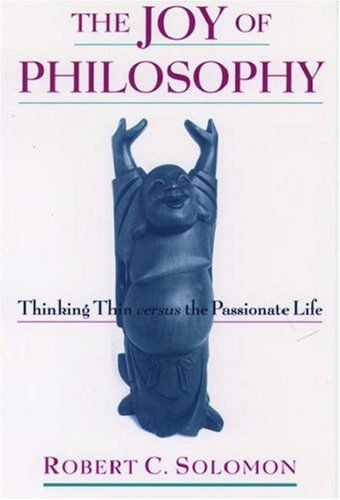
The Joy of Philosophy is a return to some of the perennial questions of philosophy–questions about the meaning of life; about death and tragedy; about the respective roles of rationality and passion in the good life; about love, compassion, and revenge; about honesty, deception, and betrayal; and about who we are and how we think about who we are. Recapturing the heart-felt confusion and excitement that originally brings us all to philosophy, internationally renowned teacher and lecturer Robert C. Solomon offers both a critique of contemporary philosophy and an invitation to engage in philosophy in a different way. He attempts to save philosophy from itself and its self-imposed diet of thin arguments and logical analysis to recover the richness and complexity of life in thought. Solomon defends the passionate life in contrast to the life of thoughtful contemplation idealized by so many philosophers, attempting to recapture the kind of philosophy that Nietzsche celebrated as a “joyful wisdom.”
This second edition of the Oxford Handbook of Free Will is intended to be a sourcebook and guide to current work on free will and related subjects. Its focus is on writings of the past forty years, in which there has been a resurgence of interest in traditional issues about the freedom of the will in the light of new developments in the sciences, philosophy and humanistic studies. Special attention is given to research on free will of the first decade of the twenty-first century since the publication of the first edition of the Handbook. All the essays have been newly written or rewritten for this volume. In addition, there are new essayists and essays surveying topics that have become prominent in debates about free will in the past decade, including new work on the relation of free will to physics, the neurosciences, cognitive science, psychology and empirical philosophy, new versions of traditional views (compatibilist, incompatibilist, libertarian, etc.) and new views (e.g., revisionism) that have emerged. The twenty-eight essays by prominent international scholars and younger scholars cover a host of free will related issues, such as moral agency and responsibility, accountability and blameworthiness in ethics, autonomy, coercion and control in social theory, criminal liability, responsibility and punishment in legal theory, issues about the relation of mind to body, consciousness and the nature of action in philosophy of mind and the cognitive and neurosciences, questions about divine foreknowledge, providence and human freedom in philosophy of religion, and general metaphysical questions about necessity and possibility, determinism, time and chance, quantum reality, causation and explanation.
Promoting Islam as a defender of human rights is laden with difficulties. Advocates of human rights will readily point out numerous humanitarian failures carried out in the name of Islam. In The Rights of God, Irene Oh looks at human rights and Islam as a religious issue rather than a political or legal one and draws on three revered Islamic scholars to offer a broad range of perspectives that challenge our assumptions about the role of religion in human rights. The theoretical shift from the conception of morality based in natural duty and law to one of rights has created tensions that hinder a fruitful exchange between human rights theorists and religious thinkers. Does the static identification of human rights with lists of specific rights, such as those found in the Universal Declaration of Human Rights, make sense given the cultural, historical, and religious diversity of the societies in which these rights are to be respected and implemented? In examining human rights issues of the contemporary Islamic world, Oh illustrates how the value of religious scholarship cannot be overestimated. Oh analyzes the commentaries of Abul A’la Maududi, Sayyid Qutb, and Abdolkarim Soroush — all prominent and often controversial Islamic thinkers — on the topics of political participation, religious toleration, and freedom of conscience. While Maududi and Qutb represent traditional Islam, and Soroush a more reform and Western-friendly approach, all three contend that Islam is indeed capable of accommodating and advocating human rights. Whereas disentangling politics and culture from religion is never easy, Oh shows that the attempt must be made in order to understand and overcome the historical obstacles that prevent genuine dialogue from taking place across religious and cultural boundaries.
ما از اخلاق چه انتظاری داریم؟ این سوال شاید تاحدودی برای عموم مردم و یا متخصصان این رشته قابل پاسخ باشد؛ اینکه خوب بودن را به ما بیاموزد و در تنظیم روابط فردی م...

جشن کتاب تهران به ایستگاه سی و یکم رسیده است. حال و احوال نشر کتاب خوب نیست و باید فرهنگدوستان را به خرید و هدیه دادن کتاب ترغیب نمود. خانه اخلاقپژوهان جوان ب...

بنیاد کتابهای اخلاق اسلامی عمدتا پالایش جان از آلودگیها و آراستن آن به زیباییها است. اندیشه محوری این قبیل کتابها آن است که انسان فعلی آنی نیست که باید باشد...

-
0 Comments