Notice: تابع WP_Block_Type_Registry::register به طورنادرست فراخوانی شد. نامهای نوع بلوک نباید حروف بزرگ داشته باشند. لطفاً برای اطلاعات بیشتر، اشکال زدایی در وردپرس را مشاهده کنید. (این پیام در نگارش 5.0.0 افزوده شده است.) in /home/ethicsho/public_html/wp-includes/functions.php on line 5313
Warning: Use of undefined constant TDC_PATH_LEGACY - assumed 'TDC_PATH_LEGACY' (this will throw an Error in a future version of PHP) in /home/ethicsho/public_html/wp-content/plugins/td-composer/td-composer.php on line 109
Warning: Use of undefined constant TDSP_THEME_PATH - assumed 'TDSP_THEME_PATH' (this will throw an Error in a future version of PHP) in /home/ethicsho/public_html/wp-content/plugins/td-composer/td-composer.php on line 113 بایگانیهای Brooks - خانه اخلاق پژوهان جوان Notice: Trying to access array offset on value of type bool in /home/ethicsho/public_html/wp-content/plugins/wp-ulike/inc/general-functions.php on line 807
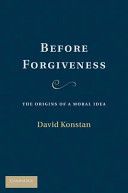
“In this book, David Konstan argues that the modern concept of interpersonal forgiveness, in the full sense of the term, did not exist in ancient Greece and Rome. Even more startlingly, it is not fully present in the Hebrew Bible, nor again in the New Testament, or in the early Jewish and Christian commentaries on the Holy Scriptures. It would still be centuries– many centuries– before the idea of interpersonal forgiveness, with its accompanying ideas of apology, remorse, and a change of heart on thepart of the wrongdoer, would emerge. For all its vast importance today in religion, law, politics, and psychotherapy, interpersonal forgiveness is creation of the 18th and 19th centuries, when the Christian concept of divine forgiveness was finally secularized. Forgiveness was God’s province, and it took a revolution in thought to bring it to earth and make it a human trait”–
When Did I Begin? investigates the theoretical, moral, and biological issues surrounding the debate over the beginning of human life. With the continuing controversy over the use of in vitro fertilization techniques and experimentation with human embryos, these issues have been forced into the arena of public debate. Following a detailed analysis of the history of the question, Reverend Ford argues that a human individual could not begin before definitive individuation occurs with the appearance of the primitive streak about two weeks after fertilization. This, he argues, is when it becomes finally known whether one or more human individuals are to form from a single egg. Thus, he questions the idea that the fertilized egg itself could be regarded as the beginning of the development of the human individual. The author also differs sharply, however, from those who would delay the beginning of the human person until the brain is formed, or until birth or the onset of conscious states.
Art and Moralityis a collection of groundbreaking new papers on the theme of aesthetics and ethics, and the link between the two subjects. A group of world-class contributors tackle the important question that arise when one thinks about the moral dimensions of art and the aesthetic dimension of moral life. The volume is a significant contribution to the philosophical literature, opening up unexplored questions and shedding new light on more traditional debates in aesthetics. The topics explored include the relation of aesthetic to ethical judgment; the relation of artistic experience to moral consciousness; the moral status of fiction; the concepts of sentimentality and decadence; the moral dimension of critical practice, pictorial art and music; the moral significance of tragedy; and the connections between artistic and moral issues elaborated in the writings of central figures in modern philosophy such as Kant, Schopenhauer and Nietzsche.
ما از اخلاق چه انتظاری داریم؟ این سوال شاید تاحدودی برای عموم مردم و یا متخصصان این رشته قابل پاسخ باشد؛ اینکه خوب بودن را به ما بیاموزد و در تنظیم روابط فردی م...

جشن کتاب تهران به ایستگاه سی و یکم رسیده است. حال و احوال نشر کتاب خوب نیست و باید فرهنگدوستان را به خرید و هدیه دادن کتاب ترغیب نمود. خانه اخلاقپژوهان جوان ب...

بنیاد کتابهای اخلاق اسلامی عمدتا پالایش جان از آلودگیها و آراستن آن به زیباییها است. اندیشه محوری این قبیل کتابها آن است که انسان فعلی آنی نیست که باید باشد...

-
0 Comments