Notice: تابع WP_Block_Type_Registry::register به طورنادرست فراخوانی شد. نامهای نوع بلوک نباید حروف بزرگ داشته باشند. لطفاً برای اطلاعات بیشتر، اشکال زدایی در وردپرس را مشاهده کنید. (این پیام در نگارش 5.0.0 افزوده شده است.) in /home/ethicsho/public_html/wp-includes/functions.php on line 5313
Warning: Use of undefined constant TDC_PATH_LEGACY - assumed 'TDC_PATH_LEGACY' (this will throw an Error in a future version of PHP) in /home/ethicsho/public_html/wp-content/plugins/td-composer/td-composer.php on line 109
Warning: Use of undefined constant TDSP_THEME_PATH - assumed 'TDSP_THEME_PATH' (this will throw an Error in a future version of PHP) in /home/ethicsho/public_html/wp-content/plugins/td-composer/td-composer.php on line 113 بایگانیهای Benjamin R. Tilghman - خانه اخلاق پژوهان جوان Notice: Trying to access array offset on value of type bool in /home/ethicsho/public_html/wp-content/plugins/wp-ulike/inc/general-functions.php on line 807
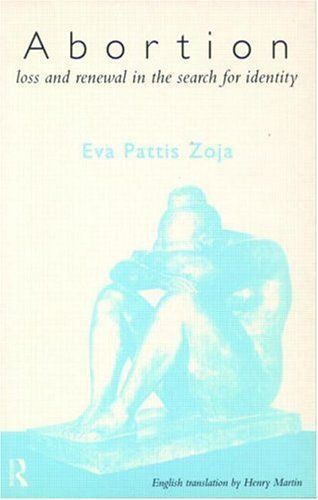
The debate on abortion has tended to avoid the psychological significance of an unwanted pregnancy, dominated instead by the strong emotions the subject excites. In this book Eva Pattis Zoja examines the thoughts and feelings that surround the decision to end a pregnancy, through the dreams, diary entries and reports of the women themselves. Abortionproposes the controversial thesis that although contraception is so readily available that the occurrence of unwanted pregnancy should become nil, abortion has now become a rite of passage in womanhood. While acknowledging the painful nature of the subject, the author suggests that this decision to abort as a way to development is one beyond the explanation of modern, enlightened rationalism.
The dominance of nationalism as ideology and the resurgence of nationalist and ethnic conflict since the end of the Cold War, demands further analysis of the complex interplay between nation, state, sovereignty and self determination. Placing the phenomenon of nationalism squarely within the continuing modernist project, contrary to many commentators who regard nationalism today merely as an atavistic counter-modernist experience, Bradshaw brings together political theory, history, cultural studies and international relations in order to investigate both the appeal and the dangers of nationalism in contemporary world politics.
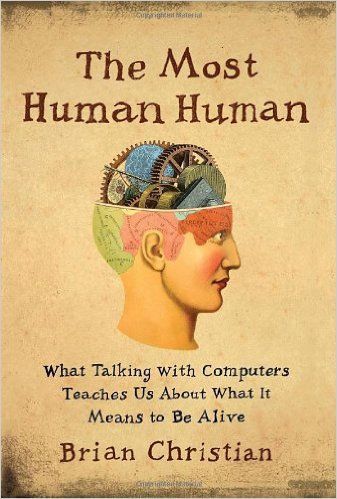
For the first time in history, we are interacting with computer programmes so sophisticated that we think they’re human beings . . .This is a remarkable feat of human ingenuity, but what does it say about our humanity? Are we really no better at being human than the machines we’ve created? In this brilliantly witty and inspiring investigation, Brian Christian explores first-hand the urgent moral and practical implications of this remarkable development. Drawing on science, philosophy, literature and the arts, and touching on aspects of life as diverse as language, work, school, chess, speed-dating, art, video games, psychiatry and the law, The Most Human Human shows that far from being a threat to our humanity, computers provide a better means than ever before of understanding what it is.In this book, you will discover . . . Why computers can fly planes but can’t ride bikes How Deep Blue beat Gary Kasparov but why it didn’t count Why arguments have in common with amnesia Why speaking to a computer is like a bad date What life is all about and how to live it better’A lively personable read and an empowering affirmation of our species.’ 4* Time Out ‘A fast-paced, witty and thoroughly winning style . . . fabulous.’ Publishers Weekly’An eye-opening inquest.’ David Eagleman, author’Strange, fertile and sometimes beautiful.’ Matthew Crawford, author
At the core of Kant’s ethics lies the claim that if there is a supreme principle of morality, then it is not a utilitarian or Aristotelian perfectionist principle, or even a principle resembling the Ten Commandments. The only viable candidate for the supreme principle of morality is the Categorial Imperative. This book is the most detailed investigation of thie claim. It constructs a new, criterial reading of Kant’s derivation of one version of the Categorial Imperative: The Formula of Universal Law. This reading shows this derivation to be far more compelling than contemporary philosophers tend to believe. It also reveals a novel approach to deriving another version of the Categorial Imperative, the Formula of Humanity, a principle widely considered to be the most attractive Kantian candidate for the supreme principle of morality. Lucidly written and dealing with a foundational topic in the history of ethics, this book will be important not just for Kant scholars but for a broad swath of students of philosophy. Samuel Kerstein is Associate Professor of Philosophy at the University of Maryland, College Park
How should we respond when some of our basic beliefs are put into question? What makes a human body distinctively human? Why is truth an important good? These are among the questions explored in this collection of essays by Alasdair MacIntyre, one of the most creative and influential philosophers working today. Ten of MacIntyre’s most influential essays written over almost thirty years are collected together here for the first time. They range over such topics as the issues raised by different types of relativism, what it is about human beings that cannot be understood by the natural sciences, the relationship between the ends of life and the ends of philosophical writing, and the relationship of moral philosophy to contemporary social practice. They will appeal to a wide range of readers across philosophy and especially in moral philosophy, political philosophy, and theology.
ما از اخلاق چه انتظاری داریم؟ این سوال شاید تاحدودی برای عموم مردم و یا متخصصان این رشته قابل پاسخ باشد؛ اینکه خوب بودن را به ما بیاموزد و در تنظیم روابط فردی م...

جشن کتاب تهران به ایستگاه سی و یکم رسیده است. حال و احوال نشر کتاب خوب نیست و باید فرهنگدوستان را به خرید و هدیه دادن کتاب ترغیب نمود. خانه اخلاقپژوهان جوان ب...

بنیاد کتابهای اخلاق اسلامی عمدتا پالایش جان از آلودگیها و آراستن آن به زیباییها است. اندیشه محوری این قبیل کتابها آن است که انسان فعلی آنی نیست که باید باشد...

-
0 Comments