Notice: تابع WP_Block_Type_Registry::register به طورنادرست فراخوانی شد. نامهای نوع بلوک نباید حروف بزرگ داشته باشند. لطفاً برای اطلاعات بیشتر، اشکال زدایی در وردپرس را مشاهده کنید. (این پیام در نگارش 5.0.0 افزوده شده است.) in /home/ethicsho/public_html/wp-includes/functions.php on line 5313
Warning: Use of undefined constant TDC_PATH_LEGACY - assumed 'TDC_PATH_LEGACY' (this will throw an Error in a future version of PHP) in /home/ethicsho/public_html/wp-content/plugins/td-composer/td-composer.php on line 109
Warning: Use of undefined constant TDSP_THEME_PATH - assumed 'TDSP_THEME_PATH' (this will throw an Error in a future version of PHP) in /home/ethicsho/public_html/wp-content/plugins/td-composer/td-composer.php on line 113 بایگانیهای Axel Honneth - خانه اخلاق پژوهان جوان Notice: Trying to access array offset on value of type bool in /home/ethicsho/public_html/wp-content/plugins/wp-ulike/inc/general-functions.php on line 807
Believing the wrong thing may sometimes have drastic consequences. The question as to when a person is not only ill-guided, but genuinely at fault for holding a particular belief is an important one: It touches upon the roots of our understanding of such notions as criminal negligence and moral responsibility. The answer to this question may influence the extent to which we are willing to submit each other to punishments ranging from mild resentment to harsh prison terms.This book presents an extensive effort to shed light on the conditions under which we may appropriately deem someone blameworthy for holding a particular belief. It regiments and unifies several debates within contemporary epistemology, ethics and legal scholarship. Finally, the book brings a new philosophical look on issues like our power to control beliefs and the extent and nature of foresight. “Blameworthy Belief is unique in being an up-to-date monograph devoted entirely to the problem of a moral appraisal of beliefs and the closely related problem of deciding to believe (doxastic voluntarism and anti-voluntarism). It is bound to become a highly influential work and is of great interest not only to epistemologists, but also to philosophers of law and moral philosophers.” Heinrich Wansing, Professor of Philosophy of Science and Logic, Dresden University of Technology, Germany “Nottelmann has nicely managed to weave accounts of competing views into his discussion, and so this book provides an excellent survey of the literature en route to the development of a sensible account of how we could be said to be responsible for believing various things, even though belief formation is not under our voluntary control.” John Heil, Professor of Philosophy, Washington University in St. Louis, U.S.A., and Monash University, Australia
This monograph is based on qualitative and inductive research. All the cases treated in it are based on current events and try to find the common aspects and basic rules that govern the wrongdoing to the minority shareholders. In the four cases of US, French and Israeli companies, most of them in high tech, the minority shareholders lose almost all their investment. Those are not pervert cases but the norm in many companies, which is illustrated by qualitative cases, without being able of course to quantify them. Case studies are the preferred strategy when “how” and “why” questions are being posed. The purpose of this monograph is therefore to analyze why and how companies do not act ethically towards their minority shareholders, not how many, not which, not to what degree and not where.
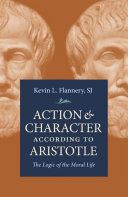
Aristotle, according to the author, depicts the way in which human acts of various sorts and in various combinations determine the logical structure of moral character. Some moral characters–or character types–manage to incorporate a high degree of practical consistency; others incorporate less, without forfeiting their basic orientation toward the good. Still others approach utter inconsistency or moral deprivation, although even these, insofar as they are responsible for their actions, retain a core element of rationality in their souls. According to Aristotle, moral character depends ultimately on the structure of individual acts and on how they fit together into a whole that is consistent–or not consistent–with justice and friendship.–From publisher’s description.
ما از اخلاق چه انتظاری داریم؟ این سوال شاید تاحدودی برای عموم مردم و یا متخصصان این رشته قابل پاسخ باشد؛ اینکه خوب بودن را به ما بیاموزد و در تنظیم روابط فردی م...

جشن کتاب تهران به ایستگاه سی و یکم رسیده است. حال و احوال نشر کتاب خوب نیست و باید فرهنگدوستان را به خرید و هدیه دادن کتاب ترغیب نمود. خانه اخلاقپژوهان جوان ب...

بنیاد کتابهای اخلاق اسلامی عمدتا پالایش جان از آلودگیها و آراستن آن به زیباییها است. اندیشه محوری این قبیل کتابها آن است که انسان فعلی آنی نیست که باید باشد...

-
0 Comments