Notice: تابع WP_Block_Type_Registry::register به طورنادرست فراخوانی شد. نامهای نوع بلوک نباید حروف بزرگ داشته باشند. لطفاً برای اطلاعات بیشتر، اشکال زدایی در وردپرس را مشاهده کنید. (این پیام در نگارش 5.0.0 افزوده شده است.) in /home/ethicsho/public_html/wp-includes/functions.php on line 5313
Warning: Use of undefined constant TDC_PATH_LEGACY - assumed 'TDC_PATH_LEGACY' (this will throw an Error in a future version of PHP) in /home/ethicsho/public_html/wp-content/plugins/td-composer/td-composer.php on line 109
Warning: Use of undefined constant TDSP_THEME_PATH - assumed 'TDSP_THEME_PATH' (this will throw an Error in a future version of PHP) in /home/ethicsho/public_html/wp-content/plugins/td-composer/td-composer.php on line 113 بایگانیهای Andrew Sneddon - خانه اخلاق پژوهان جوان Notice: Trying to access array offset on value of type bool in /home/ethicsho/public_html/wp-content/plugins/wp-ulike/inc/general-functions.php on line 807
Understanding human beings and their distinctive rational and volitional capacities is one of the central tasks of philosophy. The task requires a clear account of such things as reasons, desires, emotions and motives, and of how they combine to produce and explain human behaviour. In Kinds of Reasons, Maria Alvarez offers a fresh and incisive treatment of these issues, focusing in particular on reasons as they feature in contexts of agency. Her account builds on some important recent work in the area; but she takes her main inspiration from the tradition that receives its seminal contemporary expression in the writings of G.E.M. Anscombe, a tradition that runs counter to the broadly Humean orthodoxy that has dominated the theory of action for the past forty years. Alvarez’s conclusions are therefore likely to be controversial; and her bold and painstaking arguments will be found provocative by participants on every side of the debates with which she engages. Clear and directly written, Kinds of Reasons aims to stake out a distinctive position within one of the most hotly contested areas of contemporary philosophy.
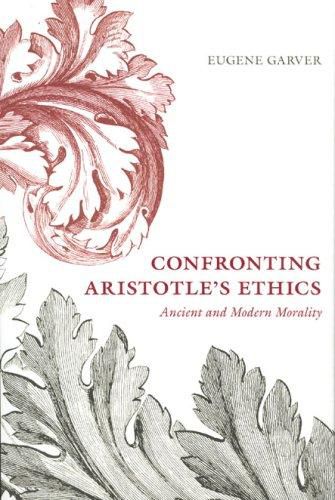
Book Summary of Confronting Aristotle’s Ethics: Ancient And Modern MoralityWhat is the good life? Posing this question today would likely elicit very different answers. Some might say that the good life means doing good?improving one?s community and the lives of others. Others might respond that it means doing well?cultivating one?s own abilities in a meaningful way. But for Aristotle these two distinct ideas?doing good and doing well?were one and the same and could be realized in a single life. In Confronting Aristotle?s Ethics, Eugene Garver examines how we can draw this conclusion from Aristotle’s works, while also studying how this conception of the good life relates to contemporary ideas ofmorality. The key to Aristotle?s views on ethics, argues Garver, lies in the Metaphysics or, more specifically, in his thoughts on activities, actions, and capacities. For Aristotle, Garver shows, it is only possible to be truly active when acting for the common good, and it is only possible to be truly happy when active to the extent of one?s own powers. But does this mean we should aspire to Aristotle?s impossibly demanding vision of the good life? In a word, no. Garver stresses the enormous gap between life in Aristotle?s time and ours. As a result, this book will be a welcome rumination on not only Aristotle, but the relationship between the individual and society in everyday life..
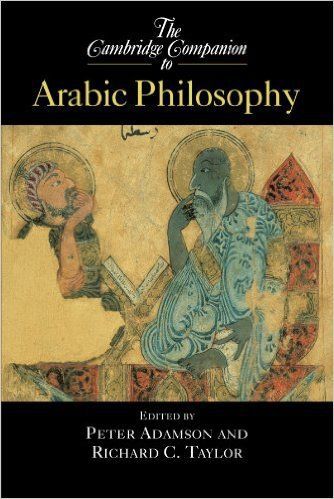
Philosophy written in Arabic and in the Islamic world represents one of the great traditions of Western philosophy. Inspired by Greek philosophical works and the indigenous ideas of Islamic theology, Arabic philosophers from the ninth century onwards put forward ideas of great philosophical and historical importance. This collection of essays, by some of the leading scholars in Arabic philosophy, provides an introduction to the field by way of chapters devoted to individual thinkers (such as al-Farabi, Avicenna and Averroes) or groups, especially during the classical period from the ninth to the twelfth centuries. It also includes chapters on areas of philosophical inquiry across the tradition, such as ethics and metaphysics. Finally, it includes chapters on later Islamic thought, and on the connections between Arabic philosophy and Greek, Jewish, and Latin philosophy. The volume also includes a useful bibliography and a chronology of the most important Arabic thinkers.
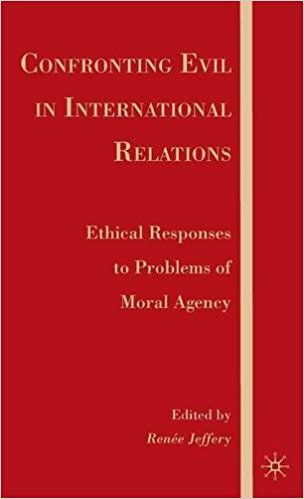
This book brings together seven original essays on the subject of evil in international relations. It considers questions of moral agency associated with the perpetration of evil acts by individuals and groups in the international sphere, and the range of ethical responses the international community has available to it in the aftermath of large-scale evils.
ما از اخلاق چه انتظاری داریم؟ این سوال شاید تاحدودی برای عموم مردم و یا متخصصان این رشته قابل پاسخ باشد؛ اینکه خوب بودن را به ما بیاموزد و در تنظیم روابط فردی م...

جشن کتاب تهران به ایستگاه سی و یکم رسیده است. حال و احوال نشر کتاب خوب نیست و باید فرهنگدوستان را به خرید و هدیه دادن کتاب ترغیب نمود. خانه اخلاقپژوهان جوان ب...

بنیاد کتابهای اخلاق اسلامی عمدتا پالایش جان از آلودگیها و آراستن آن به زیباییها است. اندیشه محوری این قبیل کتابها آن است که انسان فعلی آنی نیست که باید باشد...

-
0 Comments