Notice: تابع WP_Block_Type_Registry::register به طورنادرست فراخوانی شد. نامهای نوع بلوک نباید حروف بزرگ داشته باشند. لطفاً برای اطلاعات بیشتر، اشکال زدایی در وردپرس را مشاهده کنید. (این پیام در نگارش 5.0.0 افزوده شده است.) in /home/ethicsho/public_html/wp-includes/functions.php on line 5313
Warning: Use of undefined constant TDC_PATH_LEGACY - assumed 'TDC_PATH_LEGACY' (this will throw an Error in a future version of PHP) in /home/ethicsho/public_html/wp-content/plugins/td-composer/td-composer.php on line 109
Warning: Use of undefined constant TDSP_THEME_PATH - assumed 'TDSP_THEME_PATH' (this will throw an Error in a future version of PHP) in /home/ethicsho/public_html/wp-content/plugins/td-composer/td-composer.php on line 113 بایگانیهای 20070713d2007 M. Y0frey0103 Ba - خانه اخلاق پژوهان جوان Notice: Trying to access array offset on value of type bool in /home/ethicsho/public_html/wp-content/plugins/wp-ulike/inc/general-functions.php on line 807
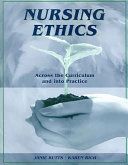
Spanning the nursing curriculum, Nursing Ethics: Across the Curriculum and Into Practice is derived from theoretical foundations, clinical evidence and case study. Based on the concept that compassionate relationships between nurses and patients form a vital element of humanistic nursing, this text provides foundational knowledge about ethics and decision-making strategies to prepare nurses for the moral issues they experience daily. Nursing Ethics includes decision-making approaches and models, rationale for decisions, and management of care for various topics. Instructor’s Resources Now Available! (Click on Supplements on the left-hand-menu to view.)
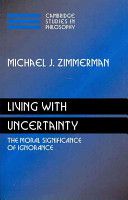
Every choice we make is set against a background of massive ignorance about our past, our future, our circumstances, and ourselves. Philosophers are divided on the moral significance of such ignorance. Some say that it has a direct impact on how we ought to behave – the question of what our moral obligations are; others deny this, claiming that it only affects how we ought to be judged in light of the behaviour in which we choose to engage – the question of what responsibility we bear for our choices. Michael Zimmerman claims that our ignorance has an important bearing on both questions, and offers an account of moral obligation and moral responsibility that is sharply at odds with the prevailing wisdom. His book will be of interest to a wide range of readers in ethics.
The provocative contention of the postmodernist and feminist essays in Ethics of the Body is that conventional bioethics is out of touch, despite its growing profile. It is out of touch with an ongoing phenomenological sense of bodies themselves; with the impact of postmodernist theory as it problematizes the certainties of binary thinking; and with a postmodern culture in which bioscientific developments force us to question what is meant by the notion of the human self. The authors demonstrate that the conventional normative framework of bioethics is called into question by issues as wide ranging as genetic manipulation, disability, high-tech prosthetics, and intersexuality. The essays show how both the theory and practice of bioethics can benefit from postmodernism’s characteristic fluidity and multiplicity, as well as from the insights of a reconceived feminist bioethics. They address issues in philosophy, law, bioscientific research, psychiatry, cultural studies, and feminism from a “postconventional” perspective that looks beyond the familiar ideas of the body, proposing not a bioethics about the body but a radical ethics of the body.After exploring notions of difference in both feminist and postmodernist terms, the book considers specific issues—including HIV, addiction, borderline personality disorder, and cancer—that challenge the principles of conventional bioethics. The focus then turns to questions raised by biotechnology: one essay rethinks the traditional feminist ethics of care in the context of new reproductive technology, while others tackle genetic and genomic issues. Finally, the book looks at embodiment and some specifically anomalous forms of being-in-the-body, including a consideration of intersex infants and children that draws on feminist, postructuralist, and queer theory.
The utility maximization paradigm forms the basis of many economic, psychological, cognitive and behavioral models. Since it was first devised in the eighteenth century, numerous examples have revealed the deficiencies of the concept. This book makes a contribution to overcome those deficiencies by taking into account insensitivity of measurement threshold and context of choice. It covers classic theory as a special, context-free case and gives a systematic overview of new models of utility maximization within a context-dependent threshold as well as related preference and choice models. The second edition has been updated to include the most recent developments and a new chapter on classic and new results for infinite sets. The presented models will be helpful to scientists in economics, decision making theory, social choice theory, behavioral and cognitive sciences, and related fields.
ما از اخلاق چه انتظاری داریم؟ این سوال شاید تاحدودی برای عموم مردم و یا متخصصان این رشته قابل پاسخ باشد؛ اینکه خوب بودن را به ما بیاموزد و در تنظیم روابط فردی م...

جشن کتاب تهران به ایستگاه سی و یکم رسیده است. حال و احوال نشر کتاب خوب نیست و باید فرهنگدوستان را به خرید و هدیه دادن کتاب ترغیب نمود. خانه اخلاقپژوهان جوان ب...

بنیاد کتابهای اخلاق اسلامی عمدتا پالایش جان از آلودگیها و آراستن آن به زیباییها است. اندیشه محوری این قبیل کتابها آن است که انسان فعلی آنی نیست که باید باشد...

-
0 Comments