Notice: تابع WP_Block_Type_Registry::register به طورنادرست فراخوانی شد. نامهای نوع بلوک نباید حروف بزرگ داشته باشند. لطفاً برای اطلاعات بیشتر، اشکال زدایی در وردپرس را مشاهده کنید. (این پیام در نگارش 5.0.0 افزوده شده است.) in /home/ethicsho/public_html/wp-includes/functions.php on line 5313
Warning: Use of undefined constant TDC_PATH_LEGACY - assumed 'TDC_PATH_LEGACY' (this will throw an Error in a future version of PHP) in /home/ethicsho/public_html/wp-content/plugins/td-composer/td-composer.php on line 109
Warning: Use of undefined constant TDSP_THEME_PATH - assumed 'TDSP_THEME_PATH' (this will throw an Error in a future version of PHP) in /home/ethicsho/public_html/wp-content/plugins/td-composer/td-composer.php on line 113 بایگانیهای Time - خانه اخلاق پژوهان جوان Notice: Trying to access array offset on value of type bool in /home/ethicsho/public_html/wp-content/plugins/wp-ulike/inc/general-functions.php on line 807
Criminal proceedings in which people can lose life, liberty, or reputation tell us a great deal about the character of any society. In Japan, it is prosecutors who wield the greatest control over these values and who therefore reveal most clearly the character of the Japanese way of justice. In this book, David T. Johnson portrays Japanese prosecutors at work; the social, political, and legal contexts that enable and constrain their actions; and the content of the justice thereby delivered. Johnson is the first researcher, Japanese or foreign, to gain access to the frontline prosecutors who charge cases and the backstage prosecutors who manage and direct them. He shows that prosecutors in Japan frequently harmonize to imperlatives of justice that Americans often regard as irreconcilable: the need to individualize cases alike. However, their capacity to correct offenders and to obtain contrite, complete confessions from criminal suspects. Johnson argues that this extreme reliance on confessions occasionally leads to extreme efforts to extract them. Indeed, much of the most disturbing prosecutor behavior springs directly or indirectly from the system’s inordinate dependence on admissions of guilt. The major achievements of Japanese criminal justice are thus inextricably intertwined with its most notable defects, and efforts to fix the defects threaten to undermine the accomplishments. Clearly written and skillfully argued, this comparative analysis will be of interest to students of Japan, criminology, and law and society. It illuminates unexplored realms in Japan’s criminal justice system while challenging readers to examine their assumptions about how crime should be prosecuted in their own systems of criminal justice.
Violent video games are successfully marketed to and easily obtained by children and adolescents. Even the U.S. government distributes one such game, America’s Army, through both the internet and its recruiting offices. Is there any scientific evidence to support the claims that violent games contribute to aggressive and violent behavior? Anderson, Gentile, and Buckley first present an overview of empirical research on the effects of violent video games, and then add to this literature three new studies that fill the most important gaps. They update the traditional General Aggression Model to focus on both developmental processes and how media-violence exposure can increase the likelihood of aggressive and violent behavior in both short- and long-term contexts. Violent Video Game Effects on Children and Adolescents also reviews the history of these games’ explosive growth, and explores the public policy options for controlling their distribution. Anderson et al. describe the reaction of the games industry to scientific findings that exposure to violent video games and other forms of media violence constitutes a significant risk factor for later aggressive and violent behavior. They argue that society should begin a more productive debate about whether to reduce the high rates of exposure to media violence, and delineate the public policy options that are likely be most effective. As the first book to unite empirical research on and public policy options for violent video games, Violent Video Game Effects on Children and Adolescents will be an invaluable resource for student and professional researchers in social and developmental psychology and media studies.
Anita Superson challenges the traditional picture of the skeptic who asks, “Why be moral?” While holding that the skeptic’s position is important, she builds an argument against it by understanding it more deeply, and then shows what it would take to successfully defeat it. Superson argues that we must defeat not only the action skeptic, but the disposition skeptic, who denies that being morally disposed is rationally required, and the motive skeptic, who believes that merely going through the motions in acting morally is rationally permissible. We also have to address the amoralist, who is not moved by moral reasons he recognizes. Superson argues for expanding the skeptic’s position from self-interest to privilege to include morally unjustified behavior targeting disenfranchised social groups, as well as revising the traditional expected utility model to exclude desires deformed by patriarchy as irrational. Lastly she argues that the challenge can be answered if it can be shown that it is, in an important way, inconsistent and therefore irrational to privilege oneself over others. The Moral Skeptic makes an important contribution to both metaethics/moral theory and feminist philosophy, and brings feminist thinking into the larger discussion of the skeptical challenge.
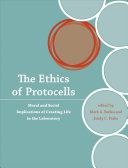
Teams of scientists around the world are racing to create protocells—microscopic, self-organizing entities that spontaneously assemble from simple organic and inorganic materials. The creation of fully autonomous protocells—a technology that can, for all intents and purposes, be considered literally alive—is only a matter of time. This book examines the pressing social and ethical issues raised by the creation of life in the laboratory. Protocells might offer great medical and social benefits and vast new economic opportunities, but they also pose potential risks and threaten cultural and moral norms against tampering with nature and “playing God.” The Ethics of Protocells offers a variety of perspectives on these concerns.After a brief survey of current protocell research (including the much-publicized “top-down” strategy of J. Craig Venter and Hamilton Smith, for which they have received multimillion dollar financing from the U.S. Department of Energy), the chapters treat risk, uncertainty, and precaution; lessons from recent history and related technologies; and ethics in a future society with protocells. The discussions range from new considerations of the precautionary principle and the role of professional ethicists to explorations of what can be learned from society’s experience with other biotechnologies and the open-source software movement.Contributors: Mark A. Bedau, Gaymon Bennett, Giovanni Boniolo, Carl Cranor, Bill Durodie, Mickey Gjerris, Brigitte Hantsche-Tangen, Christine Hauskeller, Andrew Hessel, Brian Johnson, George Khushf, Emily C. Parke, Alain Pottage, Paul Rabinow, Per Sandin, Joachim Schummer, Mark Triant, Laurie ZolothBasic Bioethics series
ما از اخلاق چه انتظاری داریم؟ این سوال شاید تاحدودی برای عموم مردم و یا متخصصان این رشته قابل پاسخ باشد؛ اینکه خوب بودن را به ما بیاموزد و در تنظیم روابط فردی م...

جشن کتاب تهران به ایستگاه سی و یکم رسیده است. حال و احوال نشر کتاب خوب نیست و باید فرهنگدوستان را به خرید و هدیه دادن کتاب ترغیب نمود. خانه اخلاقپژوهان جوان ب...

بنیاد کتابهای اخلاق اسلامی عمدتا پالایش جان از آلودگیها و آراستن آن به زیباییها است. اندیشه محوری این قبیل کتابها آن است که انسان فعلی آنی نیست که باید باشد...

-
0 Comments