Notice: تابع WP_Block_Type_Registry::register به طورنادرست فراخوانی شد. نامهای نوع بلوک نباید حروف بزرگ داشته باشند. لطفاً برای اطلاعات بیشتر، اشکال زدایی در وردپرس را مشاهده کنید. (این پیام در نگارش 5.0.0 افزوده شده است.) in /home/ethicsho/public_html/wp-includes/functions.php on line 5313
Warning: Use of undefined constant TDC_PATH_LEGACY - assumed 'TDC_PATH_LEGACY' (this will throw an Error in a future version of PHP) in /home/ethicsho/public_html/wp-content/plugins/td-composer/td-composer.php on line 109
Warning: Use of undefined constant TDSP_THEME_PATH - assumed 'TDSP_THEME_PATH' (this will throw an Error in a future version of PHP) in /home/ethicsho/public_html/wp-content/plugins/td-composer/td-composer.php on line 113 بایگانیهای Theology - خانه اخلاق پژوهان جوان Notice: Trying to access array offset on value of type bool in /home/ethicsho/public_html/wp-content/plugins/wp-ulike/inc/general-functions.php on line 807
In this forward-looking volume the invited authors argue that the world must critically assess the potential pitfalls of new technologies in advance. Many of the developments in modern technology are complex, risky, and, to begin with, cloaked in uncertainty. How should we deal with such developments – that may not only have positive effects (such as an increase of our well-being or an improved ability to control and cure diseases) but also negative effects for human beings and the environment (such as global warming or the medicalisation of human beings)? The fact that technological ‘progress’ often occurs under conditions of uncertainty makes the issue even more pressing. Frequently, we are completely devoid of information concerning the applications of new technologies and what their impact will be on human beings and the environment. History has shown that taking a retrospective perspective by passively awaiting the practical consequences of new technologies is both dangerous and inappropriate, as often damage will already have occurred. The genie is well and truly out of the bottle and those who once had control over the new processes no longer have that power, as the science will have a momentum of its own, unheeding of belated attempts to stop it or slow it down. What is more, technology is often ‘logically malleable’, with far wider applications than even we can anticipate. Thus, say editors Sollie and Duwell, an anticipatory attitude is required towards dealing with new technology. This book addresses methodological issues with regard to the ethical evaluation of new and emerging technology. It focuses specifically on the concept of uncertainty that, unlike the notion of risk, is greatly undervalued in the field of ethics. It is a must-read for anyone involved in (ethical) technology assessment: philosophers, those involved in science and technology studies, and policy-makers alike.
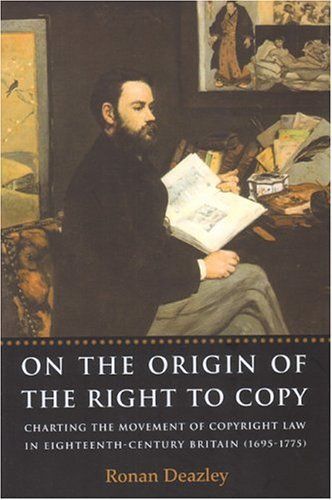
Taking as its point of departure the lapse of the Licensing Act 1662 in 1695, this book examines the lead up to the passage of the Statute of Anne 1709 and charts the movement of copyright law throughout the eighteenth century, culminating in the House of Lords decision in Donaldson v Becket (1774). The established reading of copyright’s development throughout this period, from the 1709 Act to the pronouncement in Donaldson, is that it was transformed from a publisher’s right to an author’s right; that is, legislation initially designed to regulate the marketplace of the bookseller and publisher evolved into an instrument that functioned to recognise the proprietary inevitability of an author’s intellectual labours. The historical narrative which unfolds within this book presents a challenge to that accepted orthodoxy. The traditional analysis of the development of copyright in eighteenth-century Britain is revealed as exhibiting the character of long-standing myth, and the centrality of the modern proprietary author as the raison d’être of the copyright regime is displaced.
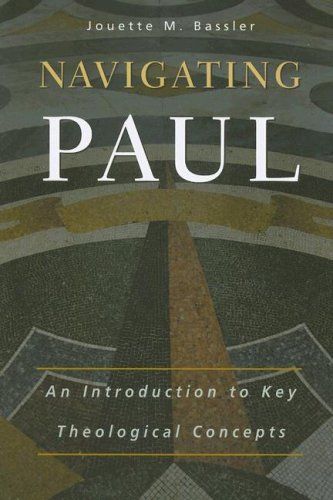
Jouette Bassler, one of the foremost experts on Pauline theology, offers her wisdom and insight into the core of Paul’s thought in this brief and accessible book. She focuses on major themes in Paul, such as grace, law, faith, righteousness, Israel, resurrection, and what it means to be “in Christ.” Through each of these themes, she explores the wealth of Paul’s various writings, lifting up the most important and basic of Paul’s ideas and explaining them within the context of the ancient Greco-Roman world. Book jacket.
Religion is one of the most powerful forces running through human history, and although often presented as a force for good, its impact is frequently violent and divisive. This provocative work brings together cutting-edge research from both evolutionary and cognitive psychology to help readers understand the psychological structure of religious morality and the origins of religious violence. Introduces a fundamentally new approach to the analysis of religion in a style accessible to the general reader Applies insights from evolutionary and cognitive psychology to both Judaism and Christianity, and their texts, to help understand the origins of religious violence Argues that religious violence is grounded in the moral psychology of religion Illustrates its controversial argument with reference to the 9/11 terrorist attacks, and the response to the attacks from both the terrorists and the President. Suggests strategies for beginning to counter the divisive aspects of religion. Discusses the role of religion and religious criticism in the contemporary world. Argues for a position sceptical of the moral authority of religion, while also critiquing the excesses of the “new atheists” for failing to appreciate the moral contributions of religion.
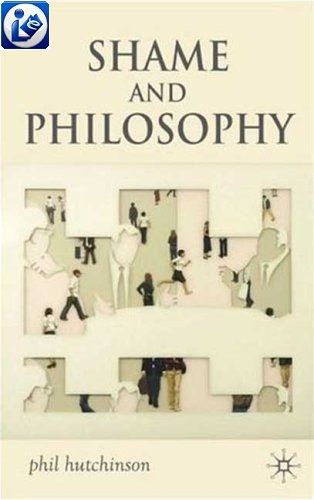
Engaging with current research in the philosophy of emotions, both analytic and continental, the author argues that reductionist accounts of emotions leave us in a state of poverty regarding our understanding of our world and of ourselves.
ما از اخلاق چه انتظاری داریم؟ این سوال شاید تاحدودی برای عموم مردم و یا متخصصان این رشته قابل پاسخ باشد؛ اینکه خوب بودن را به ما بیاموزد و در تنظیم روابط فردی م...

جشن کتاب تهران به ایستگاه سی و یکم رسیده است. حال و احوال نشر کتاب خوب نیست و باید فرهنگدوستان را به خرید و هدیه دادن کتاب ترغیب نمود. خانه اخلاقپژوهان جوان ب...

بنیاد کتابهای اخلاق اسلامی عمدتا پالایش جان از آلودگیها و آراستن آن به زیباییها است. اندیشه محوری این قبیل کتابها آن است که انسان فعلی آنی نیست که باید باشد...

-
0 Comments