

Notice: تابع WP_Block_Type_Registry::register به طورنادرست فراخوانی شد. نامهای نوع بلوک نباید حروف بزرگ داشته باشند. لطفاً برای اطلاعات بیشتر، اشکال زدایی در وردپرس را مشاهده کنید. (این پیام در نگارش 5.0.0 افزوده شده است.) in /home/ethicsho/public_html/wp-includes/functions.php on line 5313
Warning: Use of undefined constant TDC_PATH_LEGACY - assumed 'TDC_PATH_LEGACY' (this will throw an Error in a future version of PHP) in /home/ethicsho/public_html/wp-content/plugins/td-composer/td-composer.php on line 109
Warning: Use of undefined constant TDSP_THEME_PATH - assumed 'TDSP_THEME_PATH' (this will throw an Error in a future version of PHP) in /home/ethicsho/public_html/wp-content/plugins/td-composer/td-composer.php on line 113 بایگانیهای Terrorism/ Moral And Ethical Aspects - خانه اخلاق پژوهان جوان Notice: Trying to access array offset on value of type bool in /home/ethicsho/public_html/wp-content/plugins/wp-ulike/inc/general-functions.php on line 807
Mark Platts’ influential first book “Ways of Meaning” argued within the context of the philosophy of language that a realist’ account of moral thought was possible. “Moral Realities” defends the same possibility from the perspective of the philosophy of psychology. “Moral Realities” engages the classical moral philosophies of Hume, Mandeville and Nietzsche, and tackles the powerful arguments of the contemporary moral relativists. Platts uses an existing critique of philosophical notions of desire and value to present a descriptive metaphysics of morals–clarifying both what morality is and what it is not. He also employs a classification of desire that articulates a general theory of value and valuing which is distinguished by a cognitive approach given to certain kinds of moral valuing. The possibility of applying this approach to moral valuings is defended against the persuasive criticisms of both the Humean subjectivist and the contemporary moral relativist. This is a challenging book which illuminates many of the major issues of contemporary moral philosophy including: the practical nature of moral thought, free will and choice, morality and religious belief, and the pragmatics of moral discourse.
Which political principles should govern global politics? In his new book, Simon Caney engages with the work of philosophers, political theorists, and international relations scholars in order to examine some of the most pressing global issues of our time. Are there universal civil, political, and economic human rights? Should there be a system of supra-state institutions? Can humanitarian intervention be justified?
Addictive thought is inherently self-deceptive, yet offers a superficial logic that can be misleading to the addict as well as to the addict’s family members.Abnormal thinking in addiction was originally recognized by members of Alcoholics Anonymous, who coined the term “stinking thinking.” Addictive thinking often appears rational, but only on a superficial level. Addicts, as well as their family members, are easily seduced by the attendant–and erroneous–reasoning process it can foster. In Addictive Thinking, author Abraham Twerski reveals how self-deceptive thought can undermine self-esteem and threaten the sobriety of a recovering individual. This timely revision of the original classic includes updated information and research on depression and affective disorders, the relationship between addictive thinking and relapse, and the origins of addictive thought. Ultimately, Addictive Thinking offers hope to those seeking a healthy and rewarding life in recovery. Dr. Twerski is founder and medical director of the Gateway Rehabilitation Center in Pittsburgh, Pennsylvania. A rabbi, psychiatrist, and chemical dependency counselor, he is the author of numerous journal articles and books including Self Discovery in Recovery, I Didn’t Ask to be in This Family: Sibling Relationships and How They Shame Adult Behavior and Dependencies, and with “Peanuts” cartoonist Charles Schulz, When Do the Good Things Start?
Amos Tversky (1937–1996), a towering figure in cognitive and mathematical psychology, devoted his professional life to the study of similarity, judgment, and decision making. He had a unique ability to master the technicalities of normative ideals and then to intuit and demonstrate experimentally their systematic violation due to the vagaries and consequences of human information processing. He created new areas of study and helped transform disciplines as varied as economics, law, medicine, political science, philosophy, and statistics.This book collects forty of Tversky’s articles, selected by him in collaboration with the editor during the last months of Tversky’s life. It is divided into three sections: Similarity, Judgment, and Preferences. The Preferences section is subdivided into Probabilistic Models of Choice, Choice under Risk and Uncertainty, and Contingent Preferences. Included are several articles written with his frequent collaborator, Nobel Prize-winning economist Daniel Kahneman.
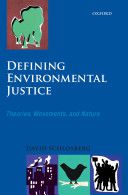
The basic task of this book is to explore what, exactly, is meant by ‘justice’ in definitions of environmental and ecological justice. It examines how the term is used in both self-described environmental justice movements and in theories of environmental and ecological justice. The central argument is that a theory and practice of environmental justice necessarily includes distributive conceptions of justice, but must also embrace notions of justice based in recognition, capabilities, and participation. Throughout, the goal is the development of a broad, multi-faceted, yet integrated notion of justice that can be applied to both relations regarding environmental risks in human populations and relations between human communities and non-human nature.
ما از اخلاق چه انتظاری داریم؟ این سوال شاید تاحدودی برای عموم مردم و یا متخصصان این رشته قابل پاسخ باشد؛ اینکه خوب بودن را به ما بیاموزد و در تنظیم روابط فردی م...

جشن کتاب تهران به ایستگاه سی و یکم رسیده است. حال و احوال نشر کتاب خوب نیست و باید فرهنگدوستان را به خرید و هدیه دادن کتاب ترغیب نمود. خانه اخلاقپژوهان جوان ب...

بنیاد کتابهای اخلاق اسلامی عمدتا پالایش جان از آلودگیها و آراستن آن به زیباییها است. اندیشه محوری این قبیل کتابها آن است که انسان فعلی آنی نیست که باید باشد...

-
0 Comments