Notice: تابع WP_Block_Type_Registry::register به طورنادرست فراخوانی شد. نامهای نوع بلوک نباید حروف بزرگ داشته باشند. لطفاً برای اطلاعات بیشتر، اشکال زدایی در وردپرس را مشاهده کنید. (این پیام در نگارش 5.0.0 افزوده شده است.) in /home/ethicsho/public_html/wp-includes/functions.php on line 5313
Warning: Use of undefined constant TDC_PATH_LEGACY - assumed 'TDC_PATH_LEGACY' (this will throw an Error in a future version of PHP) in /home/ethicsho/public_html/wp-content/plugins/td-composer/td-composer.php on line 109
Warning: Use of undefined constant TDSP_THEME_PATH - assumed 'TDSP_THEME_PATH' (this will throw an Error in a future version of PHP) in /home/ethicsho/public_html/wp-content/plugins/td-composer/td-composer.php on line 113 بایگانیهای Suffering - Moral And Ethical Aspects - خانه اخلاق پژوهان جوان Notice: Trying to access array offset on value of type bool in /home/ethicsho/public_html/wp-content/plugins/wp-ulike/inc/general-functions.php on line 807
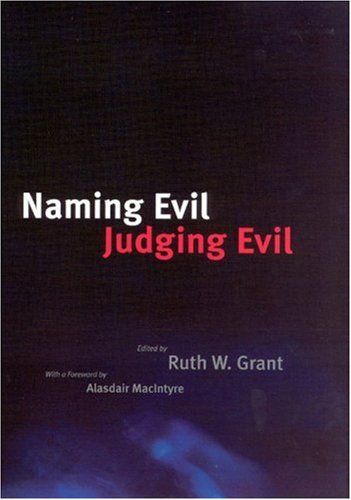
Is it more dangerous to call something evil or not to? This fundamental question deeply divides those who fear that the term oversimplifies grave problems and those who worry that, to effectively address such issues as terrorism and genocide, we must first acknowledge them as evil. Recognizing that the way we approach this dilemma can significantly affect both the harm we suffer and the suffering we inflict, a distinguished group of contributors engages in the debate with this series of timely and original essays. Drawing on Western conceptions of evil from the Middle Ages to the present, these pieces demonstrate that, while it may not be possible to definitively settle moral questions, we are still ableand in fact are obligatedto make moral arguments and judgments. Using a wide variety of approaches, the authors raise tough questions: Why is so much evil perpetrated in the name of good? Could evil ever be eradicated? How can liberal democratic politics help us strike a balance between the need to pass judgment and the need to remain tolerant? Their insightful answers exemplify how the sometimes rarefied worlds of political theory, philosophy, theology, and history can illuminate pressing contemporary concerns.
“The environment has long been the undisputed territory of the political Left, which casts international capitalism, consumerism, and the over-exploitation of natural resources as the principle threats to the planet, and sees top-down interventions as the most effective solution. In How to Think Seriously About the Planet, Roger Scruton rejects this view and offers a fresh approach to tackling the most important political problem of our time. The environmental movement, he contends, is philosophically confused and has unrealistic agendas. Its sights are directed at the large-scale events and the confrontation between international politics and multinational business. But Scruton argues that no large-scale environmental project, however well-intentioned, will succeed if it is not rooted in small-scale practical reasoning. Seeing things on a large scale promotes top-down solutions, managed by unaccountable bureaucracies that fail to assess local conditions and are rife with unintended consequences. Scruton argues for the greater efficacy of local initiatives over global schemes, civil association over political activism, and small-scale institutions of friendship over regulatory hyper-vigilance. And he suggests that conservatism is far better suited to solving environmental problems than either liberalism or socialism. Rather than entrusting the environment to unwieldy NGOs and international committees, we must assume personal responsibility and foster local control. People must be empowered to take charge of their environment, to care for it as they would a home, and to involve themselves through the kind of local associations that have been the traditional goal of conservative politics. Our common future is by no means assured, but as Roger Scruton clearly demonstrates in this important book, there is a path that can ensure the future safety of our planet and our species.”–
This work is an investigation of the ongoing methodical reconstruction of Catholic moral theology. As such it is based on and honors the work of Norbert Rigali, S.J., one of the most important contributors to this reconstruction.The decisive break from the traditional manual approach to moral theology represented by Vatican II reoriented moral theology away from universal natural law morality based on the commandments to a morality based on specifically Christian sources. This reorientation, however, was not an either/or but a both/and proposition. Father Norbert Rigali, S.J. has been an inspiration and a challenge to moral theologians working toward reconstruction. This essays in this collection address four questions in the renewal movement: an investigation of normative methods, a clarification of sources, an investigation of the tension between natural law morality and Christian ethics and/or morality, and a combination of methodical insights of philosophy and traditional Christian sources in their investigation of biomedical ethical issues.
ما از اخلاق چه انتظاری داریم؟ این سوال شاید تاحدودی برای عموم مردم و یا متخصصان این رشته قابل پاسخ باشد؛ اینکه خوب بودن را به ما بیاموزد و در تنظیم روابط فردی م...

جشن کتاب تهران به ایستگاه سی و یکم رسیده است. حال و احوال نشر کتاب خوب نیست و باید فرهنگدوستان را به خرید و هدیه دادن کتاب ترغیب نمود. خانه اخلاقپژوهان جوان ب...

بنیاد کتابهای اخلاق اسلامی عمدتا پالایش جان از آلودگیها و آراستن آن به زیباییها است. اندیشه محوری این قبیل کتابها آن است که انسان فعلی آنی نیست که باید باشد...

-
0 Comments