Notice: تابع WP_Block_Type_Registry::register به طورنادرست فراخوانی شد. نامهای نوع بلوک نباید حروف بزرگ داشته باشند. لطفاً برای اطلاعات بیشتر، اشکال زدایی در وردپرس را مشاهده کنید. (این پیام در نگارش 5.0.0 افزوده شده است.) in /home/ethicsho/public_html/wp-includes/functions.php on line 5313
Warning: Use of undefined constant TDC_PATH_LEGACY - assumed 'TDC_PATH_LEGACY' (this will throw an Error in a future version of PHP) in /home/ethicsho/public_html/wp-content/plugins/td-composer/td-composer.php on line 109
Warning: Use of undefined constant TDSP_THEME_PATH - assumed 'TDSP_THEME_PATH' (this will throw an Error in a future version of PHP) in /home/ethicsho/public_html/wp-content/plugins/td-composer/td-composer.php on line 113 بایگانیهای Sociology - Methodology - خانه اخلاق پژوهان جوان Notice: Trying to access array offset on value of type bool in /home/ethicsho/public_html/wp-content/plugins/wp-ulike/inc/general-functions.php on line 807
Were the perpetrators of the 9/11 attacks courageous “freedom fighters” or despicable terrorist murderers? Eschewing the resort to universal moral principles favored by traditional Anglo-American analytic philosophy, Joseph Margolis sets out to sketch an alternative approach that accepts the lack of any neutral ground or privileged normative perspective for deciding moral disputes.
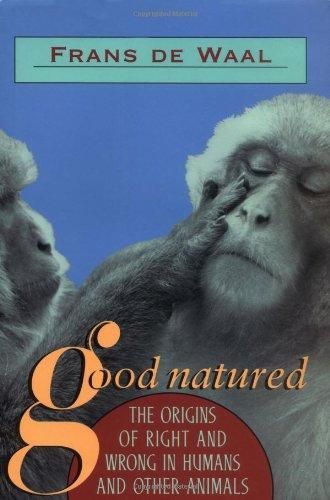
To observe a dog’s guilty look.to witness a gorilla’s self-sacrifice for a wounded mate, to watch an elephant herd’s communal effort on behalf of a stranded calf–to catch animals in certain acts is to wonder what moves them. Might there he a code of ethics in the animal kingdom? Must an animal be human to he humane? In this provocative book, a renowned scientist takes on those who have declared ethics uniquely human Making a compelling case for a morality grounded in biology, he shows how ethical behavior is as much a matter of evolution as any other trait, in humans and animals alike.World famous for his brilliant descriptions of Machiavellian power plays among chimpanzees-the nastier side of animal life–Frans de Waal here contends that animals have a nice side as well. Making his case through vivid anecdotes drawn from his work with apes and monkeys and holstered by the intriguing, voluminous data from his and others’ ongoing research, de Waal shows us that many of the building blocks of morality are natural: they can he observed in other animals. Through his eyes, we see how not just primates but all kinds of animals, from marine mammals to dogs, respond to social rules, help each other, share food, resolve conflict to mutual satisfaction, even develop a crude sense of justice and fairness.Natural selection may be harsh, but it has produced highly successful species that survive through cooperation and mutual assistance. De Waal identifies this paradox as the key to an evolutionary account of morality, and demonstrates that human morality could never have developed without the foundation of fellow feeling our species shares with other animals. As his work makes clear, a morality grounded in biology leads to an entirely different conception of what it means to he human–and humane.
This is an engaging and accessible introduction to Aristotle’s great masterpiece of moral philosophy. Michael Pakaluk gives original and compelling interpretations of the Function Argument, the Doctrine of the Mean, courage and other character virtues, Akrasia, and the two treatments of pleasure. There is also a useful section on how to read an Aristotelian text. This book will be invaluable for all student readers encountering one of the most important and influential works of Western philosophy.
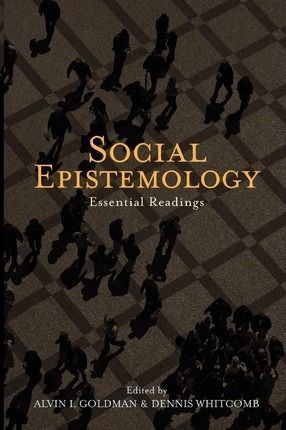
What if anything justifies us in believing the testimony of others? How should we react to disagreement between ourselves and our peers, and to disagreement among the experts when we ourselves are novices? Can beliefs be held by groups of people in addition to the people composing those groups? And if so, how should groups go about forming their beliefs? How should we design social systems, such as legal juries and scientific research-sharing schemes, to promote knowledge among the people who engage in them? When different groups of people judge different beliefs to be justified, how can we tell which groups are correct? These questions are at the heart of the vital discipline of social epistemology. The classic articles in this volume address these questions in ways that are both cutting-edge and easy to understand. This volume will be of great interest to scholars and students in epistemology.
ما از اخلاق چه انتظاری داریم؟ این سوال شاید تاحدودی برای عموم مردم و یا متخصصان این رشته قابل پاسخ باشد؛ اینکه خوب بودن را به ما بیاموزد و در تنظیم روابط فردی م...

جشن کتاب تهران به ایستگاه سی و یکم رسیده است. حال و احوال نشر کتاب خوب نیست و باید فرهنگدوستان را به خرید و هدیه دادن کتاب ترغیب نمود. خانه اخلاقپژوهان جوان ب...

بنیاد کتابهای اخلاق اسلامی عمدتا پالایش جان از آلودگیها و آراستن آن به زیباییها است. اندیشه محوری این قبیل کتابها آن است که انسان فعلی آنی نیست که باید باشد...

-
0 Comments