Notice: تابع WP_Block_Type_Registry::register به طورنادرست فراخوانی شد. نامهای نوع بلوک نباید حروف بزرگ داشته باشند. لطفاً برای اطلاعات بیشتر، اشکال زدایی در وردپرس را مشاهده کنید. (این پیام در نگارش 5.0.0 افزوده شده است.) in /home/ethicsho/public_html/wp-includes/functions.php on line 5313
Warning: Use of undefined constant TDC_PATH_LEGACY - assumed 'TDC_PATH_LEGACY' (this will throw an Error in a future version of PHP) in /home/ethicsho/public_html/wp-content/plugins/td-composer/td-composer.php on line 109
Warning: Use of undefined constant TDSP_THEME_PATH - assumed 'TDSP_THEME_PATH' (this will throw an Error in a future version of PHP) in /home/ethicsho/public_html/wp-content/plugins/td-composer/td-composer.php on line 113 بایگانیهای Socialist Ethics - خانه اخلاق پژوهان جوان Notice: Trying to access array offset on value of type bool in /home/ethicsho/public_html/wp-content/plugins/wp-ulike/inc/general-functions.php on line 807
Research Ethics for Social Scientists sets out to do four things: The first is to demonstrate the practical value of thinking seriously and systematically about what constitutes ethical conduct in social science research. Secondly, the text identifies how and why current regulatory regimes have emerged. Thirdly, it seeks to reveal those practices that have contributed to the adversarial relationships between researchers and regulators. Finally, the book hopes to encourage both parties to develop shared solutions to ethical and regulatory problems. (Backcover)
Sentimental Rules is an ambitious and highly interdisciplinary work, which proposes and defends a new theory about the nature and evolution of moral judgment. In it, philosopher Shaun Nichols develops the theory that emotions play a critical role in both the psychological and the cultural underpinnings of basic moral judgment. Nichols argues that our norms prohibiting the harming of others are fundamentally associated with our emotional responses to those harms, and that such “sentimental rules” enjoy an advantage in cultural evolution, which partly explains the success of certain moral norms. This has sweeping and exciting implications for philosophical ethics. Nichols builds on an explosion of recent intriguing experimental work in psychology on our capacity for moral judgment and shows how this empirical work has broad import for enduring philosophical problems. The result is an account that illuminates fundamental questions about the character of moral emotions and the role of sentiment and reason in how we make our moral judgments. This work should appeal widely across philosophy and the other disciplines that comprise cognitive science.
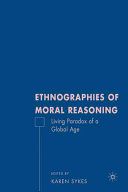
These astute essays describe the way ordinary people value human relationships and reason through the commonplace contradictions of their local way of life in a global age, rather than measure the actions of their subjects as evidence of either universal rationality or shared cultural beliefs. Each contributor conveys the ways in which people challenge the ascribed moral standards of custom, religious belief, bureaucratic policies through passionate words such as anecdotes, joke, rumors, and gossip. By evaluating moral reasoning at a local level, contributors work to answer the question, what is a good life?
Talbot Brewer presents an invigorating new approach to ethical theory, in the context of human selfhood and agency. The first main theme of the book is that contemporary ethical theorists have focused too narrowly on actions and the discrete episodes of deliberation through which we choose them, and that the subject matter of the field looks quite different if one looks instead at unfolding activities and the continuous forms of evaluative awareness that carry them forward and that constitute an essential element of those activities. The second is that ethical reflection is itself a centrally important life activity, and that philosophical ethics is an extension of this practical activity rather than a merely theoretical reflection upon it. Brewer’s approach is founded on a far-reaching reconsideration of the notions of the nature and sources of human agency, and particularly of the way in which practical thinking gives shape to activities, relationships and lives. He contests the usual understanding of the relationship between philosophical psychology and ethics. The Retrieval of Ethics shows the need for a new contemplative vision of the point or value of human action–without which we will remain unable to make optimal sense of our efforts to unify our lives around a tenable conception of how best to live them, or of the yearnings that draw us to our ideals and to each other.
ما از اخلاق چه انتظاری داریم؟ این سوال شاید تاحدودی برای عموم مردم و یا متخصصان این رشته قابل پاسخ باشد؛ اینکه خوب بودن را به ما بیاموزد و در تنظیم روابط فردی م...

جشن کتاب تهران به ایستگاه سی و یکم رسیده است. حال و احوال نشر کتاب خوب نیست و باید فرهنگدوستان را به خرید و هدیه دادن کتاب ترغیب نمود. خانه اخلاقپژوهان جوان ب...

بنیاد کتابهای اخلاق اسلامی عمدتا پالایش جان از آلودگیها و آراستن آن به زیباییها است. اندیشه محوری این قبیل کتابها آن است که انسان فعلی آنی نیست که باید باشد...

-
0 Comments