Notice: تابع WP_Block_Type_Registry::register به طورنادرست فراخوانی شد. نامهای نوع بلوک نباید حروف بزرگ داشته باشند. لطفاً برای اطلاعات بیشتر، اشکال زدایی در وردپرس را مشاهده کنید. (این پیام در نگارش 5.0.0 افزوده شده است.) in /home/ethicsho/public_html/wp-includes/functions.php on line 5313
Warning: Use of undefined constant TDC_PATH_LEGACY - assumed 'TDC_PATH_LEGACY' (this will throw an Error in a future version of PHP) in /home/ethicsho/public_html/wp-content/plugins/td-composer/td-composer.php on line 109
Warning: Use of undefined constant TDSP_THEME_PATH - assumed 'TDSP_THEME_PATH' (this will throw an Error in a future version of PHP) in /home/ethicsho/public_html/wp-content/plugins/td-composer/td-composer.php on line 113 بایگانیهای Social Science / Sociology Of Religion - خانه اخلاق پژوهان جوان Notice: Trying to access array offset on value of type bool in /home/ethicsho/public_html/wp-content/plugins/wp-ulike/inc/general-functions.php on line 807
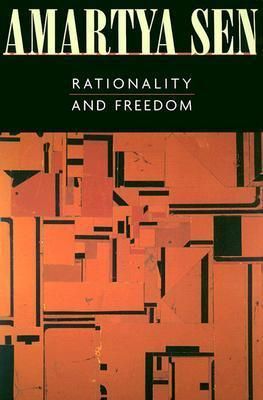
Rationality and freedom are among the most profound and contentious concepts in philosophy and the social sciences. In two volumes on rationality, freedom, and justice, the distinguished economist and philosopher Amartya Sen brings clarity and insight to these difficult issues. This volume–the first of the two–is principally concerned with rationality and freedom.Sen scrutinizes and departs from the standard criteria of rationality, and shows how it can be seen in terms of subjecting one’s values as well as choices to the demands of reason and critical scrutiny. This capacious approach is utilized to illuminate the demands of rationality in individual choice (including decisions under uncertainty) as well as social choice (including cost benefit analysis and environmental assessment).Identifying a reciprocity in the relationship between rationality and freedom, Sen argues that freedom cannot be assessed independently of a person’s reasoned preferences and valuations, just as rationality, in turn, requires freedom of thought. Sen uses the discipline of social choice theory (a subject he has helped to develop) to illuminate the demands of reason and the assessment of freedom. The latter is the subject matter of Sen’s previously unpublished Arrow Lectures included here.The essays in these volumes contribute to Sen’s ongoing transformation of economic theory and social philosophy, and to our understanding of the connections among rationality, freedom, and social justice.
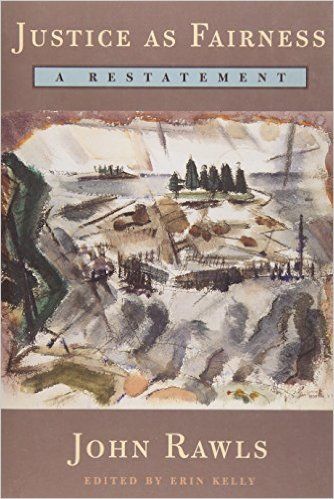
This book originated as lectures for a course on political philosophy that Rawls taught regularly at Harvard in the 1980s. In time the lectures became a restatement of his theory of justice as fairness, revised in light of his more recent papers and his treatise Political Liberalism (1993). As Rawls writes in the preface, the restatement presents “in one place an account of justice as fairness as I now see it, drawing on all [my previous] works.” He offers a broad overview of his main lines of thought and also explores specific issues never before addressed in any of his writings.Rawls is well aware that since the publication of A Theory of Justice in 1971, American society has moved farther away from the idea of justice as fairness. Yet his ideas retain their power and relevance to debates in a pluralistic society about the meaning and theoretical viability of liberalism. This book demonstrates that moral clarity can be achieved even when a collective commitment to justice is uncertain.
Liberal political justification is often accused of preaching to the converted: the values of such justification, it is claimed, are acceptable as values only to those already convinced by arguments in the secular, humanist Enlightenment tradition of political justification. This is the most taxing problem facing contemporary liberal theories of political justification. Catriona McKinnon suggests an interpretation of the ‘political constructivism’ approach to this problem offered by John Rawls. This interpretation argues that by placing the value of self-respect and its social conditions at the heart of the political constructivist approach to liberal justification, such justification can deliver on its promise to show why liberal principles of toleration and public reason are acceptable even to non-liberal people. A self-respect based constructivist approach to contemporary liberal justification restores to the liberal tradition the radical potential which it has always historically possessed.
ما از اخلاق چه انتظاری داریم؟ این سوال شاید تاحدودی برای عموم مردم و یا متخصصان این رشته قابل پاسخ باشد؛ اینکه خوب بودن را به ما بیاموزد و در تنظیم روابط فردی م...

جشن کتاب تهران به ایستگاه سی و یکم رسیده است. حال و احوال نشر کتاب خوب نیست و باید فرهنگدوستان را به خرید و هدیه دادن کتاب ترغیب نمود. خانه اخلاقپژوهان جوان ب...

بنیاد کتابهای اخلاق اسلامی عمدتا پالایش جان از آلودگیها و آراستن آن به زیباییها است. اندیشه محوری این قبیل کتابها آن است که انسان فعلی آنی نیست که باید باشد...

-
0 Comments