Notice: تابع WP_Block_Type_Registry::register به طورنادرست فراخوانی شد. نامهای نوع بلوک نباید حروف بزرگ داشته باشند. لطفاً برای اطلاعات بیشتر، اشکال زدایی در وردپرس را مشاهده کنید. (این پیام در نگارش 5.0.0 افزوده شده است.) in /home/ethicsho/public_html/wp-includes/functions.php on line 5313
Warning: Use of undefined constant TDC_PATH_LEGACY - assumed 'TDC_PATH_LEGACY' (this will throw an Error in a future version of PHP) in /home/ethicsho/public_html/wp-content/plugins/td-composer/td-composer.php on line 109
Warning: Use of undefined constant TDSP_THEME_PATH - assumed 'TDSP_THEME_PATH' (this will throw an Error in a future version of PHP) in /home/ethicsho/public_html/wp-content/plugins/td-composer/td-composer.php on line 113 بایگانیهای Social Science / Abortion & Birth Control - خانه اخلاق پژوهان جوان Notice: Trying to access array offset on value of type bool in /home/ethicsho/public_html/wp-content/plugins/wp-ulike/inc/general-functions.php on line 807
How do we judge whether an action is morally right or wrong? If an action is wrong, what reason does that give us not to do it? Why should we give such reasons priority over our other concerns and values? In this book, T. M. Scanlon offers new answers to these questions, as they apply to the central part of morality that concerns what we owe to each other. According to his contractualist view, thinking about right and wrong is thinking about what we do in terms that could be justified to others and that they could not reasonably reject. He shows how the special authority of conclusions about right and wrong arises from the value of being related to others in this way, and he shows how familiar moral ideas such as fairness and responsibility can be understood through their role in this process of mutual justification and criticism.Scanlon bases his contractualism on a broader account of reasons, value, and individual well-being that challenges standard views about these crucial notions. He argues that desires do not provide us with reasons, that states of affairs are not the primary bearers of value, and that well-being is not as important for rational decision-making as it is commonly held to be. Scanlon is a pluralist about both moral and non-moral values. He argues that, taking this plurality of values into account, contractualism allows for most of the variability in moral requirements that relativists have claimed, while still accounting for the full force of our judgments of right and wrong.
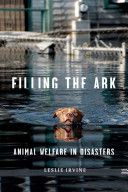
When disasters strike, people are not the only victims. Hurricane Katrina raised public attention about how disasters affect dogs, cats, and other animals considered members of the human family. In this short but powerful book, noted sociologist Leslie Irvine goes beyond Katrina to examine how disasters like oil spills, fires, and other calamities affect various animal populations-on factory farms, in research facilities, and in the wild.Filling the Arkargues that humans cause most of the risks faced by animals and urges for better decisions about the treatment of animals in disasters. Furthermore, it makes a broad appeal for the ethical necessity of better planning to keep animals out of jeopardy. Irvine not only offers policy recommendations and practical advice for evacuating animals, she also makes a strong case for rethinking our use of animals, suggesting ways to create more secure conditions.
This book shows how Darwinian biology supports an Aristotelian view of ethics as rooted in human nature. Defending a conception of “Darwinian natural right” based on the claim that the good is the desirable, the author argues that there are at least twenty natural desires that are universal to all human societies because they are based in human biology. The satisfaction of these natural desires constitutes a universal standard for judging social practice as either fulfilling or frustrating human nature, although prudence is required in judging what is best for particular circumstances.The author studies the familial bonding of parents and children and the conjugal bonding of men and women as illustrating social behavior that conforms to Darwinian natural right. He also studies slavery and psychopathy as illustrating social behavior that contradicts Darwinian natural right. He argues as well that the natural moral sense does not require religious belief, although such belief can sometimes reinforce the dictates of nature.
The debate over religious lawmaking pits respect for religious pluralism against moral identity-with liberal theorists contending that religious lawmaking is generally suspect in a morally and religiously diverse polity like the United States, and communitarian ones arguing that lawmakers cannot, and should not, be expected to suppress their religious commitments in their public policy making. Looking carefully at both sides of this ongoing debate, Lucinda Peach explores the limitations as well as the value of these conflicting perspectives, and proposes a solution for their reconciliation. Peach breaks from traditional analysis as she contends that both sides of the argument are fundamentally flawed. Neither side has been willing to recognize the merit of the other’s arguments, and both have ignored the gender-based disparities of religious lawmaking (particularly with respect to the effect religion has had on reproductive rights and abortion regulation). Using an interdisciplinary approach, the book argues for a pragmatic solution to this impasse which will respect religious pluralism, moral identity, and gender differences. Peach’s proposals will be of interest to philosophers, legal theorists, and scholars in women’s studies and political science.
ما از اخلاق چه انتظاری داریم؟ این سوال شاید تاحدودی برای عموم مردم و یا متخصصان این رشته قابل پاسخ باشد؛ اینکه خوب بودن را به ما بیاموزد و در تنظیم روابط فردی م...

جشن کتاب تهران به ایستگاه سی و یکم رسیده است. حال و احوال نشر کتاب خوب نیست و باید فرهنگدوستان را به خرید و هدیه دادن کتاب ترغیب نمود. خانه اخلاقپژوهان جوان ب...

بنیاد کتابهای اخلاق اسلامی عمدتا پالایش جان از آلودگیها و آراستن آن به زیباییها است. اندیشه محوری این قبیل کتابها آن است که انسان فعلی آنی نیست که باید باشد...

-
0 Comments