





Notice: تابع WP_Block_Type_Registry::register به طورنادرست فراخوانی شد. نامهای نوع بلوک نباید حروف بزرگ داشته باشند. لطفاً برای اطلاعات بیشتر، اشکال زدایی در وردپرس را مشاهده کنید. (این پیام در نگارش 5.0.0 افزوده شده است.) in /home/ethicsho/public_html/wp-includes/functions.php on line 5313
Warning: Use of undefined constant TDC_PATH_LEGACY - assumed 'TDC_PATH_LEGACY' (this will throw an Error in a future version of PHP) in /home/ethicsho/public_html/wp-content/plugins/td-composer/td-composer.php on line 109
Warning: Use of undefined constant TDSP_THEME_PATH - assumed 'TDSP_THEME_PATH' (this will throw an Error in a future version of PHP) in /home/ethicsho/public_html/wp-content/plugins/td-composer/td-composer.php on line 113 بایگانیهای Social Justice - خانه اخلاق پژوهان جوان Notice: Trying to access array offset on value of type bool in /home/ethicsho/public_html/wp-content/plugins/wp-ulike/inc/general-functions.php on line 807
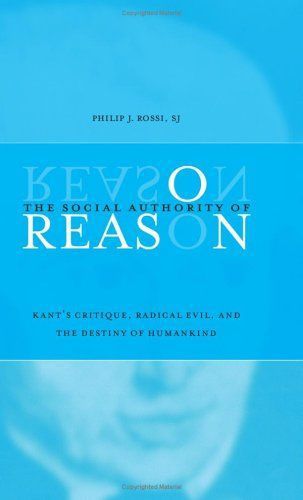
In “The Social Authority of Reason, Philip J. Rossi, SJ argues that the current cultural milieu of globalization is strikingly reflective of the human condition appraised by kant, in which mutual social interaction for human good is hamstrung by our contentious “unsociable sociability.” He situates the paradoxical nature of contemporary society–“its opportunities for deepening the bonds of our common human mutuality along with its potential for enlarging the fissures that arise from our human differences–“in the context of Kant’s notion of radical evil. As a corrective, Rossi proposes that we draw upon the social charcater of Kant’s critique of reason, which offers a communal trajectory for human moral effort and action. This trajectory still has power to open the path to what Kant called “the highest political good”–“lasting peace among nations.
Contractualism/Contractarianism collects, for the first time, both major classical sources and central contemporary discussions of these important approaches to philosophical ethics. Edited and introduced by Stephen Darwall, these readings are essential for anyone interested in normative ethics.With a helpful introduction by Stephen Darwall, examines key topics in the contractarian and contractualist moral theory.Includes six contemporary essays which respond to the classic sources.Includes an insightful discussion of contractualism by Gary Watson.Includes classic excerpts by key figures such as Hobbes, Rousseau, and Kant, and recent reactions to this work by philosophers, including David Gauthier, Gilbert Harman, John Rawls, and T. M. Scanlon.
This important book brings recent findings and theories in biology and psychology to bear on the fundamental question in ethics of what it means to behave morally. By presenting a complete model of moral agency based on contemporary evolutionary theory, developmental biology and psychology, and social cognitive theory, the book offers a unique perspective. It will be read with profit by a broad range of philosophers, as well as psychologists and biologists.
Robert Axelrod is widely known for his groundbreaking work in game theory and complexity theory. He is a leader in applying computer modeling to social science problems. His book The Evolution of Cooperation has been hailed as a seminal contribution and has been translated into eight languages since its initial publication. The Complexity of Cooperation is a sequel to that landmark book. It collects seven essays, originally published in a broad range of journals, and adds an extensive new introduction to the collection, along with new prefaces to each essay and a useful new appendix of additional resources. Written in Axelrod’s acclaimed, accessible style, this collection serves as an introductory text on complexity theory and computer modeling in the social sciences and as an overview of the current state of the art in the field.The articles move beyond the basic paradigm of the Prisoner’s Dilemma to study a rich set of issues, including how to cope with errors in perception or implementation, how norms emerge, and how new political actors and regions of shared culture can develop. They use the shared methodology of agent-based mo
ما از اخلاق چه انتظاری داریم؟ این سوال شاید تاحدودی برای عموم مردم و یا متخصصان این رشته قابل پاسخ باشد؛ اینکه خوب بودن را به ما بیاموزد و در تنظیم روابط فردی م...

جشن کتاب تهران به ایستگاه سی و یکم رسیده است. حال و احوال نشر کتاب خوب نیست و باید فرهنگدوستان را به خرید و هدیه دادن کتاب ترغیب نمود. خانه اخلاقپژوهان جوان ب...

بنیاد کتابهای اخلاق اسلامی عمدتا پالایش جان از آلودگیها و آراستن آن به زیباییها است. اندیشه محوری این قبیل کتابها آن است که انسان فعلی آنی نیست که باید باشد...

-
0 Comments