Notice: تابع WP_Block_Type_Registry::register به طورنادرست فراخوانی شد. نامهای نوع بلوک نباید حروف بزرگ داشته باشند. لطفاً برای اطلاعات بیشتر، اشکال زدایی در وردپرس را مشاهده کنید. (این پیام در نگارش 5.0.0 افزوده شده است.) in /home/ethicsho/public_html/wp-includes/functions.php on line 5313
Warning: Use of undefined constant TDC_PATH_LEGACY - assumed 'TDC_PATH_LEGACY' (this will throw an Error in a future version of PHP) in /home/ethicsho/public_html/wp-content/plugins/td-composer/td-composer.php on line 109
Warning: Use of undefined constant TDSP_THEME_PATH - assumed 'TDSP_THEME_PATH' (this will throw an Error in a future version of PHP) in /home/ethicsho/public_html/wp-content/plugins/td-composer/td-composer.php on line 113 بایگانیهای Sacraments & Rites - Christianity - خانه اخلاق پژوهان جوان Notice: Trying to access array offset on value of type bool in /home/ethicsho/public_html/wp-content/plugins/wp-ulike/inc/general-functions.php on line 807
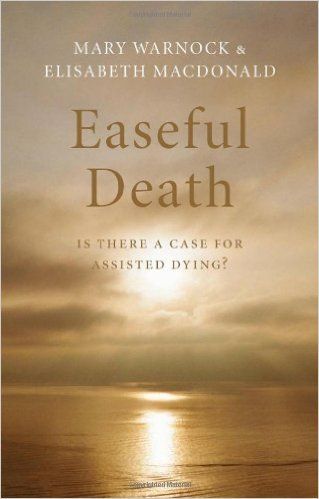
For decades assisted dying and euthanasia have sparked fierce public debate. The recent case of Terri Schiavo, and the firestorm of controversy it provoked, placed the issue in dramatic fashion before the American people once again, raising a host of complex legal, medical-ethical, religious, and individual liberties questions. Now, in Easeful Death, Mary Warnock and Elisabeth Macdonald offer a clearly reasoned, even-handed assessment of arguments both for and against the legalization of assisted suicide and euthanasia. The authors take as their starting point the attempts in Britain and other countries to bring compassion into the rules governing the end of a patient’s life. Drawing on the experience of the Netherlands, Belgium, and the state of Oregon in the US, where either assisted dying or euthanasia have been legalized, the authors explore the philosophical and ethical views on both sides of the debate, and examine how different legislative proposals would affect different members of society, from the very young to the very old. They describe the practical, medical processes of palliative care, self-denial of food and water, assisted dying and euthanasia, and ultimately conclude that the public is ready to embrace a more compassionate approach to assisted dying and that the dying themselves deserve a greater say in the timing and manner of their deaths. Written with sensitivity, grace, and level-headed authority, Easeful Death is essential reading for caregivers, doctors, medical ethicists, and anyone concerned with their own or a loved one’s end of life decisions. It argues persuasively that whatever the results of the legislative debate, compassion must be the guiding principle in the way we treat people who are dying or want to die.
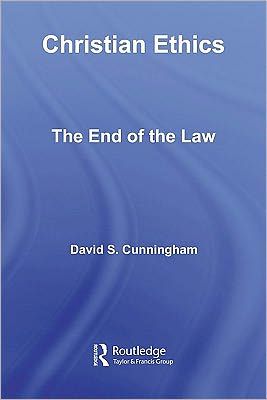
This work focuses on divine command, and in particular the theory that what makes something obligatory is that God commands it, and what makes something wrong is that God commands us not to do it. Focusing on the Abrahamic faiths, eminent scholar John E. Hare explains that two experiences have had to be integrated. The first is that God tells us to do something, or not to do something. The second is that we have to work out ourselves what to do and what not to do. The difficulty has come in establishing the proper relation between them. In Christian reflection on this, two main traditions have emerged, divine command theory and natural law theory. Professor Hare successfully defends a version of divine command theory, but also shows that there is considerable overlap with some versions of natural law theory. He engages with a number of Christian theologians, particularly Karl Barth, and extends into a discussion of divine command within Judaism and Islam.0The work concludes by examining recent work in evolutionary psychology, and argues that thinking of our moral obligations as produced by divine command offers us some help in seeing how a moral conscience could develop in a way that is evolutionarily stable.
Alain de Botton’s bestselling The Consolations of Philosophy–later made into a six-part TV series–has helped popularize ancient philosophy and especially the work of Seneca. This superb volume offers the finest translation of Seneca’s dialogues and essays in print, capturing the full range of his philosophical interests. Here the Stoic philosopher outlines his thoughts on how to live in a troubled world. Tutor to the young emperor Nero, Seneca wrote exercises in practical philosophy that draw upon contemporary Roman life and illuminate the intellectual concerns of the day. They also have much to say to the modern reader, as Seneca ranges widely across subjects such as the shortness of life, tranquility of mind, anger, mercy, happiness, and grief at the loss of a loved one. Seneca’s accessible, aphoristic style makes his writing especially attractive as an introduction to Stoic philosophy, and belies its reputation for austerity and dogmatism. This edition combines a clear and modern translation by John Davies with Tobias Reinhardt’s fascinating introduction to Seneca’s career, literary style, and influence, including a superb summary of Stoic philosophy and Seneca’s interpretation of it. The book’s notes are the fullest of any comparable edition.
“The first of its kind, this cutting edge work of philosophical ethics makes a powerful case for the centrality of moral paradox. Presenting ten diverse and original moral paradoxes, the book challenges some of our deepest moral views. This innovative volume also asks whether the existence of moral paradox is damaging or beneficial, and explores more generally what paradoxicality can teach us about morality and life.”–BOOK JACKET.
ما از اخلاق چه انتظاری داریم؟ این سوال شاید تاحدودی برای عموم مردم و یا متخصصان این رشته قابل پاسخ باشد؛ اینکه خوب بودن را به ما بیاموزد و در تنظیم روابط فردی م...

جشن کتاب تهران به ایستگاه سی و یکم رسیده است. حال و احوال نشر کتاب خوب نیست و باید فرهنگدوستان را به خرید و هدیه دادن کتاب ترغیب نمود. خانه اخلاقپژوهان جوان ب...

بنیاد کتابهای اخلاق اسلامی عمدتا پالایش جان از آلودگیها و آراستن آن به زیباییها است. اندیشه محوری این قبیل کتابها آن است که انسان فعلی آنی نیست که باید باشد...

-
0 Comments