Notice: تابع WP_Block_Type_Registry::register به طورنادرست فراخوانی شد. نامهای نوع بلوک نباید حروف بزرگ داشته باشند. لطفاً برای اطلاعات بیشتر، اشکال زدایی در وردپرس را مشاهده کنید. (این پیام در نگارش 5.0.0 افزوده شده است.) in /home/ethicsho/public_html/wp-includes/functions.php on line 5313
Warning: Use of undefined constant TDC_PATH_LEGACY - assumed 'TDC_PATH_LEGACY' (this will throw an Error in a future version of PHP) in /home/ethicsho/public_html/wp-content/plugins/td-composer/td-composer.php on line 109
Warning: Use of undefined constant TDSP_THEME_PATH - assumed 'TDSP_THEME_PATH' (this will throw an Error in a future version of PHP) in /home/ethicsho/public_html/wp-content/plugins/td-composer/td-composer.php on line 113 بایگانیهای Robotics - Military Applications - خانه اخلاق پژوهان جوان Notice: Trying to access array offset on value of type bool in /home/ethicsho/public_html/wp-content/plugins/wp-ulike/inc/general-functions.php on line 807
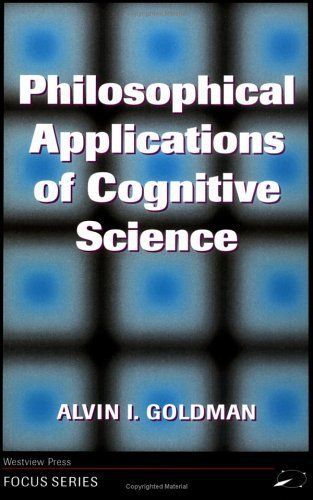
One of the most fruitful interdisciplinary boundaries in contemporary scholarship is that between philosophy and cognitive science. Now that solid empirical results about the activities of the human mind are available, it is no longer necessary for philosophers to practice armchair psychology.In this short, accessible, and entertaining book, Alvin Goldman presents a masterly survey of recent work in cognitive science that has particular relevance to philosophy. Besides providing a valuable review of the most suggestive work in cognitive and social psychology, Goldman demonstrates conclusively that the best work in philosophy in a surprising number of different fields—including philosophy of science, epistemology, metaphysics, and ethics as well as philosophy of mind—must take into account empirical breakthroughs in psychology.One of those rare texts that will also be useful for professionals, Philosophical Applications of Cognitive Science is appropriate for students in a wide range of philosophy courses. It will also interest researchers and students in psychology who are intrigued by the wider theoretical implications of their work.
How do young and old social animals view each other? Are aged animals perceived by others as weaker? Or wiser? What is the relationship between age and power among social animals?Taking a cue from Frans de Waal’s seminal work examining the lives of chimpanzees, Anne Innis Dagg in this pioneering study probes the lives of older mammals and birds. Synthesizing the available scientific research and anecdotal evidence, she explores how aging affects the lives and behavior of animals ranging from elk to elephants and gulls to gorillas, examining such topics as longevity; how others in a group view senior members in regard to leadership, wisdom, and teaching; mating success; interactions with mates and offspring; how aging affects dominance; changes in aggressive behavior and adaptability; and death and dying.At once instructive and compelling, this theme-spanning book reveals the complex nature of maturity in scores of social species and shows that animal behavior often displays the same diversity we find in ourselves.
At last, a comprehensive collection of essays that examines and advances ethical evaluations of the controversial and increasingly popular practice of embryo adoption. In the United States alone, 400,000 frozen embryos created for in vitro fertilization exist but are no longer desired for that purpose. What are we morally obliged or permitted to do about these “spare” embryos? More of their genetic parents are considering donating these embryos to others to gestate and raise. This practice is politically volatile (figuring in debates about embryonic stem cells) and medically and morally complex. At the present time within the Roman Catholic Church there is no official teaching on embryo adoption. Catholic ethical analyses grapple with the way embryo adoption comports with respect for embryonic human life yet challenges Catholic moral critiques of assisted reproductive technologies. This volume is the first to bring together leading philosophers and theologians to engage Catholic debates about embryo adoption in an interactive format. The editors, a philosopher bioethicist and a moral theologian, provide a helpful overview of the practice and the arguments surrounding embryo adoption. They engage neglected Catholic ethical resources and issues to advance the current debate and chart new directions in Catholic moral thinking about this intriguing practice. The volume also includes a description of embryo adoption from a physician practitioner along with reflections from a couple who successfully adopted an embryo.
Defending Life is arguably the most comprehensive defense of the prolife position on abortion – morally, legally, and politically – that has ever been published in an academic monograph. It offers a detailed and critical analysis of Roe v. Wade and Planned Parenthood v. Casey as well as arguments by those who defend a Rawlsian case for abortion-choice, such as J. J. Thomson. The author defends the substance view of persons as the view with the most explanatory power. The substance view entails that the unborn is a subject of moral rights from conception. While defending this view, the author responds to the arguments of thinkers such as Boonin, Dworkin, Stretton, Ford, and Brody. He also critiques Thomson’s famous violinist argument and its revisions by Boonin and McDonagh. Defending Life includes chapters critiquing arguments found in popular politics and the controversy over cloning and stem cell research.
Mark Sagoff draws on the last twenty years of debate over the foundations of environmentalism in this comprehensive revision of The Economy of the Earth. Posing questions pertinent to consumption, cost-benefit analysis, the normative implications of neo-Darwinism, the role of the natural in national history, and the centrality of the concept of place in environmental ethics, he analyzes social policy in relation to the environment, pollution, the workplace, and public safely and health. Sagoff distinguishes ethical from economic questions and explains which kinds of concepts, arguments, and processes are appropriate to each.
ما از اخلاق چه انتظاری داریم؟ این سوال شاید تاحدودی برای عموم مردم و یا متخصصان این رشته قابل پاسخ باشد؛ اینکه خوب بودن را به ما بیاموزد و در تنظیم روابط فردی م...

جشن کتاب تهران به ایستگاه سی و یکم رسیده است. حال و احوال نشر کتاب خوب نیست و باید فرهنگدوستان را به خرید و هدیه دادن کتاب ترغیب نمود. خانه اخلاقپژوهان جوان ب...

بنیاد کتابهای اخلاق اسلامی عمدتا پالایش جان از آلودگیها و آراستن آن به زیباییها است. اندیشه محوری این قبیل کتابها آن است که انسان فعلی آنی نیست که باید باشد...

-
0 Comments