Notice: تابع WP_Block_Type_Registry::register به طورنادرست فراخوانی شد. نامهای نوع بلوک نباید حروف بزرگ داشته باشند. لطفاً برای اطلاعات بیشتر، اشکال زدایی در وردپرس را مشاهده کنید. (این پیام در نگارش 5.0.0 افزوده شده است.) in /home/ethicsho/public_html/wp-includes/functions.php on line 5313
Warning: Use of undefined constant TDC_PATH_LEGACY - assumed 'TDC_PATH_LEGACY' (this will throw an Error in a future version of PHP) in /home/ethicsho/public_html/wp-content/plugins/td-composer/td-composer.php on line 109
Warning: Use of undefined constant TDSP_THEME_PATH - assumed 'TDSP_THEME_PATH' (this will throw an Error in a future version of PHP) in /home/ethicsho/public_html/wp-content/plugins/td-composer/td-composer.php on line 113 بایگانیهای Report Writing/ Handbooks, Manuals, Etc - خانه اخلاق پژوهان جوان Notice: Trying to access array offset on value of type bool in /home/ethicsho/public_html/wp-content/plugins/wp-ulike/inc/general-functions.php on line 807
How do the hard facts of political responsibility shape and constrain the demands of ethical life? That question lies at the heart of the problem of ‘dirty hands’ in public life. Those who exercise political power often feel they must act in ways that would otherwise be considered immoral: indeed, paradoxically, they sometimes feel that it would be immoral of them not to perform or condone such acts as killing or lying. John Parrish offers a wide-ranging account of how this important philosophical problem emerged and developed, tracing it – and its proposed solutions – from ancient Greece through the Enlightenment. His central argument is that many of our most familiar concepts and institutions – from Augustine’s interiorised ethics, to Hobbes’s sovereign state, to Adam Smith’s ‘invisible hand’, understanding of the modern commercial economy – were designed partly as responses to the ethical problem of dirty hands in public life.
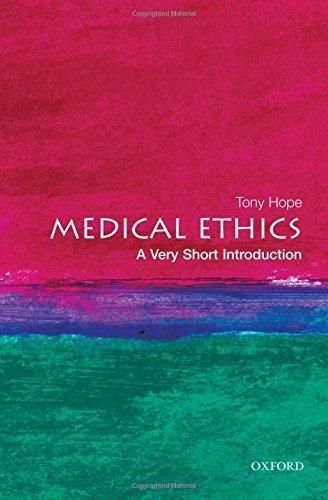
Medical ethics is an area that has particular interest for the general public as well as for the medical practitioner, and issues concerning medical ethics seem to be constantly in the headlines. This short and accessible introduction provides an invaluable tool with which to think about the ethical values that lie at the heart of medicine. Tony Hope deals with thorny moral issues, including euthanasia and the morality of killing. He also explores political questions, such as how we can make sure health care resources are distributed fairly. Each chapter in the book considers a different issue, for example, genetics, modern reproductive technologies, resource allocation, mental health, and medical research. Each section also discusses controversial questions such as: Who should have access to reproductive technology? Is it right to fund expensive drug treatment for individuals? Should treatment for mental illness be imposed on patients without their consent? Considering a wide range of questions of medical ethics, this Very Short Introduction will help to explain some of the confusing issues facing the field of medicine today.
In The Ethics of Romanticism Laurence Lockridge vigorously revives ethical criticism and at the same time brings to light the Romantics’ profound engagement with ethical questions. He argues that a will to value is the pervasive motive of Romantic writers from Blake, Wordsworth, Coleridge and De Quincey to Shelley, Hazlitt, Keats and Byron. They articulate a compelling ethics that has had a significant influence on modern thought. Yet its character has never before been systematically explored within the larger contexts of European thought. Lockridge argues that a focus on the ethical dimension of literature is the single most powerful strategy for structuring a writer’s work as a whole, and that it can even prove congenial. He gives original, interrelated readings of the eight major British Romantic writers. In discussing the place of ethical criticism in modern letters, he qualifies or refutes opposing views – conservative, Marxist, and deconstructive. His book gives strong evidence of one direction criticism might fruitfully take in future years.
ما از اخلاق چه انتظاری داریم؟ این سوال شاید تاحدودی برای عموم مردم و یا متخصصان این رشته قابل پاسخ باشد؛ اینکه خوب بودن را به ما بیاموزد و در تنظیم روابط فردی م...

جشن کتاب تهران به ایستگاه سی و یکم رسیده است. حال و احوال نشر کتاب خوب نیست و باید فرهنگدوستان را به خرید و هدیه دادن کتاب ترغیب نمود. خانه اخلاقپژوهان جوان ب...

بنیاد کتابهای اخلاق اسلامی عمدتا پالایش جان از آلودگیها و آراستن آن به زیباییها است. اندیشه محوری این قبیل کتابها آن است که انسان فعلی آنی نیست که باید باشد...

-
0 Comments