
Notice: تابع WP_Block_Type_Registry::register به طورنادرست فراخوانی شد. نامهای نوع بلوک نباید حروف بزرگ داشته باشند. لطفاً برای اطلاعات بیشتر، اشکال زدایی در وردپرس را مشاهده کنید. (این پیام در نگارش 5.0.0 افزوده شده است.) in /home/ethicsho/public_html/wp-includes/functions.php on line 5313
Warning: Use of undefined constant TDC_PATH_LEGACY - assumed 'TDC_PATH_LEGACY' (this will throw an Error in a future version of PHP) in /home/ethicsho/public_html/wp-content/plugins/td-composer/td-composer.php on line 109
Warning: Use of undefined constant TDSP_THEME_PATH - assumed 'TDSP_THEME_PATH' (this will throw an Error in a future version of PHP) in /home/ethicsho/public_html/wp-content/plugins/td-composer/td-composer.php on line 113 بایگانیهای Religion / General - خانه اخلاق پژوهان جوان Notice: Trying to access array offset on value of type bool in /home/ethicsho/public_html/wp-content/plugins/wp-ulike/inc/general-functions.php on line 807
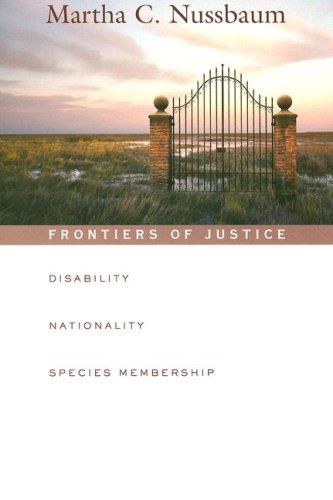
Theories of social justice are necessarily abstract, reaching beyond the particular and the immediate to the general and the timeless. Yet such theories, addressing the world and its problems, must respond to the real and changing dilemmas of the day. A brilliant work of practical philosophy, Frontiers of Justice is dedicated to this proposition. Taking up three urgent problems of social justice neglected by current theories and thus harder to tackle in practical terms and everyday life, Martha Nussbaum seeks a theory of social justice that can guide us to a richer, more responsive approach to social cooperation.The idea of the social contract–especially as developed in the work of John Rawls–is one of the most powerful approaches to social justice in the Western tradition. But as Nussbaum demonstrates, even Rawls’s theory, suggesting a contract for mutual advantage among approximate equals, cannot address questions of social justice posed by unequal parties. How, for instance, can we extend the equal rights of citizenship–education, health care, political rights and liberties–to those with physical and mental disabilities? How can we extend justice and dignified life conditions to all citizens of the world? And how, finally, can we bring our treatment of nonhuman animals into our notions of social justice? Exploring the limitations of the social contract in these three areas, Nussbaum devises an alternative theory based on the idea of “capabilities.” She helps us to think more clearly about the purposes of political cooperation and the nature of political principles–and to look to a future of greater justice for all.
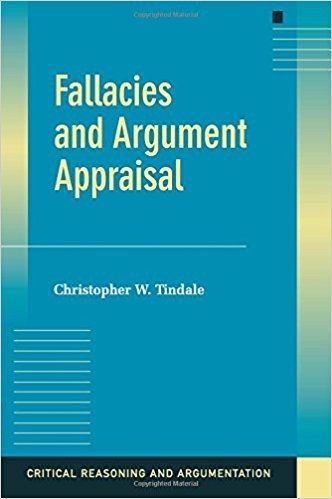
Fallacies and Argument Appraisal presents an introduction to the nature, identification, and causes of fallacious reasoning, along with key questions for evaluation. Drawing from the latest work on fallacies as well as some of the standard ideas that have remained relevant since Aristotle, Christopher Tindale investigates central cases of major fallacies in order to understand what has gone wrong and how this has occurred. Dispensing with the approach that simply assigns labels and brief descriptions of fallacies, Tindale provides fuller treatments that recognize the dialectical and rhetorical contexts in which fallacies arise. This volume analyzes major fallacies through accessible, everyday examples. Critical questions are developed for each fallacy to help the student identify them and provide considered evaluations.
Although the environmental movement and the environmental justice movement would seem to be natural allies, their relationship over the years has often been characterized by conflict and division. The environmental justice movement has charged the mainstream environmental movement with racism and elitism and has criticized its activist agenda on the grounds that it values wilderness over people. Environmental justice advocates have called upon environmental organizations to act on environmental injustice and address racism and classism in their own hiring and organizational practices, lobbying agenda, and political platforms. This book examines the current relationship between the two movements in both conceptual and practical terms and explores the possibilities for future collaboration. In ten original essays, contributors from a variety of disciplines consider such topics as the relationship between the two movements’ ethical commitments and activist goals, instances of successful cooperation in U.S. contexts, and the challenges posed to both movements by globalization and climate change. They examine the possibility and desirability of one unified movement as opposed to two complementary ones by means of analyses and case studies; these include a story of asbestos hazards that begins in a Montana mine and ends with the release of asbestos insulation into the air of Manhattan after the collapse of the World Trade Center. This book, part of a necessary rethinking of the relationship between the two movements, shows that effective, mutually beneficial alliances can advance the missions of both.Contributors:Kim Allen, J. Robert Cox, Vinci Daro, Kevin DeLuca, Giovanna Di Chiro, Daniel Faber, Dorothy Holland, Dale Jamieson, M. Nils Peterson, Markus John Peterson, Tarla Rai Peterson, Phaedra C. Pezzullo, J. Timmons Roberts, Ronald Sandler, Steve Schwarze, Peter Wenz
Dealing with a diverse set of problems in practical and theoretical ethics, these fourteen essays, three of them previously unpublished, reconfirm Joel Feinberg’s leading position in the field of legal philosophy. With a clarity and humor that will be familiar to readers of his other works, Feinberg writes on topics including “wrongful life” suits in the law of torts, or whether there is any sense in the remark that a person is so badly off that he would be better off not existing at all; the morality of abortion; educational options; free expression; civil disobedience; and the duty of easy rescue in criminal law. He continues with a three-part defense of moral rights in the abstract, a discussion of voluntary euthanasia, and an inquiry into arguments of various kinds for not granting legal rights in enforcement of a person’s acknowledged moral rights. This collection concludes with two essays dealing with concepts used in appraising the whole of a person’s life: absurdity and self-fulfillment, and their interplay.Dealing with a diverse set of problems in practical and theoretical ethics, these fourteen essays, three of them previously unpublished, reconfirm Joel Feinberg’s leading position in the field of legal philosophy. With a clarity and humor that will be familiar to readers of his other works, Feinberg writes on topics including “wrongful life” suits in the law of torts, or whether there is any sense in the remark that a person is so badly off that he would be better off not existing at all; the morality of abortion; educational options; free expression; civil disobedience; and the duty of easy rescue in criminal law. He continues with a three-part defense of moral rights in theabstract, a discussion of voluntary euthanasia, and an inquiry into arguments of various kinds for not granting legal rights in enforcement of a person’s acknowledged moral rights. This collection concludes with two essays dealing with concepts used in appraising the whole of a person’s life: absurdity and self-fulfillment, and their interplay.
ما از اخلاق چه انتظاری داریم؟ این سوال شاید تاحدودی برای عموم مردم و یا متخصصان این رشته قابل پاسخ باشد؛ اینکه خوب بودن را به ما بیاموزد و در تنظیم روابط فردی م...

جشن کتاب تهران به ایستگاه سی و یکم رسیده است. حال و احوال نشر کتاب خوب نیست و باید فرهنگدوستان را به خرید و هدیه دادن کتاب ترغیب نمود. خانه اخلاقپژوهان جوان ب...

بنیاد کتابهای اخلاق اسلامی عمدتا پالایش جان از آلودگیها و آراستن آن به زیباییها است. اندیشه محوری این قبیل کتابها آن است که انسان فعلی آنی نیست که باید باشد...

-
0 Comments