Notice: تابع WP_Block_Type_Registry::register به طورنادرست فراخوانی شد. نامهای نوع بلوک نباید حروف بزرگ داشته باشند. لطفاً برای اطلاعات بیشتر، اشکال زدایی در وردپرس را مشاهده کنید. (این پیام در نگارش 5.0.0 افزوده شده است.) in /home/ethicsho/public_html/wp-includes/functions.php on line 5313
Warning: Use of undefined constant TDC_PATH_LEGACY - assumed 'TDC_PATH_LEGACY' (this will throw an Error in a future version of PHP) in /home/ethicsho/public_html/wp-content/plugins/td-composer/td-composer.php on line 109
Warning: Use of undefined constant TDSP_THEME_PATH - assumed 'TDSP_THEME_PATH' (this will throw an Error in a future version of PHP) in /home/ethicsho/public_html/wp-content/plugins/td-composer/td-composer.php on line 113 بایگانیهای Religion / Christian Life / General - خانه اخلاق پژوهان جوان Notice: Trying to access array offset on value of type bool in /home/ethicsho/public_html/wp-content/plugins/wp-ulike/inc/general-functions.php on line 807
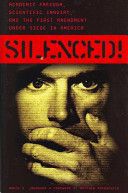
This book is about people whose beliefs and affiliations have opposed powerful interests in the present-day United States. This eclectic group of people and controversial issues, from climate-change scientists who have been censored by the Bush administration to Muslims accused of terrorism, have one thing in common. All of them straddle the limits of what Noam Chomsky has called permissible debate as defined by dominant political and economic institutions and individuals. The central thesis is that restriction of free inquiry is harmful to our culture because it inhibits the search for knowledge. Johansen presents case studies in the borderlands of free speech in a Jeffersonian cast-an intellectual framework assuming that open debate-even of unpopular ideas-is essential to accurate perception of reality. This book is about people whose ideological circumstances have found them opposing established beliefs in our times-scholars advocating the Palestinian cause in a very hostile intellectual environment, for example, as well as climate scientists defending themselves against the de-funding of their laboratories by defenders of fossil-fuel interests; opponents of creation science under assault for teaching what once was regarded as household-variety biology (a.k.a. Darwinism); Marxists in a political system dominated by neoconservatives. The central thesis that unites this diverse array of controversies is that shutting down free inquiry-most notably for points of view deemed unpopular-dumbs us all down by restraining the search for knowledge, which demands open inquiry. We have been told when going to war, as in Iraq, that freedom isn’t free, the unstated assumption being that our armed forces are fighting and dying to safeguard our civil rights at home and abroad. During recent years, however, freedom to inquire and debate without retribution has been under assault in the United States. This assault has been carried out under a distinctly Orwellian cast, under Newspeak titles such as the Patriot Act, parts of which might as well be described more honestly as the Restriction of Freedom of Inquiry Act. The information gathered here will interest (and probably anger) anyone who is concerned with protecting robust, free inquiry in a nation that takes seriously its freedom to speak out, and to define truth through open debate.
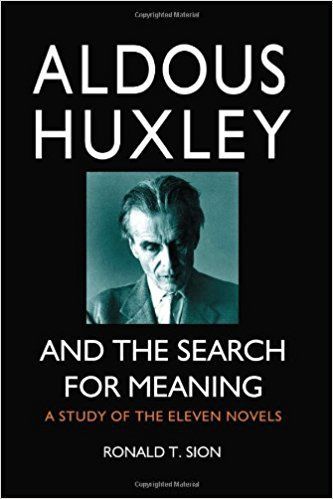
“This critical biography explores Huxley’s life-long quest for self-actualization by interfacing the events of his life with details of the creative period that produced each book, weaving Huxley’s letters, essays and interviews with the thematic content of each novel, providing a unique look into the man’s life and work”–Provided by publisher.
It is hard to overestimate the importance of the work of Augustine of Hippo, both in his own period and in the subsequent history of Western philosophy. Until the thirteenth century, when he may have had a competitor in Thomas Aquinas, he was the most important philosopher of the medieval period. Many of his views, including his theory of the just war, his account of time and eternity, his understanding of the will, his attempted resolution of the problem of evil, and his approach to the relation of faith and reason, have continued to be influential up to the present time. In this volume of specially-commissioned essays, sixteen scholars provide a wide-ranging and stimulating contribution to our understanding of Augustine, covering all the major areas of his philosophy and theology.
In this wide-ranging philosophical work, Koons takes on two powerful dogmas–anti-realism and materialism. In doing so, Koons develops an elegant metaphysical system that accounts for such phenomena as information, mental representation, our knowledge of logic, mathematics and science, the structure of spacetime, the identity of physical objects, and the objectivity of values and moral norms.
How should a prize be awarded after a horse race? Should it go to the best rider, the best person, or the one who finishes first? To what extent are bystanders blameworthy when they do nothing to prevent harm? Are there any objective standards of moral responsibility with which to address such perennial questions? In this fluidly written and lively book, Daniel Robinson takes on the prodigious task of setting forth the contours of praise and blame. He does so by mounting an important and provocative new defense of a radical theory of moral realism and offering a critical appraisal of prevailing alternatives such as determinism and behaviorism and of their conceptual shortcomings. The version of moral realism that arises from Robinson’s penetrating inquiry–an inquiry steeped in Aristotelian ethics but deeply informed by modern scientific knowledge of human cognition–is independent of cognition and emotion. At the same time, Robinson carefully explores how such human attributes succeed or fail in comprehending real moral properties. Through brilliant analyses of constitutional and moral luck, of biosocial and genetic versions of psychological determinism, and of relativistic-anthropological accounts of variations in moral precepts, he concludes that none of these conceptions accounts either for the nature of moral properties or the basis upon which they could be known. Ultimately, the theory that Robinson develops preserves moral properties even while acknowledging the conditions that undermine the powers of human will.
ما از اخلاق چه انتظاری داریم؟ این سوال شاید تاحدودی برای عموم مردم و یا متخصصان این رشته قابل پاسخ باشد؛ اینکه خوب بودن را به ما بیاموزد و در تنظیم روابط فردی م...

جشن کتاب تهران به ایستگاه سی و یکم رسیده است. حال و احوال نشر کتاب خوب نیست و باید فرهنگدوستان را به خرید و هدیه دادن کتاب ترغیب نمود. خانه اخلاقپژوهان جوان ب...

بنیاد کتابهای اخلاق اسلامی عمدتا پالایش جان از آلودگیها و آراستن آن به زیباییها است. اندیشه محوری این قبیل کتابها آن است که انسان فعلی آنی نیست که باید باشد...

-
0 Comments