Notice: تابع WP_Block_Type_Registry::register به طورنادرست فراخوانی شد. نامهای نوع بلوک نباید حروف بزرگ داشته باشند. لطفاً برای اطلاعات بیشتر، اشکال زدایی در وردپرس را مشاهده کنید. (این پیام در نگارش 5.0.0 افزوده شده است.) in /home/ethicsho/public_html/wp-includes/functions.php on line 5313
Warning: Use of undefined constant TDC_PATH_LEGACY - assumed 'TDC_PATH_LEGACY' (this will throw an Error in a future version of PHP) in /home/ethicsho/public_html/wp-content/plugins/td-composer/td-composer.php on line 109
Warning: Use of undefined constant TDSP_THEME_PATH - assumed 'TDSP_THEME_PATH' (this will throw an Error in a future version of PHP) in /home/ethicsho/public_html/wp-content/plugins/td-composer/td-composer.php on line 113 بایگانیهای Recreation Areas - Lebanon - خانه اخلاق پژوهان جوان Notice: Trying to access array offset on value of type bool in /home/ethicsho/public_html/wp-content/plugins/wp-ulike/inc/general-functions.php on line 807
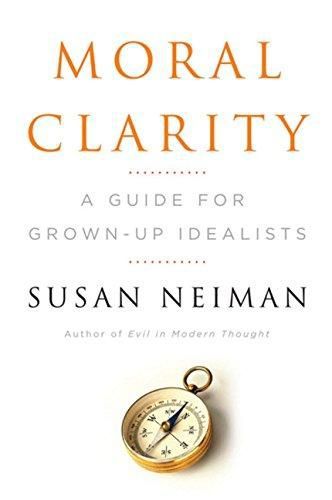
Susan Neiman is a moral philosopher committed to making the tools of her trade relevant to real life. In Moral Clarity, she shows how resurrecting a moral vocabulary good and evil, heroism and nobility can steer us clear of the dogmas of the right and the helpless pragmatism of the left. In search of a framework for forming clear opinions and taking responsible action on today’s urgent political and social questions, Neiman reaches back to the eighteenth century, retrieving a set of virtues happiness, reason, reverence, and hope that were held high by every Enlightenment thinker. She shows that the pursuit of moral clarity is not a matter of religious faith but is open to all who are committed to these ideals, believers and nonbelievers alike. And she draws on literature, evolutionary theory, and other contemporary research to show why, by keeping before us the distinction between the real and the possible, these ideals continue to guide and inspire.
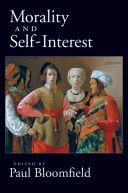
Ever since “Know Thyself” was inscribed at Delphi, Western philosophers have struggled to understand the relations between morality and self-interest. This edited volume of essays pushes forward one of the oldest and most important debates in philosophy. Is morality a check on self-interest or is it in one’s self interest to be moral? Can morality and self-interest be understood independently of each other? Christopher Morris, The Trouble With Justice Mathias Risse, Nietzsche on Selfishness, Justice, and the Duties of the Higher Men Richard Joyce, Morality, Schmorality David Schmidtz, Because It’s Right Thomas Nagel, The Value of Inviolability Samuel Scheffler, Potential Congruence Stephen Finlay, Too Much Morality Terence Irwin Scotus and the Possibility of Moral Motivation Ralph Wedgwood, Butler on Virtue, Self Interest, and Human Nature Julia Annas, Virtue Ethics and the Charge of Egoism W.D. Falk, Morality, Self, and Others Paul Bloomfield, Why It’s Bad To Be Bad Joel Kupperman, Classical and Sour Forms of Virtue Michael Stocker, Shame and Gui
One of the most difficult problems confronting clinicians and medical professionals today is the application of ethical principles to real decisions affecting patients. In this even-handed book, Clare Foster examines the three main approaches to moral decision-making: goal-based, duty-based, and rights-based. She discusses the underlying philosophical arguments behind each approach, examines their relative strengths and weaknesses, and indicates how they can actually be applied. Is it ethical to experiment with new cures on people who are probably dying? How do you assess quality of consent? This book provides a thorough, nonpartisan grounding in what the ethical principles are and what informs them.
ما از اخلاق چه انتظاری داریم؟ این سوال شاید تاحدودی برای عموم مردم و یا متخصصان این رشته قابل پاسخ باشد؛ اینکه خوب بودن را به ما بیاموزد و در تنظیم روابط فردی م...

جشن کتاب تهران به ایستگاه سی و یکم رسیده است. حال و احوال نشر کتاب خوب نیست و باید فرهنگدوستان را به خرید و هدیه دادن کتاب ترغیب نمود. خانه اخلاقپژوهان جوان ب...

بنیاد کتابهای اخلاق اسلامی عمدتا پالایش جان از آلودگیها و آراستن آن به زیباییها است. اندیشه محوری این قبیل کتابها آن است که انسان فعلی آنی نیست که باید باشد...

-
0 Comments