Notice: تابع WP_Block_Type_Registry::register به طورنادرست فراخوانی شد. نامهای نوع بلوک نباید حروف بزرگ داشته باشند. لطفاً برای اطلاعات بیشتر، اشکال زدایی در وردپرس را مشاهده کنید. (این پیام در نگارش 5.0.0 افزوده شده است.) in /home/ethicsho/public_html/wp-includes/functions.php on line 5313
Warning: Use of undefined constant TDC_PATH_LEGACY - assumed 'TDC_PATH_LEGACY' (this will throw an Error in a future version of PHP) in /home/ethicsho/public_html/wp-content/plugins/td-composer/td-composer.php on line 109
Warning: Use of undefined constant TDSP_THEME_PATH - assumed 'TDSP_THEME_PATH' (this will throw an Error in a future version of PHP) in /home/ethicsho/public_html/wp-content/plugins/td-composer/td-composer.php on line 113 بایگانیهای Public Health - خانه اخلاق پژوهان جوان Notice: Trying to access array offset on value of type bool in /home/ethicsho/public_html/wp-content/plugins/wp-ulike/inc/general-functions.php on line 807
This book argues that the English law governing the end(ing) of life violates norms, such as the need for consistency and clarity, whose observance are vital for a properly functioning legal system. It will demonstrate that such difficulties stem from the law’s attempts to cleave to competing ethical injunctions concerning the value of human life and the individual’s proclaimed right to determine the ending of his or her life. In contrast to most contributions to the debate which tend to adopt more absolutist positions, this book concludes that a compromise position is defensible but that current compromise can be better articulated, thus restoring a measure of legal rationality.
Despite the pharmaceutical industry’s notable contributions to human progress, including the development of miracle drugs for treating cancer, AIDS, and heart disease, there is a growing tension between the industry and the public. Debates are raging over how the industry can and should be expected to act. In this volume leading figures in industry, government, NGOs, the medical community, and academia discuss and propose solutions to the ethical dilemmas of drug industry behavior. They examine such aspects as the role of intellectual property rights and patent protection, the moral and economic requisites of research and clinical trials, drug pricing, marketing and advertising. . Michael Santoro is Associate Professor with tenure in the Business Environment Department at Rutgers Business School, where he teaches courses on business ethics, public policy, labor and human rights, law, ethical issues in the pharmaceutical industry and China business strategy. As a Research Associate at Harvard Business School, he wrote or co-authored nearly thirty case studies and teaching notes on ethical and legal topics such as global protection of intellectual property, insider trading, the Federal Sentencing Guidelines and Fair Credit Reporting Act. Thomas Gorrie is Corporate Vice President, Government Affairs & Policy, at Johnson & Johnson, with responsiblity for all federal, state and international government affairs and policy. He completed post-doctoral studies at the Swiss Federal Institute of Technology in Zurich, following the receipt of his doctorate at Princeton University. Gorrie has over 30 years of worldwide health care experience and has worked with various Johnson & Johnson companies in research and development, marketing and sales, business development, strategic planning, general management, international, venture capital, and health policy.
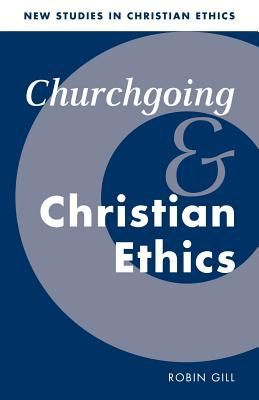
Robin Gill argues that once moral communities (such as churchgoers) take centre stage in ethics – as they do in virtue ethics – then there should be a greater interest in sociological evidence about these communities. This book examines recent evidence, gathered from social attitude surveys, about church communities, in particular their views on faith, moral order and love. It shows that churchgoers are distinctive in their attitudes and behaviour. Some of their attitudes change over time, and there are a number of obvious moral disagreements between different groups of churchgoers. Nonetheless, there are broad patterns of Christian beliefs, teleology and altruism which distinguish churchgoers as a whole from non-churchgoers. However, the values, virtues, moral attitudes and behaviour of churchgoers are shared by many other people as well. The distinctiveness of church communities in the modern world is thus real but relative, and is crucial for the task of Christian ethics.
Adam Smith is the best known among economists for his book, The Wealth of Nations, often viewed as the keystone of modern economic thought. Others, often heterodox economists and social philosophers, on the contrary, focus on Smith’s Theory of Moral Sentiments, and explore his moral theory. This work treats these dimensions of Smith’s work as elements in a seamless moral philosophical vision, demonstrating the integrated nature of these works and Smith’s other writings. Although many practitioners today see the study of Smith as an antiquarian exercise, this book weaves Smith into a constructive critique of modern ecnomic analysis (engaging along the way the work of Nobel Laureates Gary Becker, Amarty Sen, Douglass North, and James Buchanan) and builds bridges between that discourse and the other social sciences.
ما از اخلاق چه انتظاری داریم؟ این سوال شاید تاحدودی برای عموم مردم و یا متخصصان این رشته قابل پاسخ باشد؛ اینکه خوب بودن را به ما بیاموزد و در تنظیم روابط فردی م...

جشن کتاب تهران به ایستگاه سی و یکم رسیده است. حال و احوال نشر کتاب خوب نیست و باید فرهنگدوستان را به خرید و هدیه دادن کتاب ترغیب نمود. خانه اخلاقپژوهان جوان ب...

بنیاد کتابهای اخلاق اسلامی عمدتا پالایش جان از آلودگیها و آراستن آن به زیباییها است. اندیشه محوری این قبیل کتابها آن است که انسان فعلی آنی نیست که باید باشد...

-
0 Comments