Notice: تابع WP_Block_Type_Registry::register به طورنادرست فراخوانی شد. نامهای نوع بلوک نباید حروف بزرگ داشته باشند. لطفاً برای اطلاعات بیشتر، اشکال زدایی در وردپرس را مشاهده کنید. (این پیام در نگارش 5.0.0 افزوده شده است.) in /home/ethicsho/public_html/wp-includes/functions.php on line 5313
Warning: Use of undefined constant TDC_PATH_LEGACY - assumed 'TDC_PATH_LEGACY' (this will throw an Error in a future version of PHP) in /home/ethicsho/public_html/wp-content/plugins/td-composer/td-composer.php on line 109
Warning: Use of undefined constant TDSP_THEME_PATH - assumed 'TDSP_THEME_PATH' (this will throw an Error in a future version of PHP) in /home/ethicsho/public_html/wp-content/plugins/td-composer/td-composer.php on line 113 بایگانیهای Presbyterian Church - Missions - Connecticut - خانه اخلاق پژوهان جوان Notice: Trying to access array offset on value of type bool in /home/ethicsho/public_html/wp-content/plugins/wp-ulike/inc/general-functions.php on line 807
Wittgenstein and Levinasexamines the oft-neglected relationship between the philosophies of two of the most important and notoriously difficult thinkers of the twentieth century. By bringing the work of each philosopher to bear upon the other, Plant navigates between the antagonistic intellectual traditions that they helped to share. The central focus on the book is the complex yet illuminating interplay between a number of ethical-religious themes in both Wittgenstein’s mature thinking and Levinas’s distinctive account of ethical responsibility.
In Oughts and Thoughts, Anandi Hattiangadi provides an innovative response to the argument for meaning skepticism set out by Saul Kripke in Wittgenstein on Rules and Private Language. Kripke asks what makes it the case that anybody ever means anything by any word, and argues that there are no facts of the matter as to what anybody ever means. Kripke’s argument has inspired a lively and extended debate in the philosophy of language, as it raises some of the most fundamental issues in the field: namely, the reality, privacy, and normativity of meaning. Hattiangadi argues that in order to achieve the radical conclusion that there are no facts as to what a person means by a word, the skeptic must rely on the thesis that meaning is normative, and that this thesis fails. Since any “skeptical solution” to the skeptical problem is irremediably incoherent, Hattiangadi concludes that there must be a fact of the matter about what we mean. In addition to providing an overview of the debate on meaning and content skepticism, Hattiangadi presents a detailed discussion of the contributions made by Simon Blackburn, Paul Boghossian, Robert Brandom, Fred Dretske, John McDowell, and Crispin Wright, among others, to the controversy surrounding Kripke’s argument. The issues considered include the normativity of meaning and its relation to the normativity of moral judgments, reductive and non-reductive theories of meaning, deflationism about truth and meaning, and the privacy of meaning.
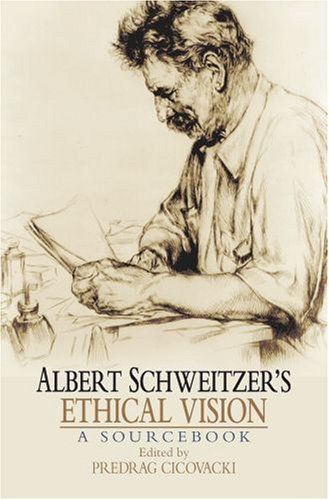
The philosophy of Albert Schweitzer has proved widely influential in modern thinking, especially in the field of ethics. His leading ethical idea can be summarized in the phrase “reverence for life” – namely, that good consists in maintaining and perfecting life, and evil consists in destroying and obstructing life. For Schweitzer, all life is sacred. Ethics thus deals with human attitudes and behavior toward all living beings. Unlike many moral philosophers, Schweitzer argues that knowledge of human nature does not provide a sufficient foundation for any adequate moral theory. That is why he bases his ethics on much broader foundations, articulated in his philosophy of civilization and the philosophy of religion. Schweitzer argues that the material aspect of our civilization has become far more important than its spiritual counterpart. Even organized religion has put itself in the service of politics and economy, thereby losing its vitality and moral authority. Schweitzer’s ethics of reverence for life, argues Predrag Cicovacki, offers a viable alternative at a time when traditional ethical theories are found inadequate. Schweitzer’s robust and un-dogmatic idealism may offer the best antidote to the prevailing relativism and nihilism of the postmodern epoch. His ethical vision directs us toward a new way of building a more just and more peaceful world. Collecting sixteen of Schweitzer’s most effective essays, this volume serves as a compelling introduction to this remarkable thinker and humanist.
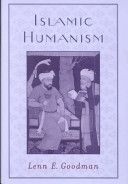
This book is an attempt to explain how, in the face of increasing religious authoritarianism in medieval Islamic civilization, some Muslim thinkers continued to pursue essentially humanistic, rational, and scientific discourses in the quest for knowledge, meaning, and values. Drawing on a wide range of Islamic writings, from love poetry to history to philosophical theology, Goodman shows that medieval Islam was open to individualism, occasional secularism, skepticism, even liberalism.
ما از اخلاق چه انتظاری داریم؟ این سوال شاید تاحدودی برای عموم مردم و یا متخصصان این رشته قابل پاسخ باشد؛ اینکه خوب بودن را به ما بیاموزد و در تنظیم روابط فردی م...

جشن کتاب تهران به ایستگاه سی و یکم رسیده است. حال و احوال نشر کتاب خوب نیست و باید فرهنگدوستان را به خرید و هدیه دادن کتاب ترغیب نمود. خانه اخلاقپژوهان جوان ب...

بنیاد کتابهای اخلاق اسلامی عمدتا پالایش جان از آلودگیها و آراستن آن به زیباییها است. اندیشه محوری این قبیل کتابها آن است که انسان فعلی آنی نیست که باید باشد...

-
0 Comments