Notice: تابع WP_Block_Type_Registry::register به طورنادرست فراخوانی شد. نامهای نوع بلوک نباید حروف بزرگ داشته باشند. لطفاً برای اطلاعات بیشتر، اشکال زدایی در وردپرس را مشاهده کنید. (این پیام در نگارش 5.0.0 افزوده شده است.) in /home/ethicsho/public_html/wp-includes/functions.php on line 5313
Warning: Use of undefined constant TDC_PATH_LEGACY - assumed 'TDC_PATH_LEGACY' (this will throw an Error in a future version of PHP) in /home/ethicsho/public_html/wp-content/plugins/td-composer/td-composer.php on line 109
Warning: Use of undefined constant TDSP_THEME_PATH - assumed 'TDSP_THEME_PATH' (this will throw an Error in a future version of PHP) in /home/ethicsho/public_html/wp-content/plugins/td-composer/td-composer.php on line 113 بایگانیهای Political Science/ Dictionaries - خانه اخلاق پژوهان جوان Notice: Trying to access array offset on value of type bool in /home/ethicsho/public_html/wp-content/plugins/wp-ulike/inc/general-functions.php on line 807
Philosophy of Right remains among the most influential works in Western political theory. It introduces a notion of civil society that has proven of inestimable importance to diverse philosophical and social agendas. In this transcription of the lectures that formed the initial version of Hegel’s text, the philosopher presents his thought with a clarity and directness seldom matched in his later writings. Nowhere does Hegel make clearer the difference between his concept of objective spirit and traditional concepts of natural law. Nowhere does he offer a more prominent treatment of the key notion of recognition. The long-awaited appearance of this first English-language translation of these lectures is a major event for Hegel scholars, philosophers, and political theorists. Philosophy of Right remains among the most influential works in Western political theory. It introduces a notion of civil society that has proven of inestimable importance to diverse philosophical and social agendas. In this transcription of the lectures that formed the initial version of Hegel’s text, the philosopher presents his thought with a clarity and directness seldom matched in his later writings. Nowhere does Hegel make clearer the difference between his concept of objective spirit and traditional concepts of natural law. Nowhere does he offer a more prominent treatment of the key notion of recognition. The long-awaited appearance of this first English-language translation of these lectures is a major event for Hegel scholars, philosophers, and political theorists.
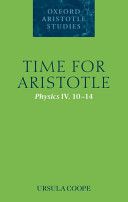
What is the relation between time and change? Does time depend on the mind? Is the present always the same or is it always different? Aristotle tackles these questions in the Physics, and Time for Aristotle is the first book in English devoted to this discussion. Aristotle claims that time is not a kind of change, but that it is something dependent on change; he defines it as a kind of “number of change.” Ursula Coope argues that what this means is that time is a kind of order (not, as is commonly supposed, a kind of measure). It is universal order within which all changes are related to each other. This interpretation enables Coope to explain two puzzling claims that Aristotle makes: that the now is like a moving thing, and that time depends for its existence on the mind. Brilliantly lucid in its explanation of this challenging section of the Physics, Time for Aristotle shows his discussion to be of enduring philosophical interest.
Bolin analyses biblical and extra-biblical traditions and motifs in the book of Jonah, and argues that the book’s portrayal of the relationship between God and humanity, much like those of Job and Ecclesiastes, emphasizes an absolute divine sovereignty beyond human notions of mercy, justice, or forgiveness. God is understood as free to forgive, yet he still punishes, and is unfettered by the constraints imposed by attributes of benevolence. The only proper human response to God is fear at his power and acknowledgment of him as the source of welfare and woe.
ما از اخلاق چه انتظاری داریم؟ این سوال شاید تاحدودی برای عموم مردم و یا متخصصان این رشته قابل پاسخ باشد؛ اینکه خوب بودن را به ما بیاموزد و در تنظیم روابط فردی م...

جشن کتاب تهران به ایستگاه سی و یکم رسیده است. حال و احوال نشر کتاب خوب نیست و باید فرهنگدوستان را به خرید و هدیه دادن کتاب ترغیب نمود. خانه اخلاقپژوهان جوان ب...

بنیاد کتابهای اخلاق اسلامی عمدتا پالایش جان از آلودگیها و آراستن آن به زیباییها است. اندیشه محوری این قبیل کتابها آن است که انسان فعلی آنی نیست که باید باشد...

-
0 Comments