Notice: تابع WP_Block_Type_Registry::register به طورنادرست فراخوانی شد. نامهای نوع بلوک نباید حروف بزرگ داشته باشند. لطفاً برای اطلاعات بیشتر، اشکال زدایی در وردپرس را مشاهده کنید. (این پیام در نگارش 5.0.0 افزوده شده است.) in /home/ethicsho/public_html/wp-includes/functions.php on line 5313
Warning: Use of undefined constant TDC_PATH_LEGACY - assumed 'TDC_PATH_LEGACY' (this will throw an Error in a future version of PHP) in /home/ethicsho/public_html/wp-content/plugins/td-composer/td-composer.php on line 109
Warning: Use of undefined constant TDSP_THEME_PATH - assumed 'TDSP_THEME_PATH' (this will throw an Error in a future version of PHP) in /home/ethicsho/public_html/wp-content/plugins/td-composer/td-composer.php on line 113 بایگانیهای Political Ethics - خانه اخلاق پژوهان جوان Notice: Trying to access array offset on value of type bool in /home/ethicsho/public_html/wp-content/plugins/wp-ulike/inc/general-functions.php on line 807
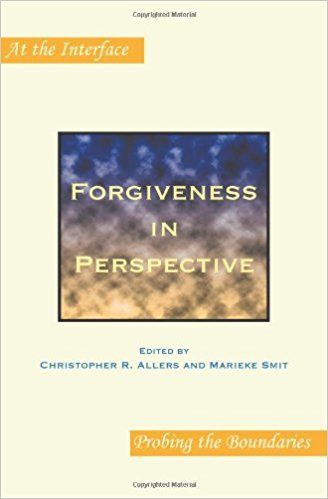
Amidst the cacophony of claims made about forgiveness, this book serves to aid in an effort to put żforgiveness in perspective.ż Marieke Smit and Christopher R. Allers have collected here ten essays written by twelve authors from around the world and across the disciplinary spectrum including philosophers, practitioners, psychologists, literary theorists, and prison chaplains. All the essays offer a perspective on forgiveness and put forgiveness in perspective whether by tracing what forgiveness żis,ż how this religious inheritance is worked out in our secularizing societies, how forgiveness works in our quotidian experience, or a particular manifestation in a particular context such as marriage, prison, or after an abortion, to name a few. The multi-disciplinary character of this book provides a multi-disciplinary appeal as well as a resource to enlarge oneżs own perspective on this perplexing, enigmatic, and wonderfully complex concept of forgiveness.Marieke Smit is a researcher at the Centre for Prison Pastoral Care at the University of Tilburg, The Netherlands. Her research concerns the role of forgiveness in detention. She is also working as a prison chaplain in Dutch prisons.Christopher R. Allers (M.A., Institute for Christian Studies, Toronto) is Adjunct Professor of Philosophy at Cornerstone University (Grand Rapids, MI) and Sessional Instructor in Philosophy at the Institute for Christian Studies, Toronto (ICS) where he is also a doctoral student in the conjoint degree program between ICS and the Vrije Universiteit, Amsterdam. He is currently working on a dissertation on forgiveness which is tentatively titled The Miracle of Forgiveness.
The term bioethics was first used in the early 1970s by biologists who were concerned about ethical implications of genetic and ecological interventions, but was soon applied to all aspects of biomedical ethics, including health care delivery, research, and public policy. Its literature draws from disciplines as varied as clinical medicine and nursing, scientific research, theology and philosophy, law, and the social sciences?each with its own distinctive vocabulary and expressions. A Handbook of Bioethics Terms is a handy and concise glossary-style reference featuring over 400 entries on the significant terms, expressions, titles, and court cases that are most important to the field. Most entries are cross-referenced, making this handbook a valuable addition to the bookshelves of undergraduate and graduate students in health care ethics, physicians and nurses, members of institutional ethics committees, and others interested in bioethics.
The last few years have seen a remarkable revival of interest in the virtues, which have regained their central role in moral philosophy. This thought-provoking new collection is a much-needed survey of virtue ethics and virtue theory. The specially commissioned articles by an international team of philosophers represent the state of the art in this subject and will set the agenda for future work in the area. The contributors–including Lawrence Blum, John Cottingham, Julia Driver, Rosalind Hursthouse, Terence Irwin, Susan Moller Okin, Onora O’Neill, Michael Slote, Michael Stocker, and David Wiggins–cover practical virtue ethics, ancient views of the virtues, impartiality and partiality, Kant, utilitarianism, human nature, natural and artificial virtues, virtue and the good life, the vices, emotions, politics, feminism, moral education, and community.
Book Summary of Guilt And Its Vicissitudes: Psychoanalytic Reflections On MoralityHow do psychoanalysts explain human morality? Guilt and Its Vicissitudes: Psychoanalytic Reflections on Morality focuses on the way Melanie Klein and successive generations of her followers pursued and deepened Freud’s project of explaining man’s moral sense as a wholly natural phenomenon. With the introduction of the superego, Freud laid claim to the study of moral development as part of the psychoanalytic enterprise. At the same time he reconceptualized guilt: he thought of it not only as conscious, but as unconscious as well, and it was the unconscious sense of guilt that became a particular concern of the discipline he was founding. As Klein saw it, his work merely pointed the way. Judith M. Hughes argues that Klein and contemporary Kleinians went on to provide a more consistent and comprehensive psychological account of moral development. Hughes shows how Klein and her followers came to appreciate that moral and cognitive questions are complexly interwoven and makes clear how this complexity prompted them to extend the range of their theory. Hughes demonstrates both a detailed knowledge of the major figures in post-war British psychoanalysis, and a keen sensitivity to the way clinical experience informed theory-building. She writes with vigor and grace, not only about Freud and Klein, but also about such key thinkers as Riviere, Isaacs, Heimann, Segal, Bion and Joseph. Guilt and Its Vicissitudes speaks to those concerned with the clinical application of psychoanalytic theory and to those interested in the contribution psychoanalysis makes to understanding questions of human morality..
ما از اخلاق چه انتظاری داریم؟ این سوال شاید تاحدودی برای عموم مردم و یا متخصصان این رشته قابل پاسخ باشد؛ اینکه خوب بودن را به ما بیاموزد و در تنظیم روابط فردی م...

جشن کتاب تهران به ایستگاه سی و یکم رسیده است. حال و احوال نشر کتاب خوب نیست و باید فرهنگدوستان را به خرید و هدیه دادن کتاب ترغیب نمود. خانه اخلاقپژوهان جوان ب...

بنیاد کتابهای اخلاق اسلامی عمدتا پالایش جان از آلودگیها و آراستن آن به زیباییها است. اندیشه محوری این قبیل کتابها آن است که انسان فعلی آنی نیست که باید باشد...

-
0 Comments