Notice: تابع WP_Block_Type_Registry::register به طورنادرست فراخوانی شد. نامهای نوع بلوک نباید حروف بزرگ داشته باشند. لطفاً برای اطلاعات بیشتر، اشکال زدایی در وردپرس را مشاهده کنید. (این پیام در نگارش 5.0.0 افزوده شده است.) in /home/ethicsho/public_html/wp-includes/functions.php on line 5313
Warning: Use of undefined constant TDC_PATH_LEGACY - assumed 'TDC_PATH_LEGACY' (this will throw an Error in a future version of PHP) in /home/ethicsho/public_html/wp-content/plugins/td-composer/td-composer.php on line 109
Warning: Use of undefined constant TDSP_THEME_PATH - assumed 'TDSP_THEME_PATH' (this will throw an Error in a future version of PHP) in /home/ethicsho/public_html/wp-content/plugins/td-composer/td-composer.php on line 113 بایگانیهای Poetry - خانه اخلاق پژوهان جوان Notice: Trying to access array offset on value of type bool in /home/ethicsho/public_html/wp-content/plugins/wp-ulike/inc/general-functions.php on line 807
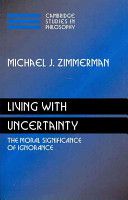
Every choice we make is set against a background of massive ignorance about our past, our future, our circumstances, and ourselves. Philosophers are divided on the moral significance of such ignorance. Some say that it has a direct impact on how we ought to behave – the question of what our moral obligations are; others deny this, claiming that it only affects how we ought to be judged in light of the behaviour in which we choose to engage – the question of what responsibility we bear for our choices. Michael Zimmerman claims that our ignorance has an important bearing on both questions, and offers an account of moral obligation and moral responsibility that is sharply at odds with the prevailing wisdom. His book will be of interest to a wide range of readers in ethics.
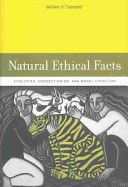
In Natural Ethical Facts William Casebeer argues that we can articulate a fully naturalized ethical theory using concepts from evolutionary biology and cognitive science, and that we can study moral cognition just as we study other forms of cognition. His goal is to show that we have “softly fixed” human natures, that these natures are evolved, and that our lives go well or badly depending on how we satisfy the functional demands of these natures. Natural Ethical Facts is a comprehensive examination of what a plausible moral science would look like.Casebeer begins by discussing the nature of ethics and the possible relationship between science and ethics. He then addresses David Hume’s naturalistic fallacy and G. E. Moore’s open-question argument, drawing on the work of John Dewey and W. V. O. Quine. He then proposes a functional account of ethics, offering corresponding biological and moral descriptions. Discussing in detail the neural correlates of moral cognition, he argues that neural networks can be used to model ethical function. He then discusses the impact his views of moral epistemology and ontology will have on traditional ethical theory and moral education, concluding that there is room for other moral theories as long as they take into consideration the functional aspect of ethics; the pragmatic neo-Aristotelian virtue theory he proposes thus serves as a moral “big tent.” Finally, he addresses objections to ethical naturalism that may arise, and calls for a reconciliation of the sciences and the humanities. “Living well,” Casebeer writes, “depends upon reweaving our ethical theories into the warp and woof of our scientific heritage, attending to the myriad consequences such a project will have for the way we live our lives and the manner in which we structure our collective moral institutions.”
Technological developments have shaped copyright law’s development, and now the prospect of endless, effortless digital copying poses a significant challenge to modern copyright law. Many complain that copyright protection has burgeoned wildly, far beyond its original boundaries. Some have questioned whether copyright can survive the digital age. From a historical perspective, however, many of these ‘new’ challenges are simply fresh presentations of familiar dilemmas. This book explores the history of international copyright law, and looks at how this history is relevant today. It focuses on international copyright during the nineteenth century, as it affected Europe, the British colonies (particularly Canada), America, and the UK. As we consider the reform of modern copyright law, nineteenth-century experiences offer highly relevant empirical evidence. Copyright law has proved itself robust and flexible over several centuries. If directed with vision, Seville argues, it can negotiate cyberspace.
ما از اخلاق چه انتظاری داریم؟ این سوال شاید تاحدودی برای عموم مردم و یا متخصصان این رشته قابل پاسخ باشد؛ اینکه خوب بودن را به ما بیاموزد و در تنظیم روابط فردی م...

جشن کتاب تهران به ایستگاه سی و یکم رسیده است. حال و احوال نشر کتاب خوب نیست و باید فرهنگدوستان را به خرید و هدیه دادن کتاب ترغیب نمود. خانه اخلاقپژوهان جوان ب...

بنیاد کتابهای اخلاق اسلامی عمدتا پالایش جان از آلودگیها و آراستن آن به زیباییها است. اندیشه محوری این قبیل کتابها آن است که انسان فعلی آنی نیست که باید باشد...

-
0 Comments