Notice: تابع WP_Block_Type_Registry::register به طورنادرست فراخوانی شد. نامهای نوع بلوک نباید حروف بزرگ داشته باشند. لطفاً برای اطلاعات بیشتر، اشکال زدایی در وردپرس را مشاهده کنید. (این پیام در نگارش 5.0.0 افزوده شده است.) in /home/ethicsho/public_html/wp-includes/functions.php on line 5313
Warning: Use of undefined constant TDC_PATH_LEGACY - assumed 'TDC_PATH_LEGACY' (this will throw an Error in a future version of PHP) in /home/ethicsho/public_html/wp-content/plugins/td-composer/td-composer.php on line 109
Warning: Use of undefined constant TDSP_THEME_PATH - assumed 'TDSP_THEME_PATH' (this will throw an Error in a future version of PHP) in /home/ethicsho/public_html/wp-content/plugins/td-composer/td-composer.php on line 113 بایگانیهای Philosophy / Western - خانه اخلاق پژوهان جوان Notice: Trying to access array offset on value of type bool in /home/ethicsho/public_html/wp-content/plugins/wp-ulike/inc/general-functions.php on line 807
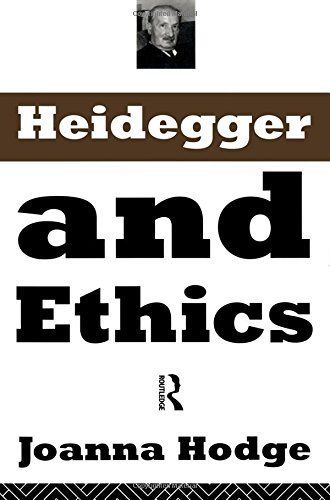
Heidegger and ethics is a contentious conjunction of terms. Martin Heidegger himself rejected the notion of ethics, while his endorsement of Nazism is widely seen as unethical. This major study examines the complex and controversial issues involved in bringing Heidegger and ethics together. Working backwards through his work, from his 1964 claim that philosophy has been completed to his first major book,Being and Time,Joanna Hodge questions Heidegger’s denial that his inquiries were concerned with ethics. She discovers a form of ethics in Heidegger’s thinking which elucidates his important distinction between metaphysics and philosophy. Opposing many contemporary views, Hodge proposes that ethics can be retrieved and questions the relation between ethics and metaphysics that Heidegger made so pervasive.
The debate over religious lawmaking pits respect for religious pluralism against moral identity-with liberal theorists contending that religious lawmaking is generally suspect in a morally and religiously diverse polity like the United States, and communitarian ones arguing that lawmakers cannot, and should not, be expected to suppress their religious commitments in their public policy making. Looking carefully at both sides of this ongoing debate, Lucinda Peach explores the limitations as well as the value of these conflicting perspectives, and proposes a solution for their reconciliation. Peach breaks from traditional analysis as she contends that both sides of the argument are fundamentally flawed. Neither side has been willing to recognize the merit of the other’s arguments, and both have ignored the gender-based disparities of religious lawmaking (particularly with respect to the effect religion has had on reproductive rights and abortion regulation). Using an interdisciplinary approach, the book argues for a pragmatic solution to this impasse which will respect religious pluralism, moral identity, and gender differences. Peach’s proposals will be of interest to philosophers, legal theorists, and scholars in women’s studies and political science.
“In this book, David Konstan argues that the modern concept of interpersonal forgiveness, in the full sense of the term, did not exist in ancient Greece and Rome. Even more startlingly, it is not fully present in the Hebrew Bible, nor again in the New Testament, or in the early Jewish and Christian commentaries on the Holy Scriptures. It would still be centuries– many centuries– before the idea of interpersonal forgiveness, with its accompanying ideas of apology, remorse, and a change of heart on thepart of the wrongdoer, would emerge. For all its vast importance today in religion, law, politics, and psychotherapy, interpersonal forgiveness is creation of the 18th and 19th centuries, when the Christian concept of divine forgiveness was finally secularized. Forgiveness was God’s province, and it took a revolution in thought to bring it to earth and make it a human trait”–
Mark Sagoff draws on the last twenty years of debate over the foundations of environmentalism in this comprehensive revision of The Economy of the Earth. Posing questions pertinent to consumption, cost-benefit analysis, the normative implications of neo-Darwinism, the role of the natural in national history, and the centrality of the concept of place in environmental ethics, he analyzes social policy in relation to the environment, pollution, the workplace, and public safely and health. Sagoff distinguishes ethical from economic questions and explains which kinds of concepts, arguments, and processes are appropriate to each.
“In this book, Jean Kazez asks the perennial philosophical questions about what we should place at the center of our lives. Incorporating the views of both past and present philosophers, as well as examples from history, literature, media, and the news, this concise introduction to ethics and philosophy offers an opportunity for personal reflection. Contemplating the importance of happiness, morality, self expression, desire, religion, and family, The Weight of Things invites the reader to explore the difficult questions in our daily lives.”–BOOK JACKET.
ما از اخلاق چه انتظاری داریم؟ این سوال شاید تاحدودی برای عموم مردم و یا متخصصان این رشته قابل پاسخ باشد؛ اینکه خوب بودن را به ما بیاموزد و در تنظیم روابط فردی م...

جشن کتاب تهران به ایستگاه سی و یکم رسیده است. حال و احوال نشر کتاب خوب نیست و باید فرهنگدوستان را به خرید و هدیه دادن کتاب ترغیب نمود. خانه اخلاقپژوهان جوان ب...

بنیاد کتابهای اخلاق اسلامی عمدتا پالایش جان از آلودگیها و آراستن آن به زیباییها است. اندیشه محوری این قبیل کتابها آن است که انسان فعلی آنی نیست که باید باشد...

-
0 Comments