Notice: تابع WP_Block_Type_Registry::register به طورنادرست فراخوانی شد. نامهای نوع بلوک نباید حروف بزرگ داشته باشند. لطفاً برای اطلاعات بیشتر، اشکال زدایی در وردپرس را مشاهده کنید. (این پیام در نگارش 5.0.0 افزوده شده است.) in /home/ethicsho/public_html/wp-includes/functions.php on line 5313
Warning: Use of undefined constant TDC_PATH_LEGACY - assumed 'TDC_PATH_LEGACY' (this will throw an Error in a future version of PHP) in /home/ethicsho/public_html/wp-content/plugins/td-composer/td-composer.php on line 109
Warning: Use of undefined constant TDSP_THEME_PATH - assumed 'TDSP_THEME_PATH' (this will throw an Error in a future version of PHP) in /home/ethicsho/public_html/wp-content/plugins/td-composer/td-composer.php on line 113 بایگانیهای Philosophy Of Technology - خانه اخلاق پژوهان جوان Notice: Trying to access array offset on value of type bool in /home/ethicsho/public_html/wp-content/plugins/wp-ulike/inc/general-functions.php on line 807
Nietzsche is one of the most important and controversial thinkers in the history of philosophy. His writings on moral philosophy are amongst the most widely read works both by philosophers and non-philosophers. Many of the ideas raised are both startling and disturbing and have been the source of great contention. On the Geneaology of Morality is Nietzsche’s most sustained and important contribution to moral philosophy, featuring many of the ideas fir which he is best known: the slave revolt in morals, will to power, geneaology, perspectivism. The Routledge Philosophy GuideBook to Nietzsche on Morality introduces the reader to these and other important Nietzschean themes patiently and clearly. It is the first book to examine the work in such a way and will be a vital point of reference for any Nietzsche scholar. The Routledge Philosophy GuideBook to Nietzsche on Morality will be vital for all studentnts coming to Nietzsche for the first time.
Written at the height of the philosopher’s intellectual powers, Friedrich Nietzsche’s On the Genealogy of Morals has become one of the key texts of recent Western philosophy. Its essayistic style affords a unique opportunity to observe many of Nietzsche’s persisting concerns coming together in an illuminating constellation. A profound influence on psychoanalysis, antihistoricism, and poststructuralism and an abiding challenge to ethical theory, Nietzsche’s book addresses many of the major philosophical problems and possibilities of modernity.In this unique collection focusing on the Genealogy, twenty-five notable philosophers offer diverse discussions of the book’s central themes and concepts. They explore such notions as ressentiment, asceticism, “slave” and “master” moralities, and what Nietzsche calls “genealogy” and its relation to other forms of inquiry in his work. The book presents a cross section of contemporary Nietzsche scholarship and philosophical investigation that is certain to interest philosophers, intellectual and cultural historians, and anyone concerned with one of the master thinkers of the modern age. Written at the height of the philosopher’s intellectual powers, Friedrich Nietzsche’s On the Genealogy of Morals has become one of the key texts of recent Western philosophy. Its essayistic style affords a unique opportunity to observe many of Nietzsche’s persisting concerns coming together in an illuminating constellation. A profound influence on psychoanalysis, antihistoricism, and poststructuralism and an abiding challenge to ethical theory, Nietzsche’s book addresses many of the major philosophical problems and possibilities of modernity.In this unique collection focusing on the Genealogy, twenty-five notable philosophers offer diverse discussions of the book’s central themes and concepts. They explore such notions as ressentiment, asceticism, “slave” and “master” moralities, and what Nietzsche calls “genealogy” and its relation to other forms of inquiry in his work. The book presents a cross section of contemporary Nietzsche scholarship and philosophical investigation that is certain to interest philosophers, intellectual and cultural historians, and anyone concerned with one of the master thinkers of the modern age.
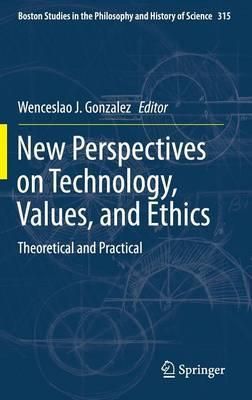
This volume was written in response to the Food and Agriculture Organization (FAO) Series of Ethics Papers that broached a series of previously neglected issues in international agricultural development. The volume contains a diverse collection of highly respected international scholars offer comments and elaboration on the FAO papers on the ethics of agricultural intensification and on intensification in animal agriculture. The full text of the FAO intensification paper is followed by chapters that mount specific reactions to its relevance for agricultural technology, environmental protection, globalization and animal welfare, and these four topics are further discussed, debated and elaborated by eight commentary chapters. Questions of agricultural development policy are addressed in terms of the relevance to farmers, consumers and other interested parties, as well as from key disciplinary and philosophical approaches. The rationale and purpose behind the FAO papers is explained and suggestions are offered on how to make ethics more central to programming and planning for agricultural development projects.
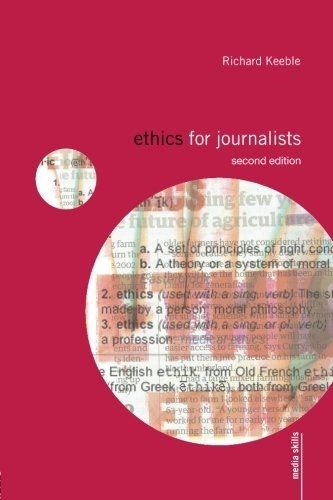
Ethics for Journalists tackles many of the issues which journalists face in their everyday lives – from the media’s supposed obsession with sex, sleaze and sensationalism, to issues of regulation and censorship. Its accessible style and question and answer approach highlights the relevance of ethical issues for everyone involved in journalism, both trainees and professionals, whether working in print, broadcast or new media.Ethics for Journalists provides a comprehensive overview of ethical dilemmas and features interviews with a number of journalists. Presenting a range of imaginative strategies for improving media standards and supported by a thorough bibliography and a wide ranging list of websites.
ما از اخلاق چه انتظاری داریم؟ این سوال شاید تاحدودی برای عموم مردم و یا متخصصان این رشته قابل پاسخ باشد؛ اینکه خوب بودن را به ما بیاموزد و در تنظیم روابط فردی م...

جشن کتاب تهران به ایستگاه سی و یکم رسیده است. حال و احوال نشر کتاب خوب نیست و باید فرهنگدوستان را به خرید و هدیه دادن کتاب ترغیب نمود. خانه اخلاقپژوهان جوان ب...

بنیاد کتابهای اخلاق اسلامی عمدتا پالایش جان از آلودگیها و آراستن آن به زیباییها است. اندیشه محوری این قبیل کتابها آن است که انسان فعلی آنی نیست که باید باشد...

-
0 Comments