Notice: تابع WP_Block_Type_Registry::register به طورنادرست فراخوانی شد. نامهای نوع بلوک نباید حروف بزرگ داشته باشند. لطفاً برای اطلاعات بیشتر، اشکال زدایی در وردپرس را مشاهده کنید. (این پیام در نگارش 5.0.0 افزوده شده است.) in /home/ethicsho/public_html/wp-includes/functions.php on line 5313
Warning: Use of undefined constant TDC_PATH_LEGACY - assumed 'TDC_PATH_LEGACY' (this will throw an Error in a future version of PHP) in /home/ethicsho/public_html/wp-content/plugins/td-composer/td-composer.php on line 109
Warning: Use of undefined constant TDSP_THEME_PATH - assumed 'TDSP_THEME_PATH' (this will throw an Error in a future version of PHP) in /home/ethicsho/public_html/wp-content/plugins/td-composer/td-composer.php on line 113 بایگانیهای Philosophy - Hungary - خانه اخلاق پژوهان جوان Notice: Trying to access array offset on value of type bool in /home/ethicsho/public_html/wp-content/plugins/wp-ulike/inc/general-functions.php on line 807
In their new book, Emotion, Character, and Responsibility, John Sabini and Maury Silver examine a conflict in the way that psychologists, philosophers, and ordinary people think about character. Most of us share an intuition that emotions are central to who we are and the characters we have, even though emotions are unchosen. Yet we also share the intuition that action, choice, and responsibility are what count about our characters. This book deals with this conflict by exploring the relations between the chosen and unchosen, moral and nonmoral, in sincerity, loyalty, sympathy, shame, guilt, and embarrassment as they affect our characters. The conflict is resolved by finding an aesthetic as well as moral basis of character. Along the way the authors consider questions such as can one truly avow ones feelings and still be insincere? What, if anything, is lacking in the Star Trek character Mr. Spock? Why is loyalty toward particular people and not people in general a duty? Is it a good idea for guilt to replace shame? How can we describe genuine self-deception without relying on unconscious knowledge? The book ends with the radical proposal that some of the emotions do not exist, at least not in the way that motives exist. We will not find them on any present or future brain scan. And yet, the authors argue, emotions matter.
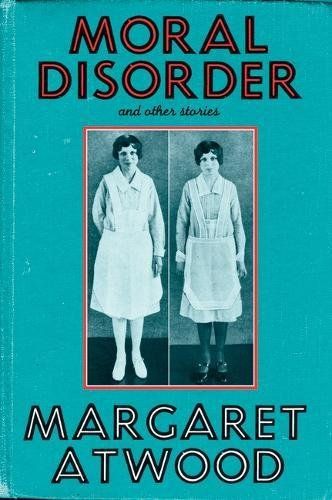
Margaret Atwood has frequently been cited as one of the foremost writers of our time. Moral Disorder, her new work of fiction, could be seen as a collection of ten stories that is almost a novel … or a novel broken up into ten stories. It resembles a photograph album – a series of clearly observed moments that trace the course of a life, and the lives intertwined with it – those of parents, siblings, children, friends, enemies, teachers and even animals. And as in a photograph album, times change; every decade is here, from the 1930s through the 50s, 60s and 70s to the present day. The settings are equally varied: large cities, suburbs, farms, northern forests. The first story, ‘The Bad News,’ is set in the present, as a couple no longer young situate themselves in a larger world no longer safe. Then the narrative switches time, as the central character moves through childhood and adolescence, in ‘The Art of Cooking and Serving’, ‘The Headless Horseman’ and ‘My Last Duchess’. We follow her into young adulthood in ‘The Other Place’, and then through a complex relationship, traced in three of the stories – ‘Monopoly’, ‘Moral Disorder’ and ‘The Entities’. The last two stories, ‘The Labrador Fiasco’ and ‘The Boys at the Lab’, deal with the heartbreaking old age of parents, but circle back to childhood again, to complete the cycle. By turns funny, moving, lyrical, incisive, tragic, earthy, shocking and deeply personal, Moral Disorder displays Atwood’s celebrated storytelling gifts and inimitable style to their best advantage. As the New York Times has said, ‘Atwood has complete access to her people’s emotional histories, complete understanding of their hearts and imaginations.’
Inspired by Howard Gruber’s Evolving Systems Approach, these studies explore creativity in several domains. The idea that the creative person embodies a system of loosely coupled sub-systems – knowledge, purpose, and affect that work together, is viewed here in different chapters that explore this concept. These include autobiographies of incarcerated youth, curricula for moral and civic responsibility, changing attitudes of readers to text (romance novels), as well as case studies of highly creative individuals, such as George Bernard Shaw. Gruber’s approach provides concepts as well as methodological tools which the authors apply to diverse creative processes. This book is a valuable resource for undergraduate as well as graduate level students interested in creativity, development and education. In addition to the intrinsic interest of each chapter, the guiding theme of the book is the underlying theory of creativity, Gruber’s Evolving Systems Approach, and illustrates the unusual breadth and flexibility of that theory.
For decades assisted dying and euthanasia have sparked fierce public debate. The recent case of Terri Schiavo, and the firestorm of controversy it provoked, placed the issue in dramatic fashion before the American people once again, raising a host of complex legal, medical-ethical, religious, and individual liberties questions. Now, in Easeful Death, Mary Warnock and Elisabeth Macdonald offer a clearly reasoned, even-handed assessment of arguments both for and against the legalization of assisted suicide and euthanasia. The authors take as their starting point the attempts in Britain and other countries to bring compassion into the rules governing the end of a patient’s life. Drawing on the experience of the Netherlands, Belgium, and the state of Oregon in the US, where either assisted dying or euthanasia have been legalized, the authors explore the philosophical and ethical views on both sides of the debate, and examine how different legislative proposals would affect different members of society, from the very young to the very old. They describe the practical, medical processes of palliative care, self-denial of food and water, assisted dying and euthanasia, and ultimately conclude that the public is ready to embrace a more compassionate approach to assisted dying and that the dying themselves deserve a greater say in the timing and manner of their deaths. Written with sensitivity, grace, and level-headed authority, Easeful Death is essential reading for caregivers, doctors, medical ethicists, and anyone concerned with their own or a loved one’s end of life decisions. It argues persuasively that whatever the results of the legislative debate, compassion must be the guiding principle in the way we treat people who are dying or want to die.
ما از اخلاق چه انتظاری داریم؟ این سوال شاید تاحدودی برای عموم مردم و یا متخصصان این رشته قابل پاسخ باشد؛ اینکه خوب بودن را به ما بیاموزد و در تنظیم روابط فردی م...

جشن کتاب تهران به ایستگاه سی و یکم رسیده است. حال و احوال نشر کتاب خوب نیست و باید فرهنگدوستان را به خرید و هدیه دادن کتاب ترغیب نمود. خانه اخلاقپژوهان جوان ب...

بنیاد کتابهای اخلاق اسلامی عمدتا پالایش جان از آلودگیها و آراستن آن به زیباییها است. اندیشه محوری این قبیل کتابها آن است که انسان فعلی آنی نیست که باید باشد...

-
0 Comments