
Notice: تابع WP_Block_Type_Registry::register به طورنادرست فراخوانی شد. نامهای نوع بلوک نباید حروف بزرگ داشته باشند. لطفاً برای اطلاعات بیشتر، اشکال زدایی در وردپرس را مشاهده کنید. (این پیام در نگارش 5.0.0 افزوده شده است.) in /home/ethicsho/public_html/wp-includes/functions.php on line 5313
Warning: Use of undefined constant TDC_PATH_LEGACY - assumed 'TDC_PATH_LEGACY' (this will throw an Error in a future version of PHP) in /home/ethicsho/public_html/wp-content/plugins/td-composer/td-composer.php on line 109
Warning: Use of undefined constant TDSP_THEME_PATH - assumed 'TDSP_THEME_PATH' (this will throw an Error in a future version of PHP) in /home/ethicsho/public_html/wp-content/plugins/td-composer/td-composer.php on line 113 بایگانیهای Philosophy, German - خانه اخلاق پژوهان جوان Notice: Trying to access array offset on value of type bool in /home/ethicsho/public_html/wp-content/plugins/wp-ulike/inc/general-functions.php on line 807
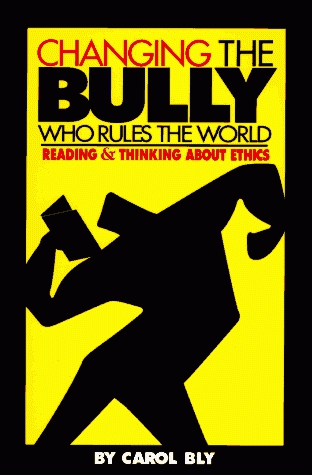
Bosses, partners, governments, corporations – all can act as bullies in our lives, intimidating us to their will. But changing their behavior may be in our power. In this provocative, visionary book, Carol Bly examines some of this century’s most far-ranging concepts about how to nurture ethical human beings and presents them through the lens of excellent contemporary literature. Changing the Bully Who Rules the World is a book of hopeful, practical ideas that can hasten ethical change both in our thinking and in our behavior. Through an anthology of exceptional literature, Bly’s book asks the reader to contemplate anew the voices she presents – including works by Charles Baxter, Donald Hall, Jim Harrison, Mark Helprin, Denise Levertov, Thomas McGrath, Joyce Carol Oates, Mary Oliver, Katha Pollitt, Alice Walker, Tobias Wolff, and many others – and to consider them in terms of the ideas of important thinkers in human behavior and our own experiences.
EM P Needs and Moral Necessity analyses ethics as a practice, explains why we have three moral theory-types, consequentialism, deontology and virtue ethics, and argues for a fourth needs-based theory. /P /EM
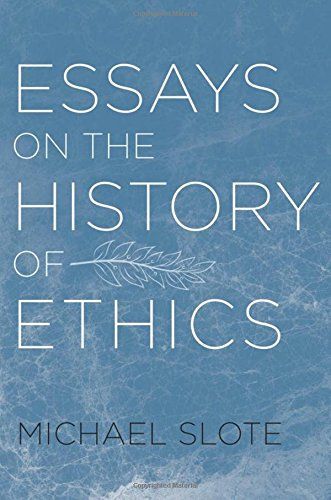
In Essays on the History of Ethics Michael Slote collects his essays that deal with aspects of both ancient and modern ethical thought and seek to point out conceptual/normative comparisons and contrasts among different views. Arranged in chronological order of the philosopher under discussion, the relationship between ancient ethical theory and modern moral philosophy is a major theme of several of the papers and, in particular, Plato, Aristotle, Hume, Kant, and/or utilitarianism feature centrally in (most of) the discussions. One essay seeks to show that there are three main ways to conceive the relationship between human well-being and virtue: one is dualistic a la Kant (they are disparate notions); one is the sort of reductionism familiar from the history of utilitarianismm; and one, not previously named by philosophers, is implicit in the approach the Stoics, Plato, and Aristotle take (in their different ways) to the topic of virtue and well-being. Slote names this third approach “elevationism” and argue that it is more promising than either reductionism or dualism. Two of the essays are narrowly focused on Hume’s ethics, and one seeks to show that even Kant’s opponents have reason to accept a number of important and original Kantian ideas. Finally, the two last essays in the volume talk about ethical thought during the last half of the twentieth century and the first few years of the twenty-first, arguing that the care ethics of Carol Gilligan and Nel Noddings has a distinctive and important contribution to make to ongoing ethical theorizing–and to our understanding of the history of ethics as well.
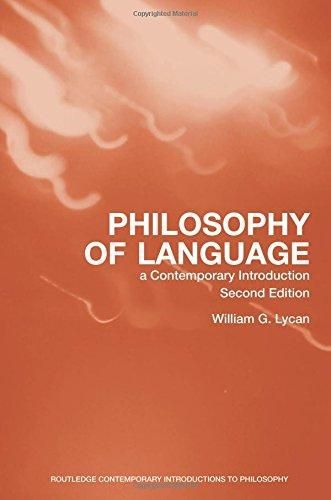
Philosophy of Language: a Contemporary Introduction introduces the student to the main issues and theories in twentieth-century philosophy of language, focusing specifically on linguistic phenomena. Topics are structured in three parts in the book. Part I, Reference and Referring Expressions, includes topics such as Russell’s Theory of Desciptions, Donnellan’s distinction, problems of anaphora, the description theory of proper names, Searle’s cluster theory, and the causal-historical theory. Part II, Theories of Meaning, surveys the competing theories of linguistic meaning and compares their various advantages and liabilities. Part III, Pragmatics and Speech Acts, introduces the basic concepts of linguistic pragmatics, includes a detailed discussion of the problem of indirect force and surveys approaches to metaphor. Part IV, new to this edition, examines the four theories of metaphor. Features of Philosophy of Language include: New chapters on Frege and puzzles, inferentialism, illocutionary theories ofmeaning and relevance theory chapter overviews and summaries clear supportive examples study questions annotated further reading glossary
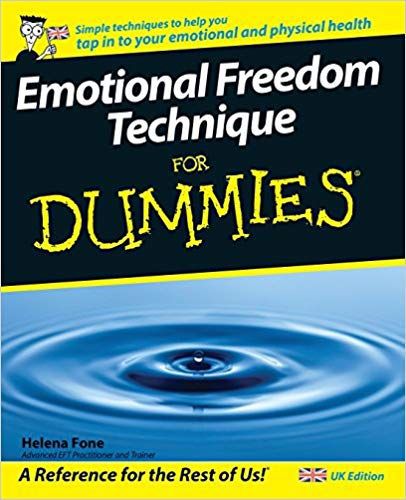
A member of the Energy Therapies family – which includes, acupuncture, acupressure and shiatsu – Emotional Freedom Technique is a simple and increasingly popular self- development therapy used to treat a wide range of physical and emotional issues. Popularised by figures including Paul McKenna, EFT is based on the theory that negative emotions are caused by disturbances in the body’s energy. Often referred to as acupuncture without needles, EFT involves locating and tapping on meridian points in the body while thinking of a negative emotion and using positive suggestion and thoughts to alter the body’s energy flow, restore balance and reprogram thought processes. This no-nonsense guide introduces readers to the theories and methods behind the technique and shows them how to use it to reduce the physical and emotional impact of a wide range of issues including, depression, fears, phobias, anger, addictions, sleeplessness and pain. It’s simple, safe, anyone can practice it at home and with EFT For Dummies readers can banish bad habits for good. Includes information on: The path to emotional freedom – explaining EFT Understanding your emotions Basic EFT tapping routines Improving emotional health with EFT Practising EFT on yourself and others Helena Fone is a registered EFT practitioner and trainer and an advanced hypnotherapist. She has a diploma in advanced holistic hypnotherapy and practices CBT and NLP. Find out more about Helena at www.EFTRegister.com
ما از اخلاق چه انتظاری داریم؟ این سوال شاید تاحدودی برای عموم مردم و یا متخصصان این رشته قابل پاسخ باشد؛ اینکه خوب بودن را به ما بیاموزد و در تنظیم روابط فردی م...

جشن کتاب تهران به ایستگاه سی و یکم رسیده است. حال و احوال نشر کتاب خوب نیست و باید فرهنگدوستان را به خرید و هدیه دادن کتاب ترغیب نمود. خانه اخلاقپژوهان جوان ب...

بنیاد کتابهای اخلاق اسلامی عمدتا پالایش جان از آلودگیها و آراستن آن به زیباییها است. اندیشه محوری این قبیل کتابها آن است که انسان فعلی آنی نیست که باید باشد...

-
0 Comments