
Notice: تابع WP_Block_Type_Registry::register به طورنادرست فراخوانی شد. نامهای نوع بلوک نباید حروف بزرگ داشته باشند. لطفاً برای اطلاعات بیشتر، اشکال زدایی در وردپرس را مشاهده کنید. (این پیام در نگارش 5.0.0 افزوده شده است.) in /home/ethicsho/public_html/wp-includes/functions.php on line 5313
Warning: Use of undefined constant TDC_PATH_LEGACY - assumed 'TDC_PATH_LEGACY' (this will throw an Error in a future version of PHP) in /home/ethicsho/public_html/wp-content/plugins/td-composer/td-composer.php on line 109
Warning: Use of undefined constant TDSP_THEME_PATH - assumed 'TDSP_THEME_PATH' (this will throw an Error in a future version of PHP) in /home/ethicsho/public_html/wp-content/plugins/td-composer/td-composer.php on line 113 بایگانیهای Philosophy / Criticism - خانه اخلاق پژوهان جوان Notice: Trying to access array offset on value of type bool in /home/ethicsho/public_html/wp-content/plugins/wp-ulike/inc/general-functions.php on line 807
Purchase of this book includes free trial access to www.million-books.com where you can read more than a million books for free. This is an OCR edition with typos. Excerpt from book: when completely formed. Many of our most important perceptions through the eye are universally acknowledged to be acquired. But they are as general as the original perceptions of that organ; they arise as independently of our will, and human nature would be quite as imperfect without them. An adult who did not immediately see the different distances of objects from his eye, would be thought by every one to be as great a deviation from the ordinary state of man as if he were incapable of distinguishing the brightest sunshine from the darkest midnight. Acquired perceptions and sentiments may therefore be termed natural, as much as those which are more com- monly so called, if they be as rarely found wanting. Ethical theories can never be satisfactorily discussed by those who do not constantly bear in mind, that the question concerning the existence of a moral faculty in man which immediately approves or disapproves without reference to any further object, is perfectly distinct, on the one hand, from that which inquires into the qualities thus approved or disapproved; and on the other, from an inquiry whether that faculty be derived from other parts of our mental frame, or be itself one of the ultimate constituent principles of human nature. SECTION II. Retrospect of Ancient Ethics. Inquiries concerning the nature of mind, the first principles of knowledge, the origin and government of the world, appear to have been among the earliest objects which employed the understanding of civilized men. Fragments of such speculation are handed down fromthe legendary age of Greek philosophy. In the remaining monuments of that more ancient form of civilization which sprung up in Asia, we see clearly that the Bra- minical philosophers, in times perhaps before the dawn of western history, …
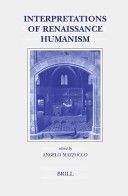
Authored by some of the most preeminent Renaissance scholars active today, the essays of this volume give fresh and illuminating analyses of important aspects of Renaissance humanism, such as the time and causes of its origin, its connection to the papal court and medieval traditions, its classical learning, its religious and literary dimensions, and its dramatis personae. Their interpretations are varied to the point of being contradictory. The essays bear the imprint of the work of the eminent scholars of the second half of the twentieth century, especially Kristeller’s, and demonstrate an awareness of the various modes of critical inquiry that have prevailed in recent years. As such they are an important exemplar of current scholarship on Renaissance humanism and are, therefore, indispensable to the scholar who wishes to explore this pivotal cultural movement. Book jacket.
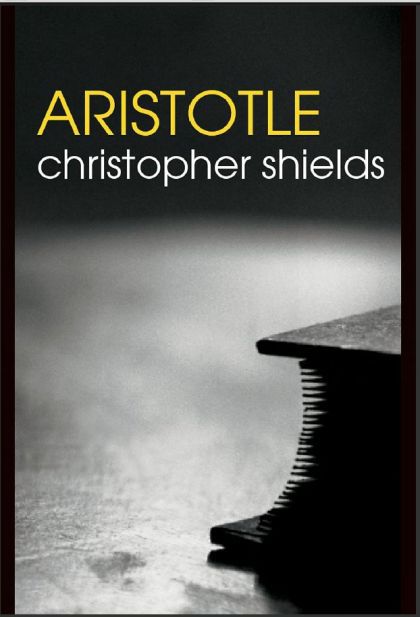
In this excellent introduction, Christopher Shields introduces and assesses the whole of Aristotle?s philosophy, showing how his powerful conception of human nature shaped much of his thinking on the nature of the soul and the mind, ethics, politics and the arts. Beginning with a brief biography, Christopher Shields carefully explains the fundamental elements of Aristotle?s thought: his explanatory framework, his philosophical methodology and his four-causal explanatory scheme. Subsequently he discusses Aristotle?s metaphysics and the theory of categories and logical theory and his conception of the human being and soul and body. In the last part, he concentrates on Aristotle?s value theory as applied to ethics and politics, and assesses his approach to happiness, virtues and the best life for human beings. He concludes with an appraisal of Aristotelianism today.
۰۰ Unprecedented advances in medicine, genetic engineering, and demographic forecasting raise new questions that strain the categories and assumptions of traditional ethical theories. Heyd’s approach resolves many paradoxes in intergenerational justice, while offering a major test case for the profound problems of the limits of ethics and the nature of value. Unprecedented advances in medicine, genetic engineering, and demographic forecasting raise new questions that strain the categories and assumptions of traditional ethical theories. Heyd’s approach resolves many paradoxes in intergenerational justice, while offering a major test case for the profound problems of the limits of ethics and the nature of value.
According to the author of “After Virtue, ” to flourish, humans need to develop virtues of independent thought and acknowledged social dependence. This book presents the moral philosopher’s comparison of humans to other animals and his exploration of the impact of these virtues.
ما از اخلاق چه انتظاری داریم؟ این سوال شاید تاحدودی برای عموم مردم و یا متخصصان این رشته قابل پاسخ باشد؛ اینکه خوب بودن را به ما بیاموزد و در تنظیم روابط فردی م...

جشن کتاب تهران به ایستگاه سی و یکم رسیده است. حال و احوال نشر کتاب خوب نیست و باید فرهنگدوستان را به خرید و هدیه دادن کتاب ترغیب نمود. خانه اخلاقپژوهان جوان ب...

بنیاد کتابهای اخلاق اسلامی عمدتا پالایش جان از آلودگیها و آراستن آن به زیباییها است. اندیشه محوری این قبیل کتابها آن است که انسان فعلی آنی نیست که باید باشد...

-
0 Comments