
Notice: تابع WP_Block_Type_Registry::register به طورنادرست فراخوانی شد. نامهای نوع بلوک نباید حروف بزرگ داشته باشند. لطفاً برای اطلاعات بیشتر، اشکال زدایی در وردپرس را مشاهده کنید. (این پیام در نگارش 5.0.0 افزوده شده است.) in /home/ethicsho/public_html/wp-includes/functions.php on line 5313
Warning: Use of undefined constant TDC_PATH_LEGACY - assumed 'TDC_PATH_LEGACY' (this will throw an Error in a future version of PHP) in /home/ethicsho/public_html/wp-content/plugins/td-composer/td-composer.php on line 109
Warning: Use of undefined constant TDSP_THEME_PATH - assumed 'TDSP_THEME_PATH' (this will throw an Error in a future version of PHP) in /home/ethicsho/public_html/wp-content/plugins/td-composer/td-composer.php on line 113 بایگانیهای Philosophy, Confucian - خانه اخلاق پژوهان جوان Notice: Trying to access array offset on value of type bool in /home/ethicsho/public_html/wp-content/plugins/wp-ulike/inc/general-functions.php on line 807
How do we judge whether an action is morally right or wrong? If an action is wrong, what reason does that give us not to do it? Why should we give such reasons priority over our other concerns and values? In this book, T. M. Scanlon offers new answers to these questions, as they apply to the central part of morality that concerns what we owe to each other. According to his contractualist view, thinking about right and wrong is thinking about what we do in terms that could be justified to others and that they could not reasonably reject. He shows how the special authority of conclusions about right and wrong arises from the value of being related to others in this way, and he shows how familiar moral ideas such as fairness and responsibility can be understood through their role in this process of mutual justification and criticism.Scanlon bases his contractualism on a broader account of reasons, value, and individual well-being that challenges standard views about these crucial notions. He argues that desires do not provide us with reasons, that states of affairs are not the primary bearers of value, and that well-being is not as important for rational decision-making as it is commonly held to be. Scanlon is a pluralist about both moral and non-moral values. He argues that, taking this plurality of values into account, contractualism allows for most of the variability in moral requirements that relativists have claimed, while still accounting for the full force of our judgments of right and wrong.
A paradox can be defined as an unacceptable conclusion derived by apparently acceptable reasoning from apparently acceptable premises. Many paradoxes raise serious philosophical problems, and they are associated with crises of thought and revolutionary advances. The expanded and revised third edition of this intriguing book considers a range of knotty paradoxes including Zeno’s paradoxical claim that the runner can never overtake the tortoise, a new chapter on paradoxes about morals, paradoxes about belief, and hardest of all, paradoxes about truth. The discussion uses a minimum of technicality but also grapples with complicated and difficult considerations, and is accompanied by helpful questions designed to engage the reader with the arguments. The result is not only an explanation of paradoxes but also an excellent introduction to philosophical thinking.
Mark Graber looks at the history of abortion law in action to argue that the only defensible, constitutional approach to the issue is to afford all women equal choice – abortion should remain legal or bans should be strictly enforced. Steering away from metaphysical critiques of privacy, Graber compares the philosophical, constitutional, and democratic merits of the two systems of abortion regulation witnessed in the twentieth-century: pre-Roe v. Wade statutory prohibitions on abortion and Roe’s ban on significant state interference with the market for safe abortion services. He demonstrates that before Roe, pro-life measures were selectively and erratically administered, thereby subverting our constitutional commitment to equal justice. Claiming that these measures would be similarly administered if reinstated, the author seeks to increase support for keeping abortion legal, even among those who have reservations about its morality. Abortion should remain legal, Graber argues, because statutory bans on abortion have a history of being enforced in ways that intentionally discriminate against poor persons and persons of color. In the years before Roe, the same law enforcement officials who routinely ignored and sometimes assisted those physicians seeking to terminate pregnancies for their private patients too often prevented competent abortionists from offering the same services to the general public. This double standard violated the fundamental human and constitutional right of equal justice under law, a right that has powerful roots in the American political tradition and that remains a major concern of the equal protection clause of the Fourteenth Amendment.
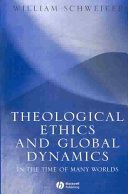
The nature of ethics has been the subject of much controversy andargument in recent decades. Theological Ethics and GlobalDynamics tackles these various debates, offering awide-ranging, comprehensive, and provocative statement of thenature of theological ethics in global times. Offers an accessible, lively, and provocative statement of thenature of moral philosophy and theological ethics in contemporarytimes.Tackles various perspectives on debates about distinctlyChristian ethics.Argues that we need to reframe the arena in which moralquestions are asked.Engages a range of positions, exploring distinctively modernissues such as moral and cultural relativism, globalization,problems of consumption and violence, and religiouspluralism.Addresses the complexity of certain ethical decisions, whichare difficult and far from clear-cut, and yet presents an ethicalunderstanding which is both humane and deeply religious.
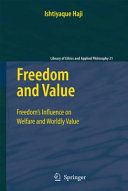
Freedom of the sort implicated in acting freely or with free will is important to the truth of different sorts of moral judgment, such as judgments of moral responsibility and those of moral obligation. Little thought, however, has been invested into whether appraisals of good or evil presuppose free will. This important topic has not commanded the attention it deserves owing to what is perhaps a prevalent assumption that freedom leaves judgments concerning good and evil largely unaffected. The central aim of this book is to dispute this assumption by arguing for the relevance of free will to the truth of two sorts of such judgment: welfare-ranking judgments or judgments of personal well-being (when is one’s life intrinsically good for the one who lives it?), and world-ranking judgments (when is a possible world intrinsically better than another?). The book also examines free will’s impact on the truth of such judgments for central issues in moral obligation and in the free will debate. This book should be of interest to those working on intrinsic value, personal well-being, moral obligation, and free will.
ما از اخلاق چه انتظاری داریم؟ این سوال شاید تاحدودی برای عموم مردم و یا متخصصان این رشته قابل پاسخ باشد؛ اینکه خوب بودن را به ما بیاموزد و در تنظیم روابط فردی م...

جشن کتاب تهران به ایستگاه سی و یکم رسیده است. حال و احوال نشر کتاب خوب نیست و باید فرهنگدوستان را به خرید و هدیه دادن کتاب ترغیب نمود. خانه اخلاقپژوهان جوان ب...

بنیاد کتابهای اخلاق اسلامی عمدتا پالایش جان از آلودگیها و آراستن آن به زیباییها است. اندیشه محوری این قبیل کتابها آن است که انسان فعلی آنی نیست که باید باشد...

-
0 Comments