Notice: تابع WP_Block_Type_Registry::register به طورنادرست فراخوانی شد. نامهای نوع بلوک نباید حروف بزرگ داشته باشند. لطفاً برای اطلاعات بیشتر، اشکال زدایی در وردپرس را مشاهده کنید. (این پیام در نگارش 5.0.0 افزوده شده است.) in /home/ethicsho/public_html/wp-includes/functions.php on line 5313
Warning: Use of undefined constant TDC_PATH_LEGACY - assumed 'TDC_PATH_LEGACY' (this will throw an Error in a future version of PHP) in /home/ethicsho/public_html/wp-content/plugins/td-composer/td-composer.php on line 109
Warning: Use of undefined constant TDSP_THEME_PATH - assumed 'TDSP_THEME_PATH' (this will throw an Error in a future version of PHP) in /home/ethicsho/public_html/wp-content/plugins/td-composer/td-composer.php on line 113 بایگانیهای Philosophy, Arab - خانه اخلاق پژوهان جوان Notice: Trying to access array offset on value of type bool in /home/ethicsho/public_html/wp-content/plugins/wp-ulike/inc/general-functions.php on line 807
Book Summary of Commitment, Value, And Moral RealismDespite the importance of commitment in moral and political philosophy, there has hitherto been little extended analysis of it. Marcel Lieberman examines the conditions under which commitment is possible, and offers at the same time an indirect argument for moral realism. His ambitious study addresses questions that are of great interest to analytic philosophers but also makes many connections with continental philosophy and with folk psychology, sociology and cognitive science. It will be seen as a novel and distinctive intervention in the debate about moral realism..
When Thomas Jefferson placed “the pursuit of happiness” along with life and liberty in The Declaration of Independence he was most likely referring to Aristotle’s concept of happiness, or eudaimonia. Eudaimonia is not about good feelings but rather the fulfillment of human potentials. Fulfillment is made possible by virtue; the moderation of desire and emotion by reason. The Psychology of Happiness is the first book to bring together psychological, philosophical, and physiological theory and research in support of Aristotle’s view. It examines the similarity between Aristotle’s concept of virtue and modern cognitive theories of emotion. It discusses the discovery of human potentials, the development of virtue and its neurological basis, the mistaken idea that fulfillment is selfish, and several other issues related to the pursuit of a good human life.
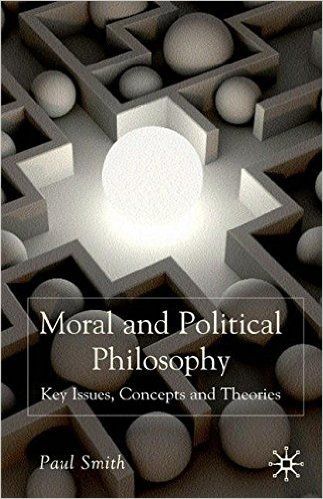
Paul Smith’s clear and concise introduction provides a comprehensive and incisive examination of key concepts and theories in moral and political philosophy. With a clear focus on the essentials of each topic, he presupposes no prior knowledge and relates moral philosophy to social and political issues. Chapters can be read independently, but are interconnected, enabling students to develop a coherent understanding of the subject, including: – the controversial and topical practical issues of drug laws, justifications of punishment, civil disobedience and whether there is a duty to obey the law, and global poverty. – key concepts in moral and political theory: liberty, reasons for laws that limit liberty (harm to others, offence, harm to self, and harmless wrongdoing), rights, equality and social justice. – critical evaluation of moral and political theories: moral relativism, utilitarianism, Kantian moral philosophy, and Rawls’s theory of justice, together with libertarian and egalitarian criticisms of Rawls.
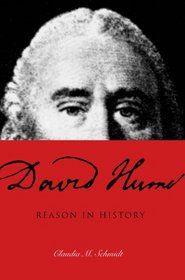
In his seminal Philosophy of David Hume (1941), Norman Kemp Smith called for a study of Hume “in all his manifold activities: as philosopher, as political theorist, as economist, as historian, and as man of letters, ” indicating that “Hume’s philosophy, as the attitude of mind which found for itself these various forms of expression, will then have been presented, adequately and in due perspective, for the first time.” Claudia Schmidt seeks to address this long-standing need in Hume scholarship. Against the charges that Hume holds no consistent philosophical position, offers no constructive account of rationality, and sees no positive relation between philosophy and other areas of inquiry, Schmidt argues for the overall coherence of Hume’s thought as a study of “reason in history.” She develops this interpretation by tracing Hume’s constructive account of human cognition and its historical dimension as a unifying theme across the full range of his writings. Hume, she shows, provides a positive account of the ways in which our concepts, beliefs, emotions, and standards of judgment in different areas of inquiry are shaped by experience, both in the personal history of the individual and in the life of a community. This book is valuable at many levels: for students, as an introduction to Hume’s writings and issues in their interpretation; for Hume specialists, as a unified and intriguing interpretation of his thought; for philosophers generally, as a synthesis of recent developments in Hume scholarship; and for scholars in other disciplines, as a guide to Hume’s contributions to their own fields.
Since ancient times, hedonism has been one of the most attractive and controversial theories about “the Good Life.” On this view, the Good Life is the pleasant life– pleasure is the Good. Now Fred Feldman presents a careful, modern formulation of hedonism, defending the theory against some of the most important objections. Distinguishing some diverse variants of the theory, and assessing their merits, Feldman explains why each deserves to be classified as a form of hedonism. His book offers inspiring vindication for anyone who hopes that it is possible to enjoy oneself and be good at the same time.
ما از اخلاق چه انتظاری داریم؟ این سوال شاید تاحدودی برای عموم مردم و یا متخصصان این رشته قابل پاسخ باشد؛ اینکه خوب بودن را به ما بیاموزد و در تنظیم روابط فردی م...

جشن کتاب تهران به ایستگاه سی و یکم رسیده است. حال و احوال نشر کتاب خوب نیست و باید فرهنگدوستان را به خرید و هدیه دادن کتاب ترغیب نمود. خانه اخلاقپژوهان جوان ب...

بنیاد کتابهای اخلاق اسلامی عمدتا پالایش جان از آلودگیها و آراستن آن به زیباییها است. اندیشه محوری این قبیل کتابها آن است که انسان فعلی آنی نیست که باید باشد...

-
0 Comments