Notice: تابع WP_Block_Type_Registry::register به طورنادرست فراخوانی شد. نامهای نوع بلوک نباید حروف بزرگ داشته باشند. لطفاً برای اطلاعات بیشتر، اشکال زدایی در وردپرس را مشاهده کنید. (این پیام در نگارش 5.0.0 افزوده شده است.) in /home/ethicsho/public_html/wp-includes/functions.php on line 5313
Warning: Use of undefined constant TDC_PATH_LEGACY - assumed 'TDC_PATH_LEGACY' (this will throw an Error in a future version of PHP) in /home/ethicsho/public_html/wp-content/plugins/td-composer/td-composer.php on line 109
Warning: Use of undefined constant TDSP_THEME_PATH - assumed 'TDSP_THEME_PATH' (this will throw an Error in a future version of PHP) in /home/ethicsho/public_html/wp-content/plugins/td-composer/td-composer.php on line 113 بایگانیهای Patent Practice - Popular Works. - United States - خانه اخلاق پژوهان جوان Notice: Trying to access array offset on value of type bool in /home/ethicsho/public_html/wp-content/plugins/wp-ulike/inc/general-functions.php on line 807
What distinguishes evils from ordinary wrongs? Is hatred a necessarily evil? Are some evils unforgivable? Are there evils we should tolerate? What can make evils hard to recognize? Are evils inevitable? How can we best respond to and live with evils? Claudia Card offers a secular theory of evil that responds to these questions and more. Evils, according to her theory, have two fundamental components. One component is reasonably foreseeable intolerable harm — harm that makes a life indecent and impossible or that makes a death indecent. Theother component is culpable wrongdoing. Atrocities, such as genocides, slavery, war rape, torture, and severe child abuse, are Card’s paradigms because in them these key elements are writ large. Atrocities deserve more attention than secular philosophers have so far paid them. They are distinguishedfrom ordinary wrongs not by the psychological states of evildoers but by the seriousness of the harm that is done. Evildoers need not be sadistic: they may simply be negligent or unscrupulous in pursuing their goals. Card’s theory represents a compromise between classic utilitarian and stoic alternatives (including Kant’s theory of radical evil). Utilitarians tend to reduce evils to their harms; Stoics tend to reduce evils to the wickedness of perpetrators: Card accepts neither reduction. She also responds toNietzsche’s challenges about the worth of the concept of evil, and she uses her theory to argue that evils are more important than merely unjust inequalities. She applies the theory in explorations of war rape and violence against intimates. She also takes up what Primo Levi called “the gray zone”,where victims become complicit in perpetrating on others evils that threaten to engulf themselves. While most past accounts of evil have focused on perpetrators, Card begins instead from the position of the victims, but then considers more generally how to respond to — and live with — evils, asvictims, as perpetrators, and as those who have become both.
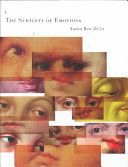
Why do we cry at the movies? What is the best way to manage destructive feelings such as jealousy? Although emotions pervade our lives, their nature, causes, and effects have only recently been studied by social scientists and philosophers. Despite growing scientific interest in the subject, empirical findings have not yet caught up with our intuitive knowledge. In this book Aaron Ben-Ze’ev carries out what he calls “a careful search for general patterns in the primeval jungle of emotions.” In an engaging, informal style he draws on a variety of theoretical approaches and popular sources to produce a coherent account of emotions in all their subtlety. All of the ideas are illustrated with examples drawn from everyday life.The book is organized into two parts. The first presents an overall conceptual framework for understanding emotions. It looks at the typical characteristics and components of emotions, distinguishes emotions from other affective phenomena, classifies the emotions, and covers such related issues as emotional intelligence, regulating emotions, and emotions and morality. The second part discusses individual emotions, including envy, jealousy, pleasure-in-others’-misfortune, pity, compassion, anger, hate, disgust, love, sexual desire, happiness, sadness, pride, regret, and shame. The text is laced with insightful and often amusing quotations from sources ranging from Mae West to Montesquieu.
ما از اخلاق چه انتظاری داریم؟ این سوال شاید تاحدودی برای عموم مردم و یا متخصصان این رشته قابل پاسخ باشد؛ اینکه خوب بودن را به ما بیاموزد و در تنظیم روابط فردی م...

جشن کتاب تهران به ایستگاه سی و یکم رسیده است. حال و احوال نشر کتاب خوب نیست و باید فرهنگدوستان را به خرید و هدیه دادن کتاب ترغیب نمود. خانه اخلاقپژوهان جوان ب...

بنیاد کتابهای اخلاق اسلامی عمدتا پالایش جان از آلودگیها و آراستن آن به زیباییها است. اندیشه محوری این قبیل کتابها آن است که انسان فعلی آنی نیست که باید باشد...

-
0 Comments