Notice: تابع WP_Block_Type_Registry::register به طورنادرست فراخوانی شد. نامهای نوع بلوک نباید حروف بزرگ داشته باشند. لطفاً برای اطلاعات بیشتر، اشکال زدایی در وردپرس را مشاهده کنید. (این پیام در نگارش 5.0.0 افزوده شده است.) in /home/ethicsho/public_html/wp-includes/functions.php on line 5313
Warning: Use of undefined constant TDC_PATH_LEGACY - assumed 'TDC_PATH_LEGACY' (this will throw an Error in a future version of PHP) in /home/ethicsho/public_html/wp-content/plugins/td-composer/td-composer.php on line 109
Warning: Use of undefined constant TDSP_THEME_PATH - assumed 'TDSP_THEME_PATH' (this will throw an Error in a future version of PHP) in /home/ethicsho/public_html/wp-content/plugins/td-composer/td-composer.php on line 113 بایگانیهای Paradox - خانه اخلاق پژوهان جوان Notice: Trying to access array offset on value of type bool in /home/ethicsho/public_html/wp-content/plugins/wp-ulike/inc/general-functions.php on line 807
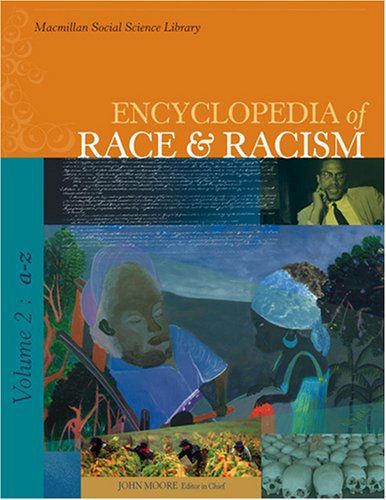
The Encyclopedia of Race and Racism is the first such work examining the anthropological, sociological, historical, economic, and scientific theories of race and racism in the modern era. The set delves into the historic origins of ideas of race and racism and explores their social and scientific consequences. Some of the nearly 400 articles address broad theoretical topics that have helped to shape modern ideas about race and racism; others address more specific subjects in the larger fields. The set includes biographies of dozens of significant theorists, as well as political and social leaders and notorious racists. The Encyclopedia of Race and Racism also includes a carefully chosen selection of primary documents that enhance and reinforce the content of the articles. Set includes a thematic outline, a filmography, and a comprehensive general index.
A member of the Energy Therapies family – which includes, acupuncture, acupressure and shiatsu – Emotional Freedom Technique is a simple and increasingly popular self- development therapy used to treat a wide range of physical and emotional issues. Popularised by figures including Paul McKenna, EFT is based on the theory that negative emotions are caused by disturbances in the body’s energy. Often referred to as acupuncture without needles, EFT involves locating and tapping on meridian points in the body while thinking of a negative emotion and using positive suggestion and thoughts to alter the body’s energy flow, restore balance and reprogram thought processes. This no-nonsense guide introduces readers to the theories and methods behind the technique and shows them how to use it to reduce the physical and emotional impact of a wide range of issues including, depression, fears, phobias, anger, addictions, sleeplessness and pain. It’s simple, safe, anyone can practice it at home and with EFT For Dummies readers can banish bad habits for good. Includes information on: The path to emotional freedom – explaining EFT Understanding your emotions Basic EFT tapping routines Improving emotional health with EFT Practising EFT on yourself and others Helena Fone is a registered EFT practitioner and trainer and an advanced hypnotherapist. She has a diploma in advanced holistic hypnotherapy and practices CBT and NLP. Find out more about Helena at www.EFTRegister.com
In this eloquent collection of essays, Rebecca Martusewicz positions a philosophy of education that relies on what transpires between teachers and learners in various contexts. She thoughtfully analyzes how, in the relationship between teachers and learners, all kinds of ideas, beliefs, interpretations, and meanings are generated as a result of potent generative forces that depend, as she demonstrates using post-structuralist theories, on difference as their fuel. Ultimately she argues that to become educated requires an attention to the welfare of self and others and a willingness to confront and shift one’s own habits, practices, and beliefs for that purpose. This work contains: clear translations of post-structuralist theories such as those of Deleuze, Serres, and Derrida; well-written essays that blend good storytelling, theory, and ethical analysis to reconceptualize education as the means toward social justice; and a clear argument for the drawing together of analyses of difference introduced by post-structuralism with attention to ethics and social justice as they apply to education.
What does it mean to lead a moral life? In her first extended study of moral philosophy, Judith Butler offers aprovocative outline for a new ethical practice–one responsive to the need for critical autonomy and grounded in a new sense of the human subject. Butler takes as her starting point one’s ability to answer the questions ocirc;What have I done?ouml; and ocirc;What ought I to do?ouml; She shows that these question can be answered only by asking a prior question, ocirc;Who is this aelig;I’ who is under an obligation to give an account of itself and to act in certain ways?ouml; Because I find that I cannot give an account of myself without accounting for the social conditions under which I emerge, ethical reflection requires a turn to social theory. In three powerfully crafted and lucidly written chapters, Butler demonstrates how difficult it is to give an account of oneself, and how this lack of self-transparency and narratibility is crucial to an ethical understanding of the human. In brilliant dialogue with Adorno, Levinas, Foucault, and other thinkers, she eloquently argues the limits, possibilities, and dangers of contemporary ethical thought. Butler offers a critique of the moral self, arguing that the transparent, rational, and continuous ethical subject is an impossible construct that seeks to deny the specificity of what it is to be human. We can know ourselves only incompletely, and only in relation to a broader social world that has always preceded us and already shaped us in ways we cannot grasp. If inevitably we are partially opaque to ourselves, how can giving an account of ourselves define the ethical act? And doesn’t an ethical system that holds us impossibly accountable for full self-knowledge and self-consistency inflict a kind of psychic violence, leading to a culture of self-beratement and cruelty? How does the turn to social theory offer us a chance to understand the specifically social character of our own unknowingness about ourselves? In this invaluable book, by recasting ethics as a project in which being ethical means becoming critical of norms under which we are asked to act, but which we can never fully choose, Butler illuminates what it means for us as ocirc;fallible creaturesouml; to create and share an ethics of vulnerability, humility, and ethical responsiveness.
ما از اخلاق چه انتظاری داریم؟ این سوال شاید تاحدودی برای عموم مردم و یا متخصصان این رشته قابل پاسخ باشد؛ اینکه خوب بودن را به ما بیاموزد و در تنظیم روابط فردی م...

جشن کتاب تهران به ایستگاه سی و یکم رسیده است. حال و احوال نشر کتاب خوب نیست و باید فرهنگدوستان را به خرید و هدیه دادن کتاب ترغیب نمود. خانه اخلاقپژوهان جوان ب...

بنیاد کتابهای اخلاق اسلامی عمدتا پالایش جان از آلودگیها و آراستن آن به زیباییها است. اندیشه محوری این قبیل کتابها آن است که انسان فعلی آنی نیست که باید باشد...

-
0 Comments