Notice: تابع WP_Block_Type_Registry::register به طورنادرست فراخوانی شد. نامهای نوع بلوک نباید حروف بزرگ داشته باشند. لطفاً برای اطلاعات بیشتر، اشکال زدایی در وردپرس را مشاهده کنید. (این پیام در نگارش 5.0.0 افزوده شده است.) in /home/ethicsho/public_html/wp-includes/functions.php on line 5313
Warning: Use of undefined constant TDC_PATH_LEGACY - assumed 'TDC_PATH_LEGACY' (this will throw an Error in a future version of PHP) in /home/ethicsho/public_html/wp-content/plugins/td-composer/td-composer.php on line 109
Warning: Use of undefined constant TDSP_THEME_PATH - assumed 'TDSP_THEME_PATH' (this will throw an Error in a future version of PHP) in /home/ethicsho/public_html/wp-content/plugins/td-composer/td-composer.php on line 113 بایگانیهای Naples (Italy) - Moral Conditions - خانه اخلاق پژوهان جوان Notice: Trying to access array offset on value of type bool in /home/ethicsho/public_html/wp-content/plugins/wp-ulike/inc/general-functions.php on line 807
At a time when age-old political structures are crumbling, civil strife abounds, and economic uncertainty permeates the air, loyalty offers us security in our relationships with associates, friends, and family. Yet loyalty is a suspect virtue. It is not impartial. It is not blind. Itviolates the principles of morality that have dominated Western thought for the last two hundred years.Loyalties are also thought to be irrational and contrary to the spirit of Capitalism. In a free market society, we are encouraged to move to the competition when we are not happy. This way of thinking has invaded our personal relationships and undermined our capacities for friendship and loyaltyto those who do not serve our immediate interests. As George P. Fletcher writes, it is time for loyal bonds, born of history and experience, to prevail both over impartial morality and the self-interested thinking of the market trader.In this extended essay, George P. Fletcher offers an account of loyalty that illuminates its role in our relationships with family and friends, our ties to country, and the commitment of the religious to God and their community. Fletcher opposes the traditional view of the moral self as detachedfrom context and history. He argues instead that loyalty, not impartial detachment, should be the central feature of our moral and political lives. Writing as a political “liberal,” he claims that a commitment to country is necessary to improve the lot of the poor and disadvantaged. This commitmentto country may well require greater reliance on patriotic rituals in education and a reconsideration of the Supreme Court’s extending the First Amendment to protect flag burning. Given the worldwide currents of parochialism and political decentralization, the task for us, Fletcher argues, is torenew our commitment to a single nation united in its diversity.Bringing to bear his expertise as a law professor, Fletcher reasons that the legal systems should defer to existing relationships of loyalty. Familial, professional, and religious loyalties should be respected as relationships beyond the limits of the law. Thus surrogate mothers should not beforced to surrender and betray their children, spouses should not be required to testify against each other in court, parents should not be prevented from willing their property to their children, and the religiously committed should not be forced to act contrary to conscience.Yet the question remains: Aren’t loyalty, and particularly patriotism, dangerously one-sided? Indeed, they are, but no more than are love and friendship. The challenge, Fletcher maintains, is to overcome the distorting effects of impartial morality and to develop a morality of loyalty properlysuited to our emotional and spiritual lives. Justice has its sphere, as do loyalties. In this book, Fletcher provides the first step toward a new way of thinking that recognizes the complexity of our moral and political lives.
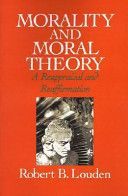
Contemporary philosophers have grown increasingly skeptical toward both morality and moral theory. Some argue that moral theory is a radically misguided enterprise that does not illuminate moral practice, while others simply deny the value of morality in human life. In this important new book, Louden responds to the arguments of both “anti-morality” and “anti-theory” skeptics. In Part One, he develops and defends an alternative conception of morality, which, he argues, captures more of the central features of both Aristotelian and Kantian ethics than do other contemporary models, and enables the central importance of morality to be convincingly reaffirmed. In Louden’s model, morality is primarily a matter of what one does to oneself, rather than what one does or does not do to others. This model eliminates the gulf that many anti-morality critics say exists between morality’s demands and the personal point of view. Louden further argues that morality’s primary focus should be on agents and their lives, rather than on right actions, and that it is always better to be morally better–i.e. it is impossible to be “too moral.” Part Two presents Louden’s alternative conception of moral theory. Here again he draws on the work of Aristotle and Kant, showing that their moral theories have far more in common than is usually thought, and that those features that they share can be the basis for a viable moral theory that is immune to the standard anti-theory objections. Louden reaffirms the necessity and importance of moral theory in human life, and shows that moral theories fulfill a variety of genuine and indispensable human needs.
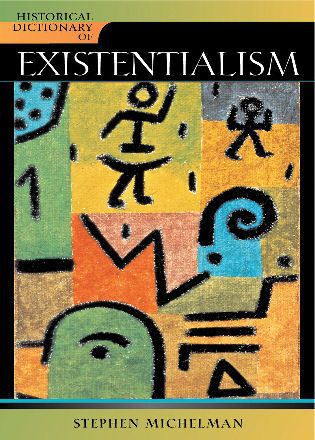
Existentialism is the philosophy of human existence, which flourished first in Germany in the 1920s and 1930s and then in France in the decade following the end of World War II. The operative meaning of existentialism here is thus broader than it was circa 1945 when the term first gained currency in France as a label for the philosophy of Jean-Paul Sartre. However, it is considerably less broad than the view proposed by commentators in the 1950s and 1960s who, in an attempt to overcome Sartre’s hegemony, discovered the seeds of existentialism far and wide: in Shakespeare, Saint Augustine, and the Old Testament prophets. In this dictionary, existentialism is understood as a decidedly 20th-century phenomenon, though with roots in the 19th century. Effort has been made to understand the philosophy of existentialism, as all philosophies should be understood, as part of an ongoing intellectual tradition: an evolving history of problems, concepts, and arguments. The A to Z of Existentialism explains the central claims of existentialist philosophy and the contexts in which it developed into one of the most influential intellectual trends of the 20th century. This is done through a chronology, an introductory essay, a bibliography, and more than 300 cross-referenced dictionary entries offering clear, accessible accounts of the life and thought of major existentialists like Jean-Paul Sartre, Martin Heidegger, Martin Buber, Karl Jaspers, Gabriel Marcel, Simone de Beauvoir, Albert Camus, and Maurice Merleau-Ponty, as well as thinkers influential to its development such as Wilhelm Dilthey, Henri Bergson, Edmund Husserl, and Max Scheler. This book affords readers an integrated, critical, and historically-sensitive understanding of this important philosophical movement.
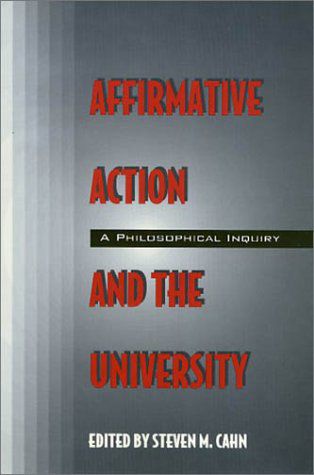
This book is recommended for anyone interested in understanding, questioning, articulating, and acting on the basis of their own and others’ perspectives on sexism, racism, and affirmative action in American higher education. –ChoiceWhile equal opportunity for all candidates is widely recognized as a goal within academia, the implementation of specific procedures to achieve equality has resulted in vehement disputes regarding both the means and ends. To encourage a reexamination of this issue, Cahn asked three prominent American social philosophers–Leslie Pickering Francis, Robert L. Simon, and Lawrence C. Becker–who hold divergent views about affirmative action, to write extended essays presenting their views. Twenty-two other philosophers then respond to these three principal essays. While no consensus is reached, the resulting clash of reasoned judgments will serve to revitalize the issues raised by affirmative action.ContentsIntroduction – Steven M. CahnPart I1. In Defense of Affirmative Action – Leslie Pickering Francis2. Affirmative Action and the University: Faculty Appointment and Preferential Treatment – Robert L. Simon3. Affirmative Action and Faculty Appointments – Lawrence C. BeckerPart II4. What Good Am I? – Laurence Thomas5. Who Counts on Campus? – Ann Hartle6. Reflections on Affirmative Action in Academia – Robert G. Turnbull7. The Injustice of Strong Affirmative Action – John Kekes8. Preferential Treatment Versus Purported Meritocratic Rights – Richard J. Arneson9. Faculties as Civil Societies: A Misleading Model for Affirmative Action – Jeffrie G. Murphy10. Facing Facts and Responsibilities – The White Man’s Burden and the Burden of Proof – Karen Hanson11. Affirmative Action: Relevant Knowledge and Relevant Ignorance – Joel J. Kupperman12. Remarks on Affirmative Action – Andrew Oldenquist13. Affirmative Action and the Multicultural Ideal – Philip L. Quinn14. Affirmative Action in the Cultural Wars – Frederick A. Olafson15. Quotas by Any Name: Some Problems of Affirmative Action in Faculty Appointments – Tom L. Beauchamp16. Are Quotas Sometimes Justified? – James Rachels17. Proportional Representation of Women and Minorities – Celia Wolf-Devine18. An Ecological Concept of Diversity – La Verne Shelton19. Careers Open to Talent – Ellen Frankel Paul20. Some Sceptical Doubts – Alasdair MacIntyre21. Affirmative Action and Tenure Decisions – Richard T. De George22. Affirmative Action and the Awarding of Tenure – Peter J. Markie23. The Case for Preferential Treatment – James P. Sterba24. Saying What We Think – Fred Sommers25. Comments on Compromise and Affirmative Action – Alan H. GoldmanAbout the AuthorsIndex About the Author(s)Steven M. Cahn is Professor of Philosophy and former Provost and Vice President for Academic Affairs at the Graduate Center of the City University of New York. He has published numerous other books, including Morality, Responsibility, and the University (Temple).Contributors: Laurence Thomas, Ann Hartle, Robert G. Turnbull, John Kekes, Richard J. Arneson, Jeffrie G. Murphy, Karen Hanson, Joel J. Kupperman, Andrew Oldenquist, Philip L. Quinn, Frederick A. Olafson, Tom L. Beauchamp, James Rachels, Celia Wolf-Devine, La Verne Shelton, Ellen Frankel Paul, Alasdair MacIntyre, Richard T. De George, Peter J. Markie, James P. Sterba, Fred Sommers, Alan H. Goldman, and the editor.
ما از اخلاق چه انتظاری داریم؟ این سوال شاید تاحدودی برای عموم مردم و یا متخصصان این رشته قابل پاسخ باشد؛ اینکه خوب بودن را به ما بیاموزد و در تنظیم روابط فردی م...

جشن کتاب تهران به ایستگاه سی و یکم رسیده است. حال و احوال نشر کتاب خوب نیست و باید فرهنگدوستان را به خرید و هدیه دادن کتاب ترغیب نمود. خانه اخلاقپژوهان جوان ب...

بنیاد کتابهای اخلاق اسلامی عمدتا پالایش جان از آلودگیها و آراستن آن به زیباییها است. اندیشه محوری این قبیل کتابها آن است که انسان فعلی آنی نیست که باید باشد...

-
0 Comments