Notice: تابع WP_Block_Type_Registry::register به طورنادرست فراخوانی شد. نامهای نوع بلوک نباید حروف بزرگ داشته باشند. لطفاً برای اطلاعات بیشتر، اشکال زدایی در وردپرس را مشاهده کنید. (این پیام در نگارش 5.0.0 افزوده شده است.) in /home/ethicsho/public_html/wp-includes/functions.php on line 5313
Warning: Use of undefined constant TDC_PATH_LEGACY - assumed 'TDC_PATH_LEGACY' (this will throw an Error in a future version of PHP) in /home/ethicsho/public_html/wp-content/plugins/td-composer/td-composer.php on line 109
Warning: Use of undefined constant TDSP_THEME_PATH - assumed 'TDSP_THEME_PATH' (this will throw an Error in a future version of PHP) in /home/ethicsho/public_html/wp-content/plugins/td-composer/td-composer.php on line 113 بایگانیهای Motion Pictures - خانه اخلاق پژوهان جوان Notice: Trying to access array offset on value of type bool in /home/ethicsho/public_html/wp-content/plugins/wp-ulike/inc/general-functions.php on line 807
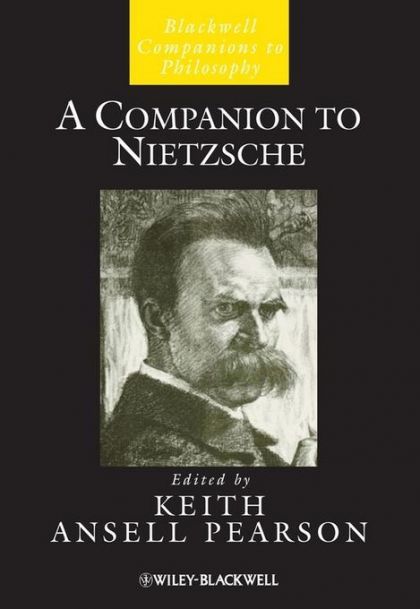
A Companion to Nietzsche provides a comprehensive guide to all the main aspects of Nietzsche’s philosophy, profiling the most recent research and trends in scholarship. Brings together an international roster of both rising stars and established scholars, including many of the leading commentators and interpreters of Nietzsche. Showcases the latest trends in Nietzsche scholarship, such as the renewed focus on Nietzsche’s philosophy of time, of nature, and of life. Includes clearly organized sections on Art, Nature, and Individuation; Nietzsche’s New Philosophy of the Future; Eternal Recurrence, the Overhuman, and Nihilism; Philosophy of Mind; Philosophy and Genealogy; Ethics; Politics; Aesthetics; Evolution and Life. Features fresh treatments of Nietzsche’s core and enigmatic doctrines.
Book Summary of Bioethical Issues, Sociological PerspectivesThis volume deals with the topic of health inequalities and health disparities. The volume is divided into five sections. The first section includes an introductory look at the issue of health care inequalities and disparities and also an introduction to the volume. One of the backdrops to this topic in the United States was The National Healthcare Disparities Report and its focus on the ability of Americans to access health care and variation in the quality of care. Disparities related to socioeconomic status were included, as were disparities linked to race and ethnicity and the report also tried to explore the relationship between race/ethnicity and socioeconomic position, as explained in more detail in the first article in the book. The second article discusses a newer overall approach to issues related to health inequalities and health disparities.The remaining four sections of the book address more specific topics relating to inequalities and disparities. The second section examines racial and ethnic inequalities and disparities. The third section includes articles that address the issue from the perspective of research about health care providers and health care facilities. The last two sections of the book focus on consumers and topics of health care disparities, with Section 4 focused on issues related to substance abuse, mental health and related concerns. Section 5 includes articles looking at issues of vulnerable women, women with breast cancer and people with colorectal cancer.Inequalities and Disparities in Health Care and Health is important reading for medical sociologists and people working in other social science disciplines studying health-related issues. The volume also provides vital information for health services researchers, policy analysts and public health researchers..
Why do we cry at the movies? What is the best way to manage destructive feelings such as jealousy? Although emotions pervade our lives, their nature, causes, and effects have only recently been studied by social scientists and philosophers. Despite growing scientific interest in the subject, empirical findings have not yet caught up with our intuitive knowledge. In this book Aaron Ben-Ze’ev carries out what he calls “a careful search for general patterns in the primeval jungle of emotions.” In an engaging, informal style he draws on a variety of theoretical approaches and popular sources to produce a coherent account of emotions in all their subtlety. All of the ideas are illustrated with examples drawn from everyday life.The book is organized into two parts. The first presents an overall conceptual framework for understanding emotions. It looks at the typical characteristics and components of emotions, distinguishes emotions from other affective phenomena, classifies the emotions, and covers such related issues as emotional intelligence, regulating emotions, and emotions and morality. The second part discusses individual emotions, including envy, jealousy, pleasure-in-others’-misfortune, pity, compassion, anger, hate, disgust, love, sexual desire, happiness, sadness, pride, regret, and shame. The text is laced with insightful and often amusing quotations from sources ranging from Mae West to Montesquieu.
The debate over religious lawmaking pits respect for religious pluralism against moral identity-with liberal theorists contending that religious lawmaking is generally suspect in a morally and religiously diverse polity like the United States, and communitarian ones arguing that lawmakers cannot, and should not, be expected to suppress their religious commitments in their public policy making. Looking carefully at both sides of this ongoing debate, Lucinda Peach explores the limitations as well as the value of these conflicting perspectives, and proposes a solution for their reconciliation. Peach breaks from traditional analysis as she contends that both sides of the argument are fundamentally flawed. Neither side has been willing to recognize the merit of the other’s arguments, and both have ignored the gender-based disparities of religious lawmaking (particularly with respect to the effect religion has had on reproductive rights and abortion regulation). Using an interdisciplinary approach, the book argues for a pragmatic solution to this impasse which will respect religious pluralism, moral identity, and gender differences. Peach’s proposals will be of interest to philosophers, legal theorists, and scholars in women’s studies and political science.
ما از اخلاق چه انتظاری داریم؟ این سوال شاید تاحدودی برای عموم مردم و یا متخصصان این رشته قابل پاسخ باشد؛ اینکه خوب بودن را به ما بیاموزد و در تنظیم روابط فردی م...

جشن کتاب تهران به ایستگاه سی و یکم رسیده است. حال و احوال نشر کتاب خوب نیست و باید فرهنگدوستان را به خرید و هدیه دادن کتاب ترغیب نمود. خانه اخلاقپژوهان جوان ب...

بنیاد کتابهای اخلاق اسلامی عمدتا پالایش جان از آلودگیها و آراستن آن به زیباییها است. اندیشه محوری این قبیل کتابها آن است که انسان فعلی آنی نیست که باید باشد...

-
0 Comments