Notice: تابع WP_Block_Type_Registry::register به طورنادرست فراخوانی شد. نامهای نوع بلوک نباید حروف بزرگ داشته باشند. لطفاً برای اطلاعات بیشتر، اشکال زدایی در وردپرس را مشاهده کنید. (این پیام در نگارش 5.0.0 افزوده شده است.) in /home/ethicsho/public_html/wp-includes/functions.php on line 5313
Warning: Use of undefined constant TDC_PATH_LEGACY - assumed 'TDC_PATH_LEGACY' (this will throw an Error in a future version of PHP) in /home/ethicsho/public_html/wp-content/plugins/td-composer/td-composer.php on line 109
Warning: Use of undefined constant TDSP_THEME_PATH - assumed 'TDSP_THEME_PATH' (this will throw an Error in a future version of PHP) in /home/ethicsho/public_html/wp-content/plugins/td-composer/td-composer.php on line 113 بایگانیهای Moral Development - Congresses - خانه اخلاق پژوهان جوان Notice: Trying to access array offset on value of type bool in /home/ethicsho/public_html/wp-content/plugins/wp-ulike/inc/general-functions.php on line 807
Larry Alexander offers a skeptical appraisal of the claim that freedom of expression is a human right. He examines the various contexts in which a right to freedom of expression might be asserted and concludes that it cannot be supported in any of these contexts. Alexander argues that the legal protection affording freedom of expression is definitely of value, although the form such protection takes will vary with historical and cultural circumstances–and, ultimately, is not a matter of human rights.
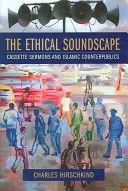
Charles Hirschkind’s unique study explores how a popular Islamic media form& -the cassette sermon& -has profoundly transformed the political geography of the Middle East over the last three decades. An essential aspect of what is now called the Islamic Revival, the cassette sermon has become omnipresent in most Middle Eastern cities, punctuating the daily routines of many men and women. Hirschkind shows how sermon tapes have provided one of the means by which Islamic ethical traditions have been recalibrated to a modern political and technological order& -to its noise and forms of pleasure and boredom, but also to its political incitements and call for citizen participation. Contrary to the belief that Islamic cassette sermons are a tool of militant indoctrination, Hirschkind argues that sermon tapes serve as an instrument of ethical self-improvement and as a vehicle for honing the sensibilities and affects of pious living. Focusing on Cairo’s popular neighborhoods, Hirschkind highlights the pivotal role these tapes now play in an expanding arena of Islamic argumentation and debate& -what he calls an “Islamic counterpublic.” This emerging arena connects Islamic traditions of ethical discipline to practices of deliberation about the common good, the duties of Muslims as national citizens, and the challenges faced by diverse Muslim communities around the globe. The Ethical Soundscapeis a brilliant analysis linking modern media practices of moral self-fashioning to the creation of increasingly powerful religious publics.
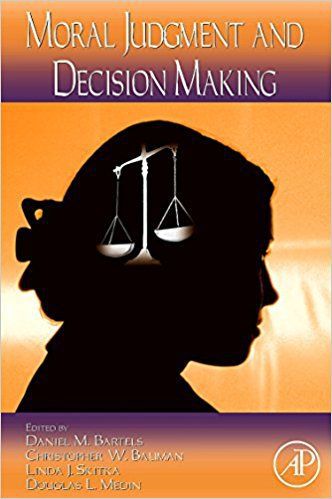
This volume presents a variety of perspectives from within and outside moral psychology. Recently there has been an explosion of research in moral psychology, but it is one of the subfields most in need of bridge-building, both within and across areas. Interests in moral phenomena have spawned several separate lines of research that appear to address similar concerns from a variety of perspectives. The contributions to this volume examine key theoretical and empirical issues these perspectives share that connect these issues with the broader base of theory and research in social and cognitive psychology. The first two chapters discuss the role of mental representation in moral judgment and reasoning. Sloman, Fernbach, and Ewing argue that causal models are the canonical representational medium underlying moral reasoning, and Mikhail offers an account that makes use of linguistic structures and implicates legal concepts. Bilz and Nadler follow with a discussion of the ways in which laws, which are typically construed in terms of affecting behavior, exert an influence on moral attitudes, cognition, and emotions. Baron and Ritov follow with a discussion of how people’s moral cognition is often driven by law-like rules that forbid actions and suggest that value-driven judgment is relatively less concerned by the consequences of those actions than some normative standards would prescribe. Iliev et al. argue that moral cognition makes use of both rules and consequences, and review a number of laboratory studies that suggest that values influence what captures our attention, and that attention is a powerful determinant of judgment and preference. Ginges follows with a discussion of how these value-related processes influence cognition and behavior outside the laboratory, in high-stakes, real-world conflicts. Two subsequent chapters discuss further building blocks of moral cognition. Lapsley and Narvaez discuss the development of moral characters in children, and Reyna and Casillas offer a memory-based account of moral reasoning, backed up by developmental evidence. Their theoretical framework is also very relevant to the phenomena discussed in the Sloman et al., Baron and Ritov, and Iliev et al. chapters. The final three chapters are centrally focused on the interplay of hot and cold cognition. They examine the relationship between recent empirical findings in moral psychology and accounts that rely on concepts and distinctions borrowed from normative ethics and decision theory. Connolly and Hardman focus on bridge-building between contemporary discussions in the judgment and decision making and moral judgment literatures, offering several useful methodological and theoretical critiques. Ditto, Pizarro, and Tannenbaum argue that some forms of moral judgment that appear objective and absolute on the surface are, at bottom, more about motivated reasoning in service of some desired conclusion. Finally, Bauman and Skitka argue that moral relevance is in the eye of the perceiver and emphasize an empirical approach to identifying whether people perceive a given judgment as moral or non-moral. They describe a number of behavioral implications of people’s reported perception that a judgment or choice is a moral one, and in doing so, they suggest that the way in which researchers carve out the moral domain a priori might be dubious.
Publisher: London: Macmillan Subjects: Philosophy and religion Ethics Metaphysics Notes: This is an OCR reprint. There may be typos or missing text. There are no illustrations or indexes. When you buy the General Books edition of this book you get free trial access to Million-Books.com where you can select from more than a million books for free. You can also preview the book there.
ما از اخلاق چه انتظاری داریم؟ این سوال شاید تاحدودی برای عموم مردم و یا متخصصان این رشته قابل پاسخ باشد؛ اینکه خوب بودن را به ما بیاموزد و در تنظیم روابط فردی م...

جشن کتاب تهران به ایستگاه سی و یکم رسیده است. حال و احوال نشر کتاب خوب نیست و باید فرهنگدوستان را به خرید و هدیه دادن کتاب ترغیب نمود. خانه اخلاقپژوهان جوان ب...

بنیاد کتابهای اخلاق اسلامی عمدتا پالایش جان از آلودگیها و آراستن آن به زیباییها است. اندیشه محوری این قبیل کتابها آن است که انسان فعلی آنی نیست که باید باشد...

-
0 Comments